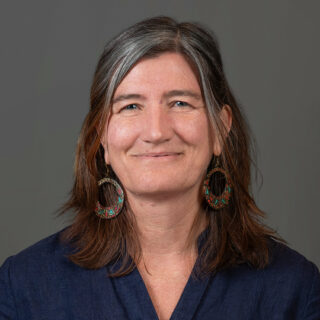
Earlier this year, Meghan Hertel—formerly the deputy secretary for biodiversity and habitat at the California Natural Resources Agency—took the helm of the California Department of Fish and Wildlife (CDFW). We recently spoke with Ms. Hertel about her vision for the department.
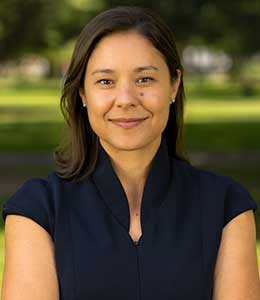 Tell us a little bit about why you’re excited to lead CDFW.
CDFW sits at the center of some of the most important questions facing California’s future: how we protect biodiversity, build resilient communities, support housing and infrastructure, and keep people connected to the natural world that defines this state. That’s what makes this role exciting and also challenging. As the trustee of California’s fish, wildlife, and habitats, we carry an enormous responsibility to ensure these resources are here for future generations. What gives me confidence is the incredible expertise, dedication, and passion of the more than 3,000 people at CDFW who show up every day to advance that mission.
How do you view CDFW’s priorities, given the inevitable staff and funding limitations?
Prioritization is essential. We have to focus on actions that deliver the greatest ecological benefit, are durable over time, and meet our legal obligations. That requires looking ahead—thinking about what California’s landscapes, communities, and species will need decades from now in the face of climate change and population growth. We need an adaptable department that is positioned to meet those challenges, which means thinking carefully about our structure, expertise, and staffing—and how we work together. We need to provide clarity and consistency for our partners and the communities we regulate.
A great example of this is the Cutting the Green Tape initiative, an effort to increase the pace and scale of permitting for habitat restoration. It should not take as long to restore a stream as it does to build a shopping mall. Since 2021, CDFW has funded, permitted, or assisted with environmental review exemptions for over 550 projects on over 320,000 acres, saving roughly $12.5 million and reducing permit timelines to an average of 47 days. This is a substantial improvement in habitat restoration permitting, and we continue to adapt.
How does CDFW fit into California’s major water initiatives, like the Water Supply Investment Program, Sites Reservoir, and Healthy Rivers and Landscapes?
We wear many hats at CDFW. We are a land manager, we provide science and technical support, and we’re a regulator. For the Water Storage Investment Program, we’re working to ensure that the project receiving funding is providing real environmental benefits. On Sites Reservoir, we’re serving in a regulatory role to ensure it’s fully mitigating and accounting for impacts to listed species.
We’ve been engaged with the Healthy Rivers and Landscapes program since the beginning. Twelve staff serve as subject matter experts and facilitate permitting for habitat projects.
Across all of this work, there’s a natural and healthy tension in wearing multiple hats. Our regulatory responsibility is clear: we uphold the law and protect species and habitats. At the same time, our science and program staff are working to find solutions that go further to support long-term ecosystem health and species recovery.
In a big agency, it can be hard to ensure staff adhere to policy from the top. Is that a challenge at CDFW, and if so, how will you address it?
Like any large, decentralized organization, consistency can be a challenge, especially in a department with 150 years of history and staff who bring deep regional and technical expertise. We need to continue empowering staff to solve complex problems in the field. At the same time, consistency matters—for fairness, credibility, and ensuring we are aligned around the policy direction set by the governor and legislature.
For me, leadership is about balancing those two things. That starts with strong communication—not just about what we are doing, but why we’re doing it. California is facing challenges today that many existing laws and policies were never designed to anticipate, so we also need to be adaptive, practical, and solutions-oriented in how we implement them.
Finally, any advice for the new governor?
It’s a tall order to give a new governor advice! For any leader in California, I would say this: California’s natural resources are not separate from our economy, public health, or quality of life—they are foundational to all of them. If we want California to remain strong and resilient, we have to continue investing in our lands, water, wildlife, and climate resilience in the face of growing pressures from climate change, development, and changing federal priorities. And we have to stay adaptable—using the best available science and evolving our approaches as conditions change.