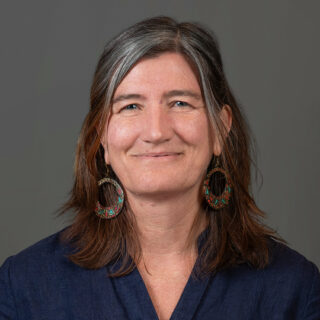
General manager Deven Upadhyay has guided Metropolitan Water District through major droughts and much more. As he prepares to retire at the end of the year, we sat down with him to talk about his experiences guiding an urban water agency through the volatile 21st century.
 How is our current water infrastructure dealing with the challenges posed by a changing climate?
Industry-wide, it’s a mixed bag. The 2020–22 drought was almost our Day Zero. In 2022, we saw the lowest State Water Project allocation in the state’s history—they were allocating on a human health and safety basis for the first time. Without the major investments we had made in storage, conservation, and transfers, we would have been facing a Day Zero—when we would have had to severely curtail deliveries to as low as 13 gallons per person per day.
The fact that we didn’t have to says a lot about how the region has planned for variability and drought. It showed that we could get through climate extremes with moderate impact to consumers, which wasn’t the case everywhere.
But climate whiplash is real: only three years later, Metropolitan is going to end 2025 with the highest storage levels we’ve ever had. That creates a challenge when investing in projects to cope with future climate effects. For instance, Pure Water Southern California is a regional water recycling project we are pursuing in partnership with LA County Sanitation Districts. It could be the biggest purification project in the US, but we’re facing questions around whether it’s needed. Three years ago, people wanted it done right away.
How much investment is needed to bring our water infrastructure up to 21st-century standards?
Metropolitan is coming up on our 100th anniversary, and a lot of our infrastructure is coming to the end of its useful life. We are seeing more emergency repairs, which are highly disruptive and expensive: emergency contracts often cost twice what scheduled repairs do.
How do you manage assets proactively so we don’t become the kid struggling to plug holes in the dike with our fingers? Maintaining infrastructure like this requires ongoing investment every single year. Investing in a capital improvement program requires money up front, but it saves money in the long run by avoiding the more costly urgent projects due to system failures. We are forecasting the major projects needed to rehabilitate our system for many years ahead, not just immediate projects that keep the system working today.
A new proposed budget would ramp up our capital improvement program to spend $950 million every two years on refurbishing existing infrastructure. This is almost a 50% increase compared to our current capital budget, but it isn’t out of line with what we are seeing in the industry. The goal is to proactively invest to avoid service disruption.
How is Metropolitan looking at raising sufficient revenue while maintaining affordability?
We’re trying to find the right balance. Metropolitan is the largest treated drinking water provider in the US. Just a few years ago, 85% of our revenue came from volumetric fees on the amount of water we delivered each year and just 15% of our revenue came from fixed charges—but our costs were the opposite. We’ve been struggling with that.
We had an incredible history of growth in our region, and we got addicted to that revenue model. Rising water deliveries resulted in increasing revenues. For six years, we didn’t raise rates at all! Then a number of things started to bend the curve around demand: we were paying retail agencies to develop local supplies, we saw great gains in consumer water use efficiency, and demand tapered off.
We started asking whether our business model fits a future where the challenge is no longer meeting a growing demand but delivering water to a stable demand in the face of an eroding supply.
We’re looking at multiple tools to raise revenue, including levying fixed charges and property taxes and conducting water sales outside of our service area. The board doubled the property tax rate recently, and we just approved a brand-new fixed charge that will go into place next year. This new charge will generate revenues to cover a third of the cost of water treatment. We’ll go from 15% fixed revenues to just below 40% fixed revenues. That’s a huge change in the right direction.
This year, we’re selling around 140,000 acre-feet of water to districts up in the Central Valley. That reduces the burden on our ratepayers and helps with affordability. Doing that more regularly could help us pay for Pure Water Southern California and other capital improvement projects. This is a financial innovation that we’re testing out this year, and I’m super optimistic about it.
We’re also designing conservation programs to help areas that have a harder time financing and paying for conservation and efficiency. One example is a partnership we are developing with the LA County Department of Public Works to help economically disadvantaged communities replace turf without having to pay money out of pocket. It’s all about balancing these investments.
Topics
climate change infrastructure Water Supply Water, Land & AirLearn More

Metropolitan Water District: “We’re the Squirrels of the Water System”
Video: Building Resilience for Cities and Farms with Water Partnerships