

California’s ballot counting process has come under fire in recent election cycles; many wonder why it takes so long for the state to certify the results. We talked to Jesse Salinas, Yolo County assessor/clerk-recorder/elections and President of the California Association of Clerks and Election Officials (CACEO) to better understand the effort it takes to process ballots and certify elections. This interview took place before the Supreme Court issued its ruling in Watson v. Republican National Committee.
In your experience, and from talking to other registrars, what makes California’s count slow?

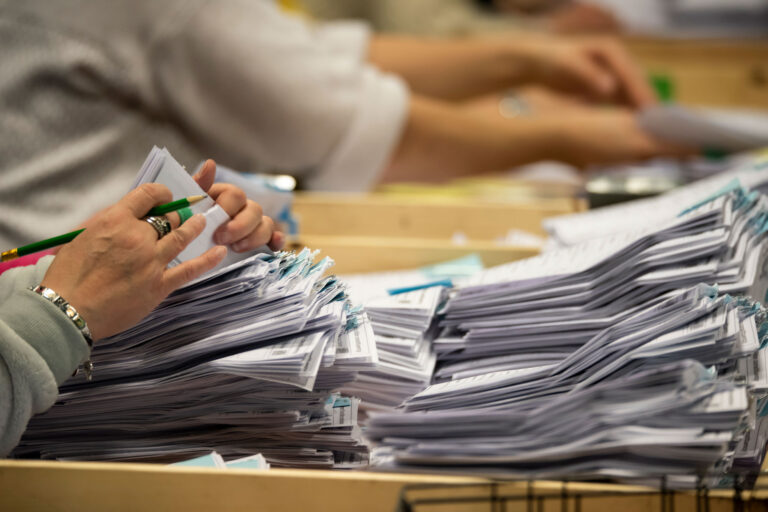
I’d like to describe it as taking longer rather than saying it is slow. It’s not slow. If you were to come to our office, you would see that the staff is working hard, we’re processing at a good pace. But we are following rules and procedures to make sure that election results are secure and accurate. Because at the end of the day, we want every eligible vote to be counted.
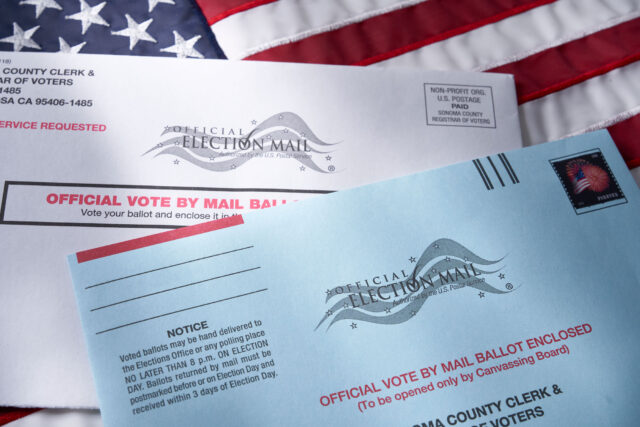
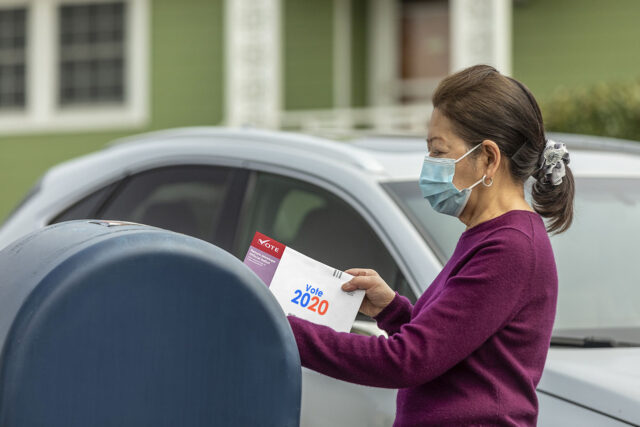
When you have more than 80% of voters across the state using vote-by-mail, the registrars have a lot of work to do to ensure that only eligible voters can cast ballots. Every signature has to be verified. In the last election, 92.5% of voters in Yolo County used vote-by-mail. That is a huge, huge number. Even though vote centers are open days ahead of time, many voters wait until the day before, or Election Day. So you have a large clot of ballots that have to be processed with due diligence, which takes time, because we want to make sure nobody votes more than once.
We also have conditional voter registration, which allows voters to register and vote on the same day. That’s another way of making elections accessible and as convenient as possible. People who register conditionally have to fill out an envelope with their registration information. And then after we make sure they’re eligible and they haven’t already voted, we process their ballot.
Has the amount of time it takes to certify elections lengthened over time? And if so, why?
Yes, and it’s largely because more and more voters have been voting by mail. In Yolo County, we used to be at 20% to 30% of voters who used vote-by-mail back in 2010 and 2012. And now we’re at 92.5%. And it’s because it’s incredibly convenient for voters.
And then, on top of that, what’s happening in what I’ll call the sphere of elections is that things are changing constantly. For example, in the recent primary, one of the candidates for governor dropped out, and that shook everything up. People see that things could change and are more likely to hold on to their ballots as long as possible.
If California wanted to speed up its count, what would be the most effective strategies?
I think there are several opportunities to bring elections to the next level of operations across the state.
One area to look at are the policies that we follow. The legislature created one statewide deadline for fixing mistakes in mail-in ballots for every county. But smaller counties might not need as much time as larger counties. Allowing for some flexibility at the local level could help—so that counties could certify when they finish processing.
I think there are opportunities to use technology to help us. Here in Yolo County, we piloted a program in November called Instant Conditional Voter Registration, which allowed several hundred people—most of them students—who had not registered ahead of time to cast a live ballot by registering online with the Secretary of State’s office on Election Day. To expand this innovation, we’d need online registration to take just a few seconds, and the technological infrastructure needs to be able to handle a large number of folks.
Technological innovations can allow for more robust results on election night, but we have to make ongoing investments—not just in statewide infrastructure, but also at the local level.
And the last area is outreach. We need ongoing funding to communicate to the voters that if they want to be part of the election night results, and they’re going to vote by mail, they should get ballots to us earlier. And if the current deadline for mail ballots is invalidated by the Supreme Court, it will be critical to encourage folks to put their ballots in the mail early—at least 7 days before Election Day—or go to a vote center or drop box during the week before.