Dust pollution is a growing problem in California. What’s driving the increase, and how might we combat it? We spoke with UC Merced assistant professor Adeyemi Adebiyi to find out.
Why are you studying dust, and what did your study find?

Dust is an important component of the atmosphere that hasn’t gotten as much attention as it should: it affects human health, ecosystems, weather, and the climate. On the climate front, there’s a growing debate about whether dust warms or cools the climate. In California, there’s also a strong association between dust and Valley fever, an infection caused by a fungus called Coccidioides. There’s still a debate about what kind of dust carries the fungus and what soil conditions enable it.
Dust pollution is a growing concern in California due to human activities as well as some natural processes, like drought, which are becoming more intense in a changing climate. Some dust may also be policy induced, for example where policies cause land fallowing—that is, taking agricultural land out of production. Often, these dust sources impact populations in the Central Valley, where many of California’s low-income people live.
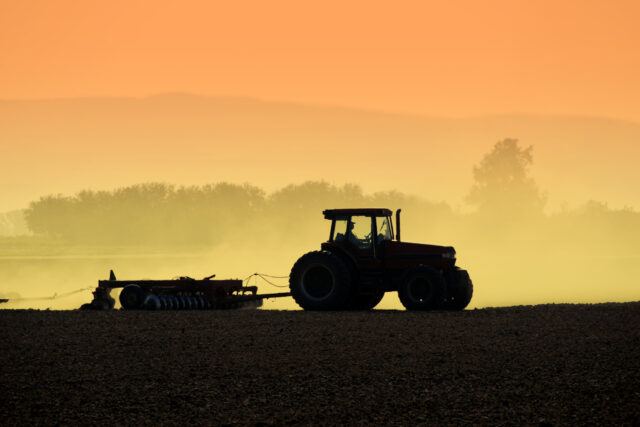
Relatedly, questions linger about whether dust abundance has increased globally since preindustrial times. This is a difficult problem to quantify, so we took a closer look, with a focus on California. We found that, as others have shown, the practice of fallowing agricultural lands can lead to wind-blown dust: according to our estimates, more than 80% of human-caused dust in California’s Central Valley is due to fallowed land. In recent years, fallowed acreage has increased, and the number of dust storms has also increased during the same period.
What causes dust storms in California, and which regions are affected?
California has a semi-arid climate, with several desert and desert-like regions, including the southern San Joaquin Valley, the Mojave Desert, the Mono Lake region, and the Imperial Valley/Salton Sea area. When these locations experience strong winds, it mobilizes dust particles, and fallowing facilitates dust emission by exposing the surface to strong winds. These events will likely increase with rising temperatures.
Human health is front of mind here: direct exposure to dust causes respiratory and cardiovascular issues and Valley fever. But there are other implications as well. We know, for instance, that dust impacts snowpack. Snow typically reflects a lot of solar energy back into space. However, any impurities on its surface can reduce that reflection. Dust-covered snow absorbs part of the solar energy, and the more that happens, the faster the snow melts. That can lead to earlier snowmelt and increased river runoff at the beginning of the season, potentially increasing water scarcity at the end of the growing season.
How is remotely sensed data enabling a better understanding of dust?
Remotely sensed data sets—particularly satellite-based data sets—are crucial. Remote sensing allows us to detect and monitor an area by measuring reflected radiation from a distance—typically from an airplane or satellite. Ground-based measurements are limited and just can’t cover all the land regions where dust occurs. Satellite information, on the other hand, could enable us to identify dust emission hot spots. For example, in the Salton Sea, it could allow us to monitor big changes in the lake’s water and identify potential new dust sources that may result from the shrinking lake. In addition, satellite information can also be important for dust forecasting.
What are some solutions?
California has to target dust at the source—where mitigation efforts are possible. There’s a lot of human-created dust in the Central Valley, and planting cover crops on fallowed lands could help. This could be expensive for farmers, but that’s where the government could provide additional funding or incentives to mitigate potential adverse consequences from the fallowed lands. In desert locations like the Mojave Desert, people can add embankments to minimize huge dust storms.
Given the prevalence of dust, California could benefit from an early warning system for dust storms. Our work is part of the UC Dust Initiative, which aims to provide a comprehensive summary of dust science in California and a guide to adaptation and mitigation efforts. One of the goals of the dust initiative is to develop an early-warning system, which requires funding that we currently don’t have. For example, there was a big dust storm last November in the Central Valley, which led to car crashes, injuries, and power outages in Fresno County. An early warning system could help residents know better what to do before a dust storm happens. Developing such a system would not be easy, but we must start somewhere.