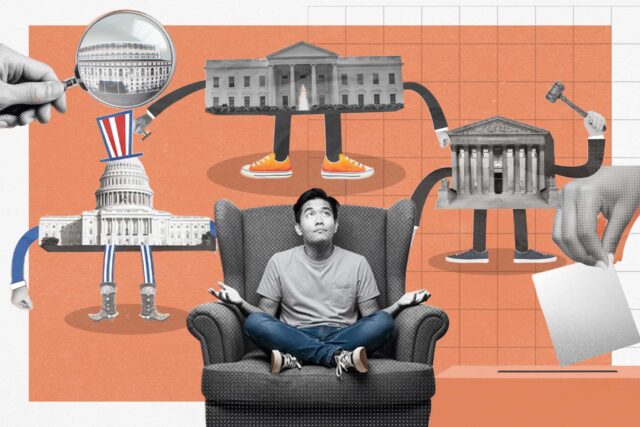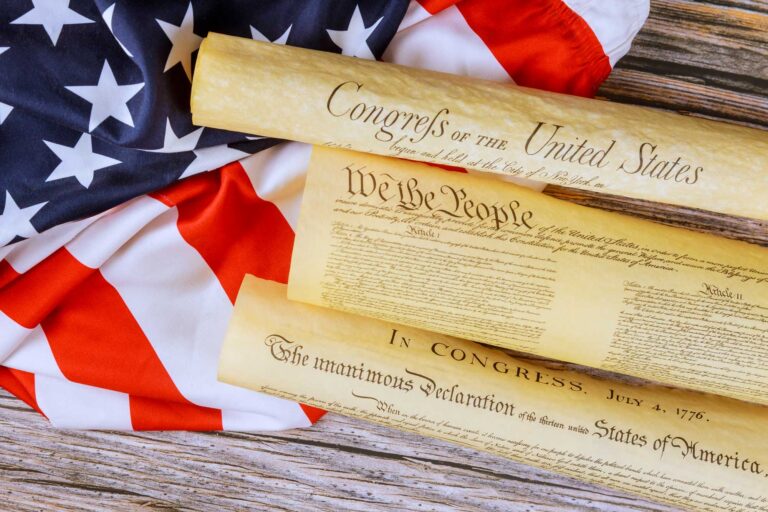


The 250th birthday of the United States is almost here, with fireworks, barbeques, and parades planned across our cities and communities. It’s also an opportunity to reflect on what holds us together as a country. One enduring fact? We are a nation of laws, bound by our Constitution, the Bill of Rights, and the Declaration of Independence—the reason we celebrate on July 4. Together, these founding documents establish who we are—a nation that chose to be governed by the rule of law—what rights we hold, and how our democracy is meant to work. It is imperative that every generation studies and understands them. That’s where civic education comes in.
Strong, Bipartisan Support for Foundational Civic Learning
Californians across the political spectrum say it matters that students understand the nation’s founding documents. In a recent PPIC Statewide Survey, nearly nine in ten California adults (88%) say it is very or somewhat important for local public schools to teach students about the Declaration of Independence. That support holds across party lines, regions, age groups, and demographic backgrounds, making it among the most broadly shared civic priorities we have measured.
Support for teaching the US Constitution is similarly high. About nine in ten Californians say it is very or somewhat important for students to learn about it; that number has grown in the past year by 4 points. At a time when consensus on almost anything feels rare, this kind of cross-partisan alignment is meaningful.
Our recent survey also asked for the first time about the Bill of Rights, the first ten amendments to the Constitution that protect personal freedoms and limit the power of government. Here again, Californians are in strong agreement: roughly nine in ten say it is very or somewhat important for students in their local public schools to learn about these foundational rights and freedoms.
Together, these findings paint a clear picture. Whether Democrat or Republican, renter or homeowner, young or old, resident of San Francisco or the Central Valley, Californians want the next generation to understand our democratic principles and the rights we all hold.
A Note on the California Constitution
Not every civic document registers equally. Fewer than half of California adults—about 47%—say it is very important for students to learn about the California Constitution, and roughly nine in ten say it is very or somewhat important in total, a somewhat lower level of enthusiasm than for the federal documents.
This gap is worth paying attention to. California’s constitution is among the longest and most frequently amended in the world; in certain areas it provides greater and broader protections than the United States Constitution. It shapes taxation, education funding, water rights, criminal justice, and much more. Understanding it is essential to understanding how this state actually works—and to participating meaningfully in state and local elections, ballot initiatives, and civic life.
As California continues to navigate its own complex policy landscape, building awareness of the state’s foundational law in our K–12 curriculum should be a priority.
Looking ahead
The 250th anniversary of the Declaration of Independence invites us to consider the ideals at the heart of American democracy—and to ask whether we are doing enough to pass them on. Civic knowledge doesn’t just happen; it has to be taught. And students who understand the Declaration, the Constitution, and the Bill of Rights are better prepared to participate in democratic life, to evaluate claims made by leaders and institutions, and to hold government accountable.
Through programs like the State Seal of Civic Engagement, California is part of a growing number of states that reward civic education for young people. Our leaders should expand on these efforts. Meanwhile, PPIC will continue to monitor Californians’ views on this important topic.