
California voters approved over 200 local public school and community college facilities bonds in November 2024, more than twice as many as in the last two statewide general elections, amounting to over $45 billion in new funding. Approved local bonds cover roughly 2.1 million TK–12 students, about 35% of statewide public school enrollment. In addition, the passage of Proposition 2 authorized $8.5 billion in state funding for TK–12 facilities (and another $1.5 billion for community colleges). State dollars will mostly be used to match local funds, with some dedicated to districts with significant financial or facility hardships. How much will this new local and state funding help address school needs and improve student outcomes?
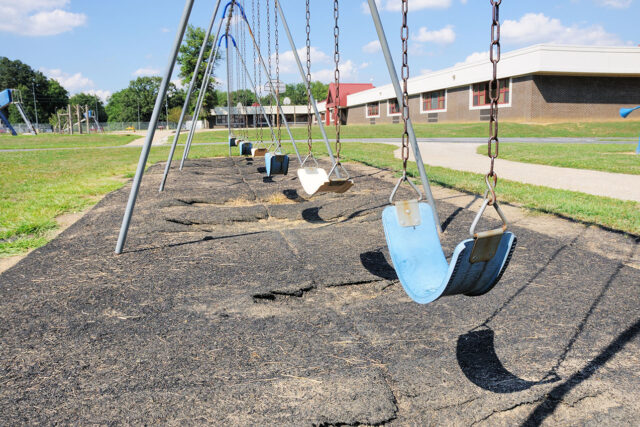
The answer depends on how—and where—dollars are targeted. Past PPIC research has found that California’s TK–12 school facilities face significant needs, and nearly 40% of schools do not meet basic standards. Historically, state funding for facilities has disproportionately benefitted more affluent students and districts.
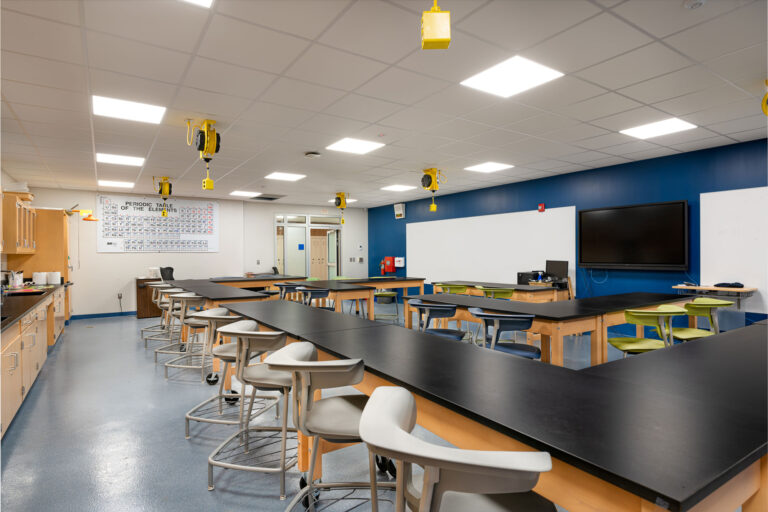
National research finds new facility investments improve academic performance, with larger gains in districts with more low-income students and worse prior facility conditions. However, the effects of new funding also depend on how the dollars are spent. Investments in HVAC, science and technology, vocational facilities, safety and health, and other basic improvements show the largest impact on student achievement, while investments in transportation, new land purchases, and athletic facilities are not linked with higher achievement.
We lack comprehensive statewide data on how these new local funds will be spent. But we can determine where new funding is going—and not going. On average, districts that proposed a bond in the November 2024 election are larger than districts that did not propose bonds, and they have similar shares of high-need and/or low-income students. Among those that proposed bonds, however, districts that passed bonds have higher shares of high-need and low-income students than districts where bonds failed. They also have higher shares of Asian, Black, and Latino students, and lower shares of white students.
While districts with higher-need students were more likely to pass bonds, more affluent districts passed the largest bonds in per student terms: the average amount per student was roughly $31,000 in districts with the highest household incomes, compared to $11,000 in districts with the lowest. The disparities are similar but smaller in magnitude when comparing districts’ house values and share of high-need students. Across geographic settings, students in city and suburban districts passed similarly sized bonds (roughly $16,900 to $17,400 per student, respectively), while rural and town districts passed smaller bonds (about $13,700 and $14,200 per student, respectively).
Of course, capital investments are cumulative and are spent on improvements intended to last many years—or decades. Examining one single election provides only a partial picture. Still, the recent results reveal important insights into where new dollars will flow. And since new state bond dollars will match local funding for new projects (and some already approved ones), any disparities will contribute to long-running gaps in state funding for facilities in low-income and low-wealth communities.
While new dollars will go a long way to address current and future needs, state and local policymakers will still want to pay careful attention to ensure that dollars are targeted to the types of investments—and communities—with the greatest need and potential for impact.