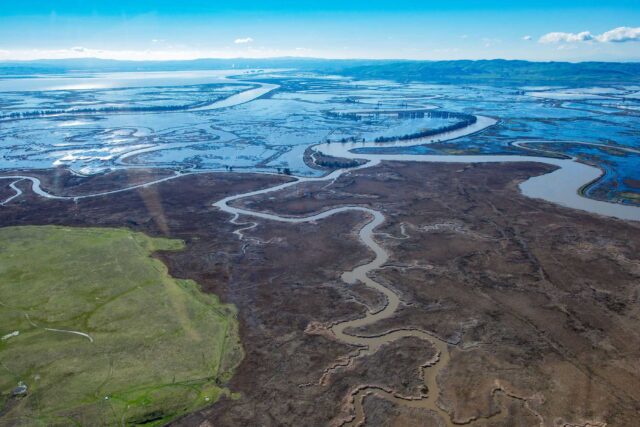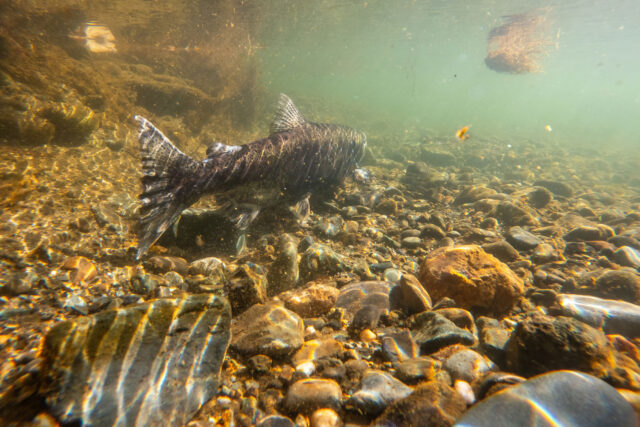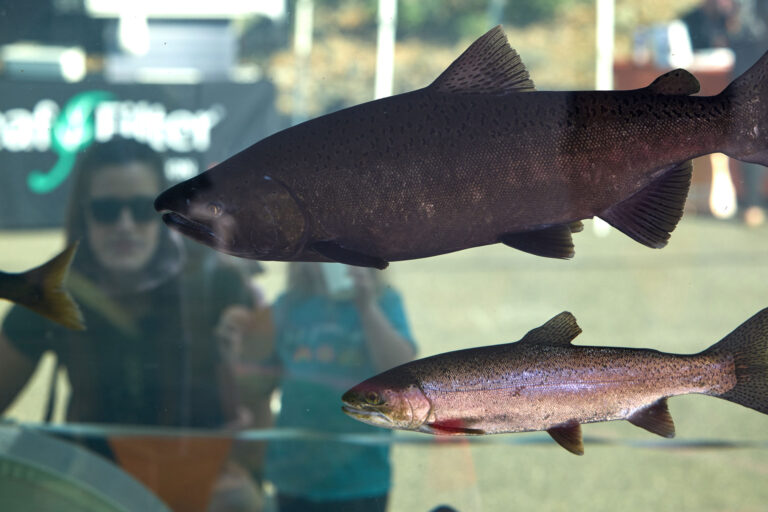

California’s rivers are special. I learned that firsthand in high school, as part of a years-long project to restore a denuded waterway called Adobe Creek. The creek had largely dried up, it was filled with trash, and the trees that had once shaded its banks were gone—but a tiny population of endangered steelhead was still hanging on. In the early ‘80s, concerned students from my high school began cleaning up the creek and replanting native vegetation. Then we took an innovative step—we built a fish hatchery on our high school campus and raised salmon and steelhead to repopulate the creek. The Adobe Creek project inspired my career as a water lawyer and educator.
Adobe Creek faced the same challenges that also plague California’s largest watersheds. Years of water and land use changes caused freshwater fish and wildlife populations to plummet, and now climate change is threatening to strike the final blow. Although the state and stakeholder communities are doing some great things, these measures are not happening at sufficient pace and scale. In just one heartbreaking example, we’re facing a third consecutive year of a closed salmon fishery.
To navigate climate change in freshwater ecosystems, California must be bolder. Last year, my colleague Ted Sommer published a report outlining climate-smart conservation tools to help do just that. The report identifies immediate actions and recommends each watershed develop a portfolio of tools tailored to its needs. The Public Policy Institute of California (PPIC) then asked: are these tools legal?
The answer is yes. As outlined in PPIC’s recent report, laws such as the state and federal Endangered Species Acts are not, for the most part, barriers to using climate-smart tools. In many instances these laws just need to be approached differently. But this effort will require shifting direction on species protection, making hard choices, and learning to take risks. Where to start?
Dedicate available resources to recovering species. Funding is limited, and it is time to focus our resources on the most important goal: helping populations of protected species rebound to the point that they no longer require the safeguards of the Endangered Species Acts. Recovery has historically been treated as secondary to preventing harm to individual animals; to be successful in climate change, it is time to flip these around. The state can and should get creative to achieve large-scale and lasting benefits to species.
Plan at the watershed level with state leadership and direction. The state can and should take an ecosystem-based approach to protecting species, one that considers future conditions and ongoing change. Appointing independent trustees to manage environmental water for the benefit of fish and wildlife is an important step toward achieving efficient and effective protection. Watershed plans will need to address changing conditions; independent trustees can be flexible while also providing transparency and accountability.
Reward innovation and support taking risks. The conservative approach taken by many agencies and organizations is failing. To save species, it’s time for bold action. The state needs to develop policies for innovative tools like assisted migration, climate-resilient hybridization, and epigenetics—and then use these tools where appropriate. The water and environmental community must support decision-makers and front-line staff in making unprecedented, creative choices.
Take action now. With limited resources, hard choices will need to be made. But if we blindly stay the course, species will slip into extinction. And that’s the choice we’re making if we don’t take action.
California is charged with stewarding some of the most special, biodiverse ecosystems in the world, but we are on the brink of failure. Let’s take a lesson from the high school students on Adobe Creek and grab hold of new ideas. Climate-smart conservation tools can change the trajectory for California’s freshwater species—if leaders are willing to be bold. The time to do this is now.