California is not alone in its struggles to save its freshwater biodiversity. Across the West, rivers and lakes have been tapped to supply water to farms and cities—and ecosystems have paid the price. One project has been restoring water to a Nevada lake through an unusual mechanism: environmental water acquisitions. We spoke with the Walker Basin Conservancy’s Carlie Henneman and Peter Stanton to learn more.
First, tell us a little about Walker Lake.
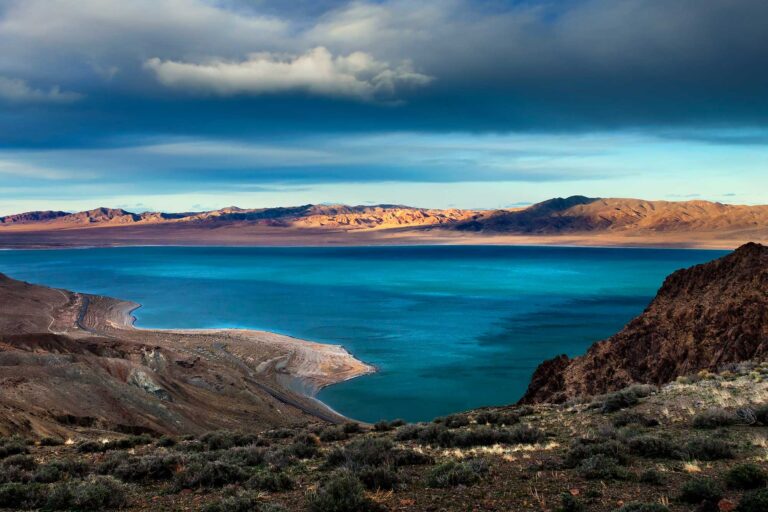
Peter Stanton: Walker Lake was once a thriving ecosystem in Nevada: people have lived around it for thousands of years. It’s a major North American Flyway stopover for migratory birds, and it’s also home to the largest freshwater trout in North America: the Lahontan cutthroat. This 40–50-pound fish has huge cultural and historical importance to the region. For example, the Walker River Paiute Tribe refer to themselves as A’gai Di’Cutta—“trout eaters.” Historically, the trout was a major regional food source, and it drove tourism and recreation throughout the 20th century. People used to fly in from Southern California for trout-fishing tournaments. But over time, diversions from the river decreased inflow to the lake. For many years, the river went bone dry during irrigation season. The lake grew too saline, and the trout and all other fish disappeared.
Carlie Henneman: The diversions have been happening for more than 150 years, but the trout went extinct locally only in 2009.
How have you acquired water for the environment?
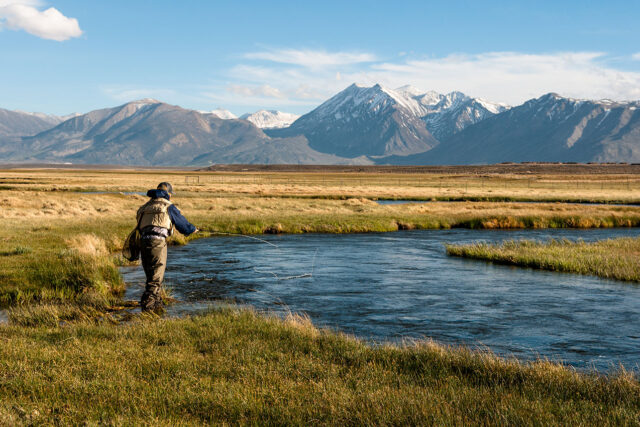
CH: We were born out of the 2009 Desert Terminal Lakes legislation, which emphasized the permanent acquisition of water rights—and we do that through working with farmers. Farming is hard in rural Nevada—the water supply is very dynamic. Some years you have a lot of water, and some years you don’t. Much of our work was talking to farmers and ranchers in upstream areas. We helped them identify the benefits of selling their water and developed a database of all farmers and ranchers in the area. These willing sellers have so far contributed 27,500 acre-feet of water per year to restore the lake.
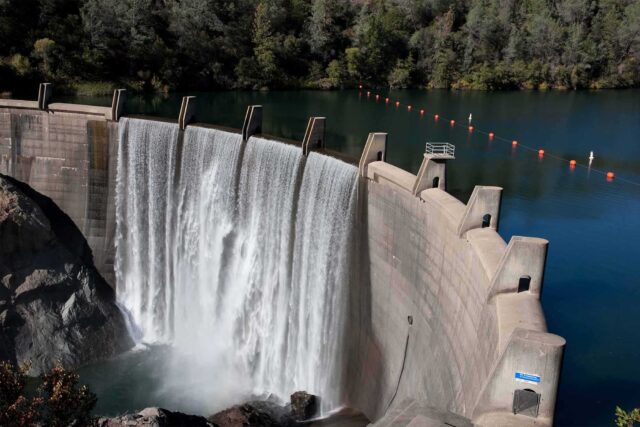
PS: The Walker River is over-allocated. The rights to divert it actually exceed its yearly discharge! For a sustainable long-term water supply, we must reduce irrigated acreage. We work with the Walker River Irrigation District on a temporary leasing pilot program—now in its fifth year. The district leases water stored in Topaz and Bridgeport reservoirs from downstream irrigators and sends it to Walker Lake instead of diverting it. Nevada has no legal concept of minimum environmental flows. In this context, the simplest and most direct way to protect the lake is to acquire rights.
CH: Nevada does have a regulatory basis to manage groundwater rights. Over the last couple of years, we’ve also gotten a grant for those. But the regulation challenges are so high, the market-based approach is the easiest way to make an impact. Even policymakers and regulators see market-based approaches as a win-win.
Do you have plans to acquire water from California?
PS: We do. We have a lot of interest from ranchers and farmers on the California side, who’d like to participate in a market-based program like the one in Nevada. In the summer of 2024, we completed a public process with Mono County to explore what a water transactions program would look like there.
When might the fish populate the lake again?
PS: Our overall goal is to restore the lake to its level in the year 2000, reduce its salinity, and restore a trout fishery. With 58% of the water we’d need, we’re not there yet. Climate is a factor: in 2023, the lake rose 16 feet! If we had two more years like that, we could talk about reintroducing the Lahontan cutthroat, but we can’t count on that happening. In the meantime, we’ll do what we can with short-term acquisitions, long-term permanent transfers, and climate variability.
What other factors have played a role in your success?
CH: Money and time. Stable funding from the Terminal Desert Lakes Program has made this effort possible. And it takes time to get legislators and people to contribute to the solution. We have been here for 15 years, working to understand the community’s constraints and needs. That effort has the highest impact. We advocate not only for the lake, but also for the farmers and ranchers.
Final thoughts?
PS: We’ve put a ton of thought into figuring out what happens to land when we remove water from it. The majority of our on-the-ground work has been about changing land use, restoring habitat, and facilitating less water-intensive agriculture. The more tools we have in the toolbox, the better it is for everyone in the region.
If you want to drive long-term water resilience in communities, put land use planning at the top of your priorities. We’ve developed recreation and tourism, established a new state park, expanded wildlife areas, and improved public access to parts of the Walker River. With stable funds, we can find the least productive land to retire and change land use in a way that benefits the community in the long run. We need solutions that work for everyone.