
Despite billions in state spending to address homelessness, California’s unhoused population grew by more than 20%—an increase of roughly 36,000 people—between 2019 and 2024. The state may have made progress in the past couple of years, as overall growth in homelessness slowed to just 3% between 2023 and 2024 and there was virtually no increase in the unsheltered homeless population. However, many are concerned that potential federal program cuts and reductions in state funding could undermine this recent progress. How do Californians feel about homelessness in their own communities?
Although homelessness remains a visible and pressing issue for Californians, our October 2025 PPIC Statewide Survey indicates that the intensity of their concern has softened. While about eight in ten Californians say they are at least somewhat concerned about homelessness in their local community, only 37% are very concerned, down from 58% in November 2019. This decline parallels the drop in the share of Californians identifying homelessness as the state’s top issue—from 20% in January 2020 to just 6% today. The groups most likely to be less intensely concerned about homelessness compared to 2019 are African Americans (-37 points) and residents of the San Francisco Bay Area (-35 points).
Today, concern about homelessness varies notably by income, region, and age. Lower-income Californians express higher levels of concern than higher earners. Across regions, at least four in ten residents in the Central Valley, Inland Empire, and Los Angeles say they are very concerned, compared to fewer than three in ten in the San Francisco Bay Area. The share who are very concerned increases as age rises.
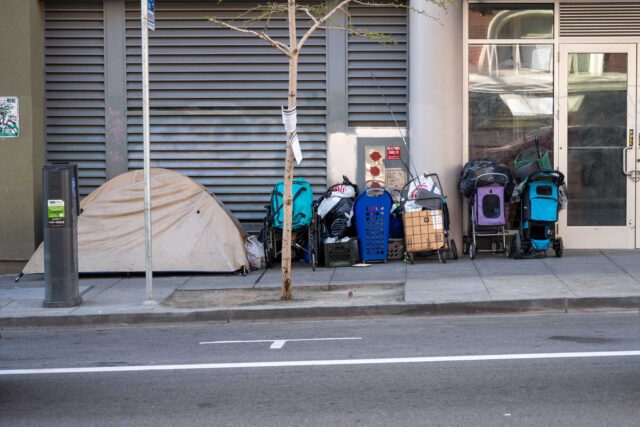
Despite this softening in public concern, encounters with homelessness remain part of daily life for many Californians. More than half (53%) say they see someone experiencing homelessness every day, and two in ten say they do so every few days. African Americans and residents of the Central Valley and Los Angeles are among the most likely to see a homeless person daily.
While nearly half of Californians (47%) believe the presence of people experiencing homelessness has worsened in their area over the past year, this represents a significant decline from early 2023 (70%). The largest decline in perceived increases occurred in the San Francisco Bay Area (-34 points). Today, Republicans, Latinos and Central Valley residents are among the most likely to say there has been a local increase in homelessness.
Californians with the lowest household incomes (under $40,000) are particularly exposed to the issue of homelessness in their communities. Among these residents, six in ten see someone experiencing homelessness every day and believe the problem has increased locally. Among low-income residents who are very concerned, nine in ten see an unhoused person every day, and eight in ten perceive a local increase.
These changing perceptions of homelessness in California align with major policy changes and public investments over the past several years. The US Supreme court decision in Grants Pass v. Johnson (2024) allowed cities to enforce anti-camping ordinances and clear homeless encampments, which they had been prohibited from doing since 2018. In addition, between 2019 and 2024, the state has awarded over $3 billion through the Homeless Housing, Assistance, and Prevention Program (HHAP) to help cities, counties, and local agencies address homelessness. However, the current state budget does not include additional HHAP funding for local governments this year, and major reductions in federal funding may be coming.
As state and local governments work to address the challenge of homelessness amid budget constraints and economic uncertainty, a continued public focus and effective policy responses will be essential. PPIC remains committed to monitoring public perceptions of homelessness and efforts to address it.