
Groundwater isn’t just important for California’s water users—it also sustains plants and wildlife all over the state. How does this work, and how can we protect ecosystems that rely on groundwater? We spoke with SUNY professor John Stella to find out.
What are groundwater-dependent ecosystems, and why do they matter?

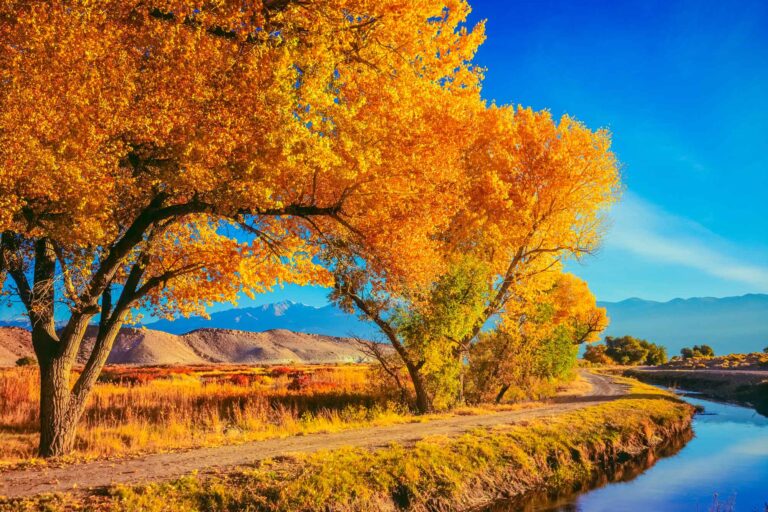
Groundwater-dependent ecosystems (GDEs) are natural communities that depend on groundwater for some or all of the year. This includes riparian forests, wetlands, and streams that rely on groundwater for some or all of their flows. These ecosystems matter in arid and Mediterranean climates like California, where we experience frequent droughts like our long, hot summers. When there are no other water sources available, groundwater allows these ecosystems to function.
GDEs are also biodiversity hotspots that act as wildlife corridors and provide a host of other functions. For deep-rooted riparian trees, regular access to groundwater can help plants cool their canopies and moderate climate stress as our world gets hotter. Wetlands and riparian forests also improve water quality, reduce flooding, sequester carbon, and keep water in streams cool for fish like salmon. One of my former students led a study mapping GDEs globally and found that more than half lie in areas that don’t have land or ecosystem protection.
How are GDEs included in groundwater policy and regulation in California?
The main tool is this forward-looking piece of legislation called the Sustainable Groundwater Management Act (SGMA), which was signed by Governor Jerry Brown in 2014. SGMA requires that, in regions where aquifers are overdrawn, stakeholders create groundwater sustainability agencies (GSAs), which must develop groundwater sustainability plans to achieve sustainability within 20 years.
Under SGMA, “sustainability” is defined relative to six undesirable results, including the depletion of connected surface water, salinity intrusion, subsidence, and so on. However, damage to groundwater-dependent ecosystems is not mentioned explicitly as an undesired result, so their protection hinges on linking them indirectly to the six defined categories, like the depletion of surface water.
Many groundwater sustainability plans do map GDEs, and GDE water needs are considered implicitly within SGMA as a “beneficial use” of water, but the way the health of these ecosystems is monitored varies widely between these plans, depending on stakeholder resources and how much attention they pay to the issue.
Based on your research, what are the best ways to manage GDEs?
The first thing is to identify them. There are some good guidelines already, but there are a lot of data gaps around the types of vegetation that are groundwater dependent, their rooting depths, and when they need groundwater most. More targeted research could help us understand the needs of different ecosystems and their ecological thresholds.
Second, we should use multiple lines of evidence to pinpoint where the most at-risk ecosystems are and prioritize protecting them. We need ground-truthed maps of GDEs and groundwater measurements or models to see where shallow groundwater coincides with groundwater-dependent vegetation.
Third, we need to increase the monitoring of shallow groundwater and surface water around these ecosystems. There are a lot of data gaps when it comes to protecting GDEs. The California Department of Water Resources has aggregated the records from thousands of deep production wells statewide in its online portal, but there’s a lack of shallow monitoring wells in locations where GDEs occur. Putting more wells in the right places will help us monitor shallow aquifers frequently enough to know when groundwater levels are getting close to impairing GDEs.
We also need to pay attention to the links between surface and groundwater. Many groundwater-dependent species, including trees, use groundwater most in the late summer and in drought years. However, we found that on heavily modified streams where there were alternative surface water sources such as wastewater treatment effluent, GDEs were less sensitive to fluctuations in groundwater levels. The canopy was a lot greener year-round because surface water was propagating through the system. That suggests that strategies like functional flows or managed aquifer recharge could help GDEs nearby by ensuring reliable groundwater supplies.
What’s the most important change that could improve the health of GDEs?
The single most important change would be to include GDEs explicitly in groundwater sustainability plans. If SGMA is amended or modified, it should acknowledge GDEs as a separate goal for avoiding impairment. Another is to clearly link groundwater levels necessary for GDE health to management actions, like pumping restrictions or water releases for groundwater recharge or environmental flows. This could mean that when groundwater drops below critical thresholds, surface water flows would need to be increased or pumping restricted to keep groundwater high enough to support trees and other elements of the GDE.
Final thoughts?
In our research over last decade since SGMA was adopted, we’ve investigated multiple indicators of water stress in groundwater-dependent ecosystems. We were looking for warning signs—the canaries in the coal mine. But we found that the negative impacts to GDEs happen relatively quickly—there aren’t early indications that would allow us to take action over months or years to prevent ecosystem decline.
So, the best way to monitor a GDE’s health is to use groundwater measurements in real time. This is a relatively inexpensive and effective way to monitor the system. In many places, we are flying blind because there’s no information about local conditions. Increasing the network of shallow monitoring wells where sensitive GDEs occur would give us a better understanding of what’s happening underground to sustain these important ecosystems.
Note: This blog post was updated on October 17, 2025 to clarify terminology related to SGMA.