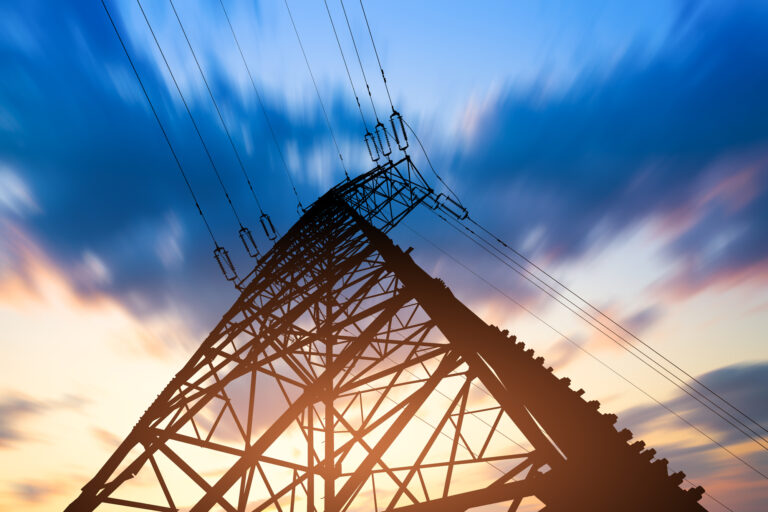

California set ambitious goals to confront climate change: reducing greenhouse gas emissions to 40% below 1990 levels by 2030 as well as achieving 100% electricity from renewable sources by 2045. Last week, PPIC president and CEO Tani Cantil-Sakauye joined experts to discuss the state’s progress toward these clean energy targets.
“We’re very much engaged in the nuts and bolts of the work to make [climate goals] happen,” said Yana Garcia, secretary of the California Environmental Protection Agency, “and I do maintain some level of optimism … despite the headwinds we’re facing not only at the national and global level but also right here in California.” Garcia cited early successes that have bolstered this optimism: “We were able to achieve our 2020 goals six years early; we’ve been able to deploy—just last year—7,000 megawatts of new clean energy.”
While Californians have a long, bipartisan history of support around protecting the environment, PPIC survey director Mark Baldassare noted that heightened concerns around the cost of living have dampened enthusiasm: “When the pandemic hit … things started to change in terms of how people felt about the economy, their cost of living, and their role in the solution. A majority are saying they are not willing to pay more for renewable energy … it’s because of their utility bills.”
A core issue for California’s roadmap to climate goals “is trying to balance … ambition with the cost it would impose on Californian households and businesses,” said Ross Brown, chief deputy legislative analyst, Legislative Analyst’s Office (LAO). The LAO is monitoring progress and evaluating policies to help the state adjust course as economic conditions, technological development, and federal policy change.
“It’s important that the state be specific about the how, and which policies are going to be used,” Brown said. The policies that set 2022 goals for reducing emissions in different sectors did not identify whether the reductions were tied to “regulations, mandates, funding from the state … or market-based mechanisms like cap-and-trade,” he noted. The design of each comes with different costs.
“Ideally, the ‘how’ part is determined locally because each community is different,” said Graham Knaus, CEO, California State Association of Counties. “You have to choose what to pursue because [issues] compete … when we’re thinking about affordability of energy, affordability of housing” communities cannot always achieve both at the same time. “As we make progress, we do so with an understanding of what the tradeoffs are.”
Cantil-Sakauye asked panelists to identify approaches the state needs to incorporate now to meet its short- and long-term climate goals. Garcia said that while the goals were ambitious by design, recalibrating them is important; Garcia also outlined the benefits of reauthorizing the cap-and-trade program.
Knaus raised concerns about fiscal pressures. “We need to figure out how to gently guide the marketplace without massive state ongoing investments or else costs rise too high, and [those costs] will be pushed back onto the residents of California.”
Baldassare felt that policies are missing citizen input: “I’d encourage the current administration … to think about ways that we can get citizens involved,” Baldassare said, and referenced the Engaged California website. “If you don’t get people involved in this, we’re not going to solve the problems.”
***
PPIC’s Speaker Series on California’s Future invites thought leaders and changemakers with diverse perspectives to participate critically, constructively, and collaboratively in public conversations. The purpose is to give Californians a better understanding of how our leaders are addressing the challenges facing our state.
PPIC is a nonpartisan, nonprofit organization. PPIC does not take or support positions on any ballot measure or on any local, state, or federal legislation, nor does it support, endorse, or oppose any political parties or candidates for public office. Any opinions expressed by event participants are theirs alone and do not necessarily reflect any position of the Public Policy Institute of California.
Topics
California’s energy transition cap-and-trade climate change Economy energy greenhouse gases Political Landscape renewable energyLearn More

Californians Back Cap-and-Trade and Related Spending on Low-Income Communities
Powering California’s Economy amid the Energy Transition
Can Clean Energy Stay Affordable as Demand Goes Up?
Reliable Energy Will Demand a Wide Energy Mix

Californians and the Energy Transition

Californians Want Renewable Energy but Don’t Want to Pay Extra for It