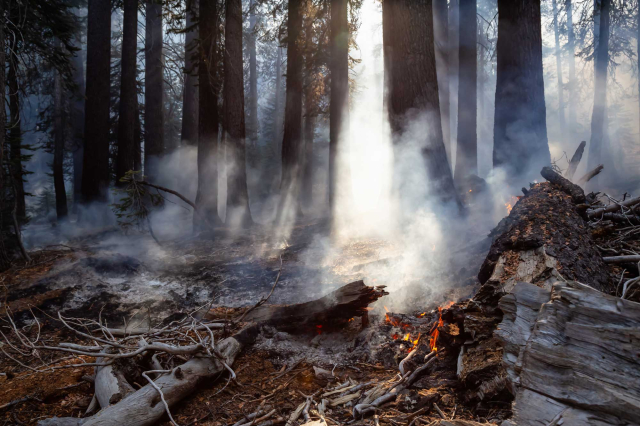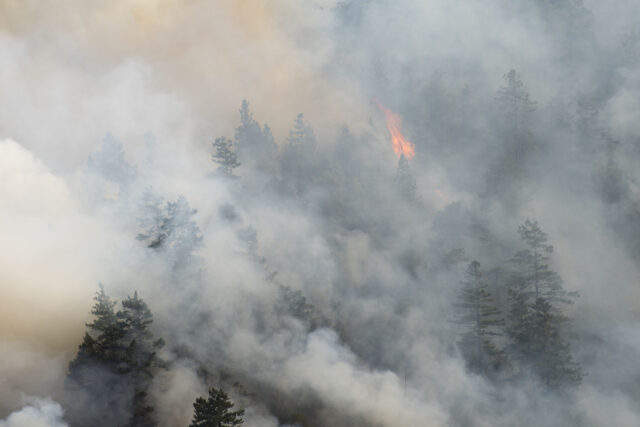


Wildfire is an inescapable part of life in California. We saw that, in a stark and heartbreaking way, back in January, when a combination of wildfire, dry vegetation, and high winds resulted in the devastating Palisades and Eaton fires, among others.
Californians are increasingly finding themselves in harm’s way. Recent analysis shows that development in or near wildland areas has grown: statewide, approximately 1 million acres of residential neighborhoods were built in or near wildland areas between 1990 and 2020, with roughly a third of them in Southern California.
The recent fires and evidence of growing fire risk has sparked a statewide conversation about reducing the impact of wildfire on our landscapes and communities. But there’s no one-size-fits-all approach to reducing wildfire impact in California. Wildfires occur throughout the state in vastly different ecosystems, and each ecosystem demands a different set of tools.
First, it’s important to understand that wildfire has always been a part of California’s ecology. Historically, a combination of burns managed by tribes and fires started by lightning worked together to manage California’s fire-adapted ecosystems. Together, these ignitions resulted in frequent, low-intensity fires on many of California’s landscapes, which in turn kept more severe fire at bay.
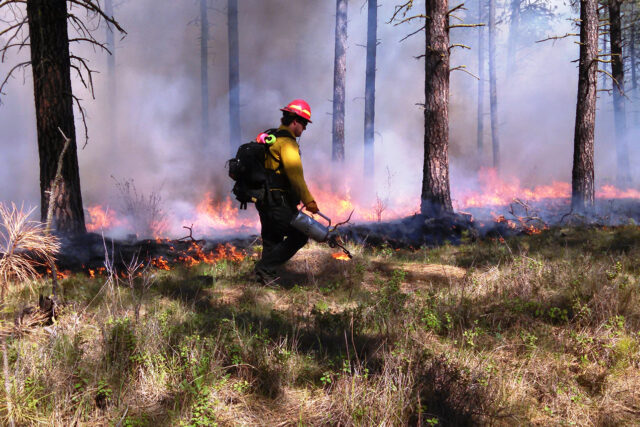
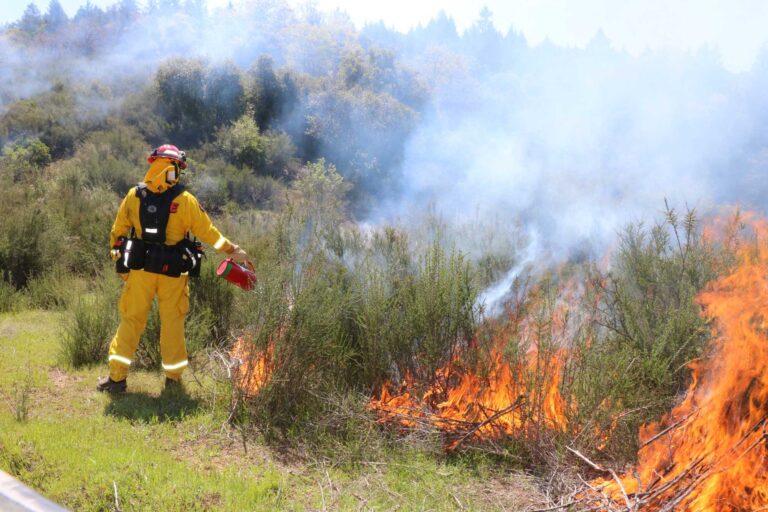
Today, fires in forests and woodlands are occurring less frequently than they did historically, largely because of fire suppression. (Forests tend to be denser than woodlands, where trees and open space are interspersed.) The state’s forests are much more dense and homogenous than they used to be, with small trees and brush packed closely together—making them vulnerable to severe wildfire. Strategically removing some vegetation from these landscapes—either through prescribed fire or thinning—helps restore them to their historical, healthy state. Wildfires that occur in restored forests and woodlands are typically less severe and have less impact on communities.
In shrublands—areas dominated by grasses and shrubs—fires are occurring more frequently than they used to. And the techniques described above to improve forest and woodland health are less effective or even harmful in shrublands. This means that shrubland wildfire management needs to lean heavily on defensive practices such as reducing ignitions, creating fire breaks by clearing vegetation, and carefully planning future development. It also means it’s important to harden homes—using fire-resistant materials and landscaping—and create defensible space around them. These practices are also important in developed areas in or near forests and woodlands.
Wildfire management efforts often focus on conifer forests, which are dominated by evergreen trees like those found in the Sierra Nevada. However, previous work has found that between 2000–18, just 14% of all structures destroyed in wildfires were found in conifer forests. In the same time period, more than three times as many structures were destroyed in hardwood forest (forests dominated by deciduous trees), woodland, and shrubland.
The changing climate is making California’s existing wildfire management challenges even worse. Dry periods are getting longer and more intense because of warming temperatures and changing precipitation patterns, which increases vulnerability to wildfire. And a delayed onset of the rainy season means that dry conditions increasingly overlap with seasonal high winds in coastal California.
While challenges and solutions vary between different ecosystems, a common thread is cross-jurisdictional management. Federal, state, and local agencies, nonprofits, tribes, private companies, and others must collaborate to scale up solutions for wildfire challenges. Together, they can support wildfire management tailored to the state’s diverse ecosystems and protect Californians from growing wildfire risks.