Sand, gravel, silt, clay…these humble sediments are the building blocks of our world. Now, some are saying sediment management could play an outsized role in helping California adapt to a changing climate. We asked Julie Beagle, Environmental Services Branch Chief with the US Army Corps of Engineers San Francisco District, to tell us more.
First, what is sediment and why it is so important for coastal resilience?

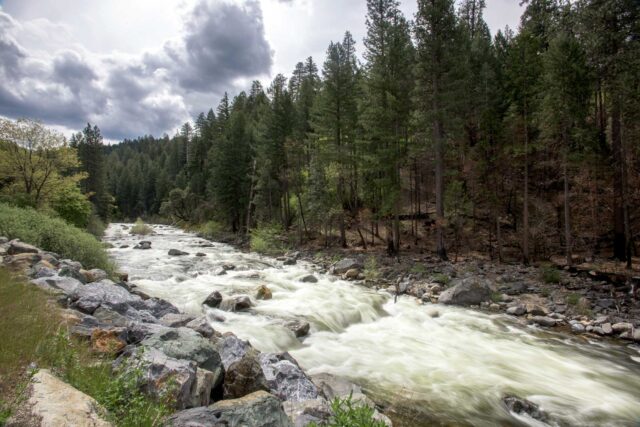
Sediment and water connect mountains to rivers to oceans. In watersheds, rivers flow from headwaters to a delta, a bay, or the ocean, eroding the land and carrying rock, sand, and silt downstream. Water deposits these sediments in some areas and moves them quickly through others, forming deltas, gravel bars, mudflats, and marshes. We have interrupted that process by building dams that store water and sediment upstream and structures that stop the flow of sediment along coastlines.
When we interrupt that process, a lot of things happen. Rivers can either become sediment starved or so full of sediment that it clogs the channel, which then needs to be cleared. We’ve done this extensively in the Sierras, where dams on the major tributaries feeding the San Joaquin–Sacramento Delta have impeded the flow of sediment into the Delta and the San Francisco Bay.
During the Gold Rush, we actually increased the flow of sediment from the foothills by essentially taking a firehose and hydraulically mining the hillsides. That’s how gold miners extracted gold from the soil, but it disintegrated many mountains and sent a pulse of sediment down through the San Joaquin–Sacramento Delta and into the San Francisco Bay that lasted for decades. It took about 150 years for the sediment to move, mostly naturally, through the system. For years, it clogged fish habitat and created turbid waters, which are bad for many species, but it also led to a very large growth of wetlands in the bay.
So we’ve seen massive shifts in sediment management over the last 200 years. Now there’s less sediment because of dams and more water with atmospheric rivers and sea level rise, so we’re out of balance again. That’s where nature-based solutions start to become more important.
How is the Army Corps taking a new approach to sediment?
The Army Corps has three major focus areas: navigation, which means keeping the ports open through dredging; ecosystem restoration; and flood risk management. The big overall change is that these areas, which were siloed, are now being considered together. How do we manage our shoreline and watersheds for all the benefits we need, given the threat of climate change?
The Corps and others dredge sediment to keep harbors and ports open for shipping in places like Oakland, Richmond, and Long Beach. That dredged material was once considered a nuisance, and it was taken wherever they could find a spot, often to offshore disposal sites.
So the Army Corps started asking, can dredged sediment be used in ecosystem restoration? That began in the 1990s. Now we’re asking whether that restoration project can also reduce flood risk for communities along the shoreline as the climate changes? Sediment is the key tool in that toolbox because marshes and beaches, which buffer our shorelines, are made of sediment and plants. We can’t have one without the other.
If we value marshes for endangered species and the other services they provide—protecting people from storm surges, improving water quality—we need to think differently about how we manage the whole system. We need sediment for equitable adaptation along all shorelines and coastlines, and we can manage sediment at a watershed scale to make projects realistic, affordable, and doable.
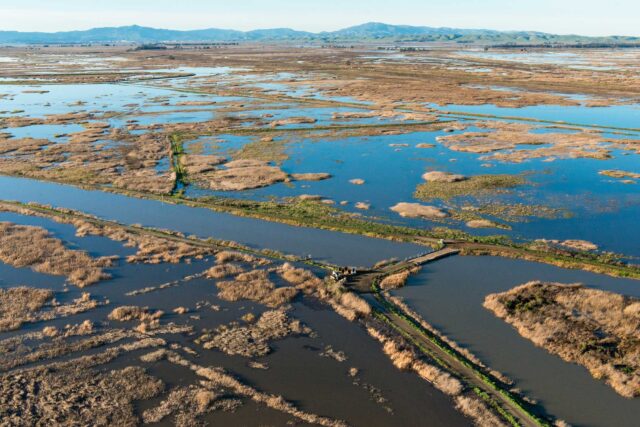
Here on the West Coast, we recently piloted a new approach to beneficially reusing dredge material. We took dredge material from Redwood City and placed it in the San Francisco Bay, about a mile and a half away from an eroding marsh. Water did the work: wind, waves, and tides moved that material onto the mudflats and marshes. It’s like a boost to the marsh—mimicking a natural process., because marshes need sediment to survive.
This incremental approach could be used in lots of places to get sediment to the shoreline, like a marsh maintenance plan. The good news is that the Army Corps, the Office of Management and Budget, and others have new policy tools and commitments to greatly expand the reuse of sediment for nature-based solutions. There are new ways to share costs, too: the Corps can now share the cost of beneficial use if we can show the benefits for communities and wildlife.
Final thoughts?
There are still real barriers to reusing sediment for habitat and resilience. Some sediments have contamination issues, especially with urban legacy contaminants. That doesn’t always mean you can’t reuse it—it just adds complexities and limitations because it could impact the food web, for example. A lot of the sediments trapped behind dams pose logistical challenges, too. But critically endangered species rely on healthy shorelines and we’re in a fight against climate change. We need to use nature as much as possible in our adaptation strategies.
We’re at a critical point as a restoration and adaptation community about how to push forward pilot projects. How can we make these projects easier to permit, build, and monitor? We’re figuring out ways to address the climate challenge on both the planning and regulatory sides, but we’ll need to work together to continue to pilot, learn, and grow.