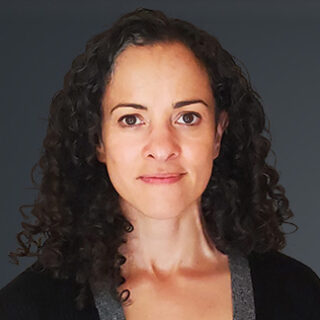
As a nonpartisan office, the California Legislative Analyst’s Office (LAO) has supplied the state legislature with an independent assessment of state budget and policy matters since 1941. Last week, legislative analyst Gabriel Petek joined PPIC president and CEO Tani Cantil-Sakauye to discuss California’s economic outlook for the coming year.
Setting the stage for the conversation, PPIC survey director Mark Baldassare offered insights from the November and December statewide surveys, in which most Californians expressed pessimism about the economic prospects for the state and nation while giving mixed ratings of their personal finances. “Even those who are in good financial shape realize that there are some deep financial problems; there’s concern about the price of food, of consumer goods,” Baldassare said.
Cantil-Sakauye described a sobering fiscal forecast for California in the most recent state budget analysis from the LAO. The report estimates an $18 billion budget deficit, a shortfall arising from a flat economy where few payroll jobs have been created and consumer sentiment is weak, according to Petek, along with an environment of uncertainty around tariffs and federal policy. These areas are translating to weaker sales tax and weaker corporation taxes.
“But there’s one bright spot: we’re having very strong personal income tax collections … growing at double-digit rates.” Petek credited gains in the stock market, up 50% over the past year, and enthusiasm over AI.
But “it’s risky to assume these trends just continue,” Petek warned. “Indicators are lining up similar to how they’ve lined up in the past when there’s been a market downturn.” Although revenue is up $11 billion, the LAO expects subdued growth ahead. Furthermore, almost all of the new revenue is spoken for: as spending for schools, debt payment, and for the budget reserve. The forecast also anticipates deficits to grow to $35 billion.
Repeating a recommendation from the LAO report, Petek said: “We really encourage the legislature to consider making ongoing changes to spending or revenues or both.” Petek stressed the importance of maintaining state budget reserves, which have helped California avoid cutting into core services.
Turning from the state to the federal budget, Cantil-Sakauye inquired into the greatest impact of the HR1 budget bill on California. “It’s primarily going to hit our health program, Medi-Cal, which is our Medicaid program,” Petek said, as well as CalFresh food assistance, California’s version of SNAP. Within Medi-Cal, HR1 work requirements will change as will how often people are redetermined to be eligible for the program. States will have some flexibility, however, around meeting these work requirements.
“We are looking through [HR1] for ways … to mitigate the impact,” Petek said. “But even if we do these things, there’s going to be a loss of coverage.”
As the event closed, Petek shined a light on the LAO’s role with voter initiatives. The LAO consults with the department of finance to provide initial cost estimates for submitted initiatives; if an initiative qualifies for the ballot, the LAO meets with proponents and opponents to offer a neutral and accessible analysis of what the measure will do and its costs in the voter guide. For Petek, the voter initiative process is where the LAO “serves the other legislature, the voters themselves.”
***
PPIC’s Speaker Series on California’s Future invites thought leaders and changemakers with diverse perspectives to participate critically, constructively, and collaboratively in public conversations. The purpose is to give Californians a better understanding of how our leaders are addressing the challenges facing our state.
PPIC is a nonpartisan, nonprofit organization. PPIC does not take or support positions on any ballot measure or on any local, state, or federal legislation, nor does it support, endorse, or oppose any political parties or candidates for public office. Any opinions expressed by event participants are theirs alone and do not necessarily reflect any position of the Public Policy Institute of California.