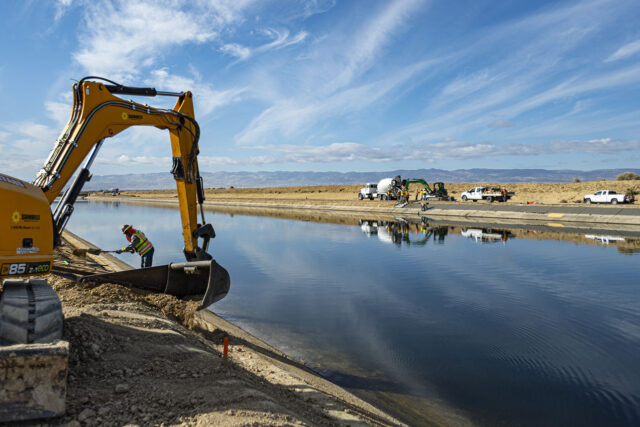


In November, voters passed Proposition 4, a general obligation bond that will yield $10 billion for a variety of climate resilience, water, and natural resource management programs—the largest climate and water bond to date. Proposition 4 is the first successful ballot measure in seven years to fund such programs, following Proposition 68 ($4.1 billion), which passed in June 2018. The last successful measure that came close to Proposition 4’s proportions and funded similar projects was Proposition 1 of 2014 ($7.1 billion), which has only $26 million in remaining balance.
California typically funds water and climate projects with general obligation bonds passed by a simple majority vote. These bonds enable the state to borrow funds and pay them back over many years using General Fund dollars. Although general obligation bonds have been the norm for funding water and climate projects in California, the Newsom administration departed from this model in 2021 and 2022 thanks to the state’s extraordinary budget surplus. The state allotted the historic sum of $16.3 billion to water and climate projects directly through the state General Fund. However, in the last two years, decreased tax revenues necessitated cuts to the state budget, and water and climate funding was reduced to $12.9 billion.
Proposition 4 will more than make up for these cuts and infuse a significant amount of funding to water and climate projects that are currently supported by the General Fund, totaling more than $21 billion for all climate and water program areas. Coastal resilience, flood planning, and extreme heat in particular will see the largest boosts compared to their current budget.

Coastal resilience and sea level rise: Proposition 4 will alleviate the budget cuts and bump up the current General Fund budget for coastal resilience and sea level rise from $662 million to $1.9 billion. The projects that will benefit include sea level rise adaptation for infrastructure and state parks, coastal wetland restoration, coastal land acquisition, and protection against climate change.
Flood planning: While a severe drought in 2020–22 catalyzed a large public investment in drought support and resilience, the historically wet winter of 2022–23 turned the state’s attention to floods, providing significant funds to a typically underfunded area. Proposition 4 will more than double the current budget’s allocation—from $858 million to $2 billion.
Nature-based solutions: Nature-based solutions, aimed to harness nature to boost climate and drought resilience through green infrastructure, ecosystem restoration, and fish and wildlife protection, have been getting more attention in the recent years. Proposition 4 will boost its current budget from $3 billion to $4.8 billion.
Sustainable agriculture: The state government aims to contribute to climate sustainability and resilience efforts in agriculture with projects like diesel engine replacement, the Healthy Soils program, livestock methane reduction, and agricultural burning alternatives with a total budget of $1.4 billion, including Proposition 4 funds.
Water supply and droughts: Following the 2020–22 drought, the state continues to allocate significant resources to water supply and drought resilience projects, including water recycling and storage, drought planning, PFAS support, and implementation of the Sustainable Groundwater Management Act. With Proposition 4, the current budget of $4.3 billion will be bumped up to $6.3 billion.
Forest health and wildfires: Following the severe fire seasons of 2020–22, the state has prioritized funding forest health and wildfire intervention projects such as post-fire restoration, forest health, and prescribed fire. The current budget for these programs will see a significant boost with Proposition 4—from $2.6 billion to $4.1 billion.
Extreme heat: Extreme heat has become a major concern in California, particularly in the last few years. Programs in this area seek to alleviate extreme heat stress across the state through projects like urban and schoolyard greening, low-income weatherization, community resilience, and public awareness campaigns. Proposition 4 will make up for recent budget cuts and bring the total funding from $297 million to $747 million.
In addition to the categories above, Proposition 4 will provide $720 million to state parks and $850 million for clean energy infrastructure like transmission, storage, and offshore wind energy, which would support California’s climate goal of achieving net zero carbon pollution by 2045.
The passage of Proposition 4 is a sign that climate and natural resources funding remains a high priority for Californians, despite previous concerns about passing a state bond amidst state budget cuts and an economic slowdown. In addition to the General Fund allocations, Proposition 4 pushes the total funding available for climate and natural resources to unprecedented levels, which should help the state boost climate resilience in key areas.