
PPIC’s May survey tracked voter preferences in the gubernatorial primary and the congressional election. The survey also examined views on the economy, the state budget, and a range of other state and national issues. At a virtual briefing last week, associate survey director Dean Bonner outlined key findings and answered audience questions.
As the votes from the June 2 gubernatorial primary are being counted, Republican Steve Hilton is in the lead, followed closely by Democrat Xavier Becerra. Bonner noted that support for Becerra jumped 18 points in the weeks after Eric Swalwell suspended his campaign, while other candidates saw minimal movement.
Asked why so much of Swalwell’s support shifted to Becerra instead of dispersing more evenly among the top Democratic candidates, Bonner noted that in December—before Swalwell entered the race—14% of likely voters supported Becerra. “After Swalwell jumped in, Becerra’s support dropped to 5%,” he said.
Bonner also said that support for Becerra was higher among those who say that recent price increases have caused financial hardship in their households, while Hilton’s support increased among those who say they haven’t experienced hardship. Relatedly, “among those who chose cost of living as the most important issue facing the state, one in four are supporting Becerra, while 13% are supporting Hilton.”
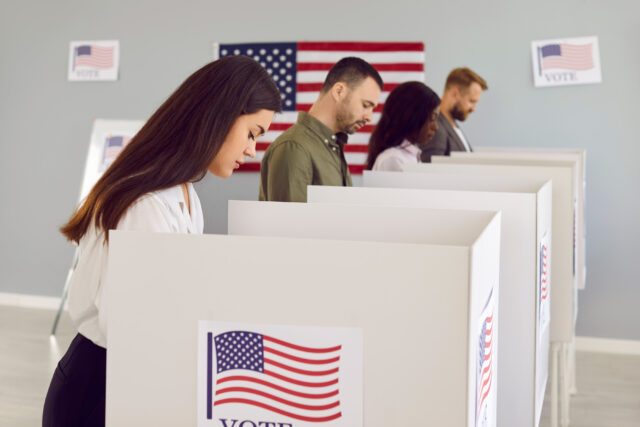
The crowded field of Democratic candidates for governor has prompted discussion about ending the top-two primary. However, a majority of likely voters continue to think the top-two has been mostly a good thing for California—and this view holds across regions and demographic groups.
Most likely voters would support the Democratic candidate if their US House election were held today. Bonner noted that while it’s not surprising that most partisans would vote for their party’s candidate, support for a generic Democrat among independents is 38 points higher than support for a generic Republican. “It’s noteworthy that in June 2024, independents were supporting the Democratic candidate over the Republican candidate by just 12 points,” he added.
Cost of living, economy, and inflation tops the list of most important issues facing the state—and three in four Californians are expecting bad economic times in the year ahead. Bonner noted that several other survey findings could factor in to this pessimism. “One notable finding is that six in ten Californians think that US military action against Iran will have a mostly negative impact on their own personal finances,” he added.
On the national level, a record-high 80% of Californians say things are going in the wrong direction. “The perception that things are headed in the wrong direction has increased 14 points among Republicans—from 36% in February to 50% today.” Another record-high share—78%—are expecting bad economic times in the nation, with pessimism among Republicans increasing from 36% to 51% since February.
Californians are most likely to identify political extremism and threats to democracy as the biggest problem facing the nation, with the economy/unemployment a close second. “These have been the top two issues since we first asked this question in October 2024,” Bonner said. Notably, the share naming war/conflict—which had been consistently hovering around 2%—jumped up to 10% in May.
Topics
2026 Election cost of living elections inflation personal finances political extremism Political Landscape state budget Statewide Survey top-two primary US House of Representatives votersLearn More

How Californians Want to Fix the State Budget
How Election Reform Played Out in California’s June Primary
Five Fast Takes on the Temperature of California Voters
California Voters and the Top-Two Primary