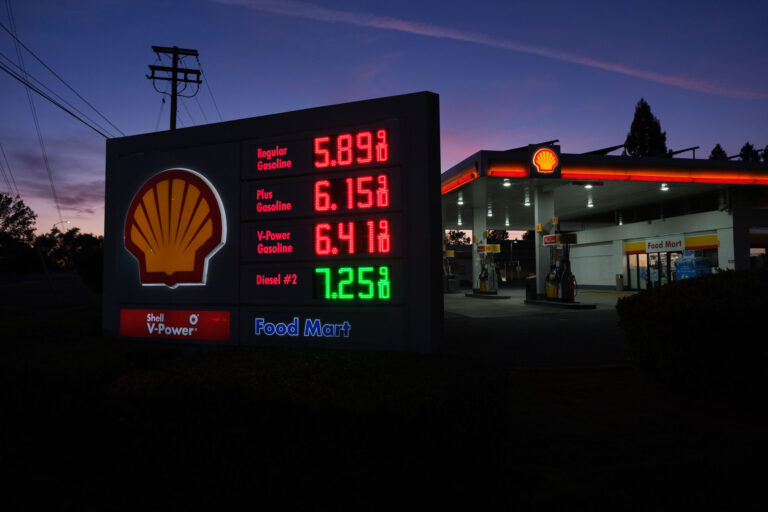


As the conflict in Iran has intensified, families in the Golden State are paying nearly $6/gallon on average for gas—40% more than the national average as of the third week of April. When gasoline prices jump, families tend to spend less on other items, especially food, an effect that is larger for lower-income households who spend a larger share of their budget on gas. Higher fuel costs can also ripple through the larger economy to pinch businesses and consumers for energy- and transportation-dependent goods and services.
Compared to the US, California gas prices have been higher for years, a reflection of policy and environmental requirements like the state’s cap-and-invest program and the low carbon fuel standard as well as supply factors. However, the difference in retail gas prices doubled in recent years: since 2020, gas has been $1.19 higher in California than the US versus $0.68 higher in the six years prior.
With the war in Iran, gas prices have seen the third largest month-over-month increase since 2007, climbing 21% between February and March (25% for the US). Higher gas prices may persist even if the conflict abates, due to the damage to energy infrastructure and industries.
The finances of lower-income Californians are hit hardest by rising prices. Based on 2022–23 spending patterns, the bottom fifth of households spent 4.3% of their budget on gas compared to 3.1% among the top fifth.
Soaring gas prices are also happening at a time when California families are confronting other cost pressures, like housing and utility rates, that have heightened affordability concerns across the state. Seven in ten Californians feel that their income is not keeping up with inflation, according to PPIC’s February Statewide Survey. Relative to earnings, however, gas prices are not as high as at other points in the last two decades.
While prices at the pump are the most immediate shock, higher diesel prices lead to higher production and operation costs for all sorts of energy-intensive goods and services, including food production and distribution. Further, manufacturing of US consumer goods as wide ranging as clothing, fertilizer, and packaging can be disrupted by energy shortages and international supply chain dislocations.
Fewer refineries in the state are also putting upward pressure on gas prices. The number of oil refineries in California has dropped from 23 in 2000 to 12 today (8 of those produce California-specific fuels, including Valero Energy’s Benicia refinery, which will be idling by the end of April). With 61% of the annual oil supply for state refineries coming from foreign countries, California’s dependency on other states and countries may deepen.
Several policy alternatives have been suggested, from freezing the gas tax to placing a moratorium on greenhouse gas reduction regulations, and from limiting refineries’ profits to halting expanded regulation of pollution sources. The challenge for California’s leaders today—and for the state’s next governor—will be to balance policy goals related to environmental sustainability and an ongoing transition to renewable energy with the economic impact on Californians who are least able to absorb additional costs.
Topics
cost of living Economic Trends Economy gas prices gas tax inflation Poverty & InequalityLearn More
Super-commuters in California
Testimony: Food Costs and Household Impacts

Five Fast Facts on the Cost of Living in California