In an event earlier this month, PPIC Water Policy Center research associate Kyle Greenspan presented new research about California’s efforts to reduce severe wildfire hazards. He explored how a state-led task force has ramped up an unprecedented multi-agency effort to “get out ahead of California’s wildfire challenges and confront them proactively.” The state, he said, is over halfway to this goal.
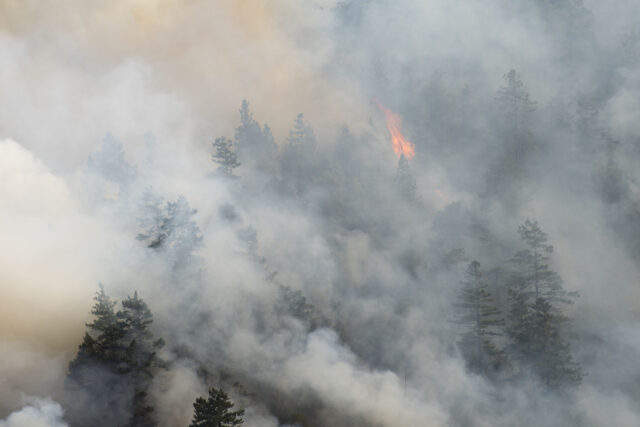
This work is critically important in a state that has seen wildfire costs quadruple in the past few decades, while the area burned at high severity has tripled. Fire has always been a part of California’s landscapes, but more than a century of fire suppression has made California’s forests dense, homogenous, and vulnerable to severe wildfire, said Greenspan.
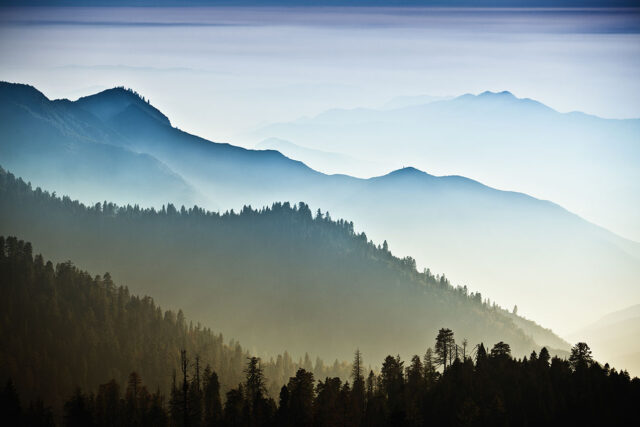
Scott Stephens, Henry Vaux special professor of forest policy at UC Berkeley, explained the problem. “It’s about what’s going on inside that fire. Maybe 30–40% of that 2020 year of fire was high severity, so you’re killing all trees over thousands of acres continuously. That’s incredibly detrimental.” It’s particularly problematic for the state’s water supply, the vast majority of which originates in California’s headwaters regions, like the Sierra-Cascade Mountains.
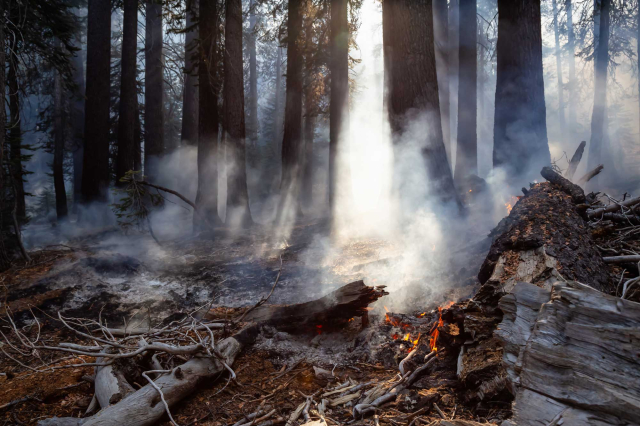
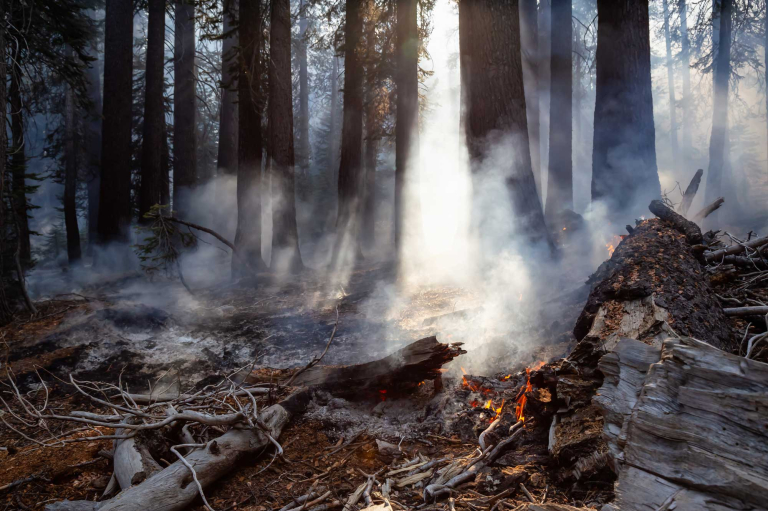
Moderator Brad Franklin asked Margo Robbins, executive director of the Cultural Fire Management Council and a member of the Yurok Tribe, to explain what a healthy forest looks like. “You can see up through the trees to the skyline,” Robbins replied. “You can walk through the forest without brush grabbing at your clothes.…There’s a wide diversity of plant and animal populations.” Regular fire, she said, “keeps the area healthy and the water purer—and a lot more of it—than what we see in these overstocked forests.”
Stephens agreed, pointing out that the Upper Merced watershed of Illilouette Creek has seen dozens of fires since 1974, when land managers stopped suppressing lightning fires. The fires “start to jigsaw puzzle each other. They start to self-limit. They touch each other and go out.” The result over time? “The forest is the most resilient…I’ve ever seen.” He recounted his surprise after a few years of working there: “I realized something was going on with the hydrology.” Areas that used to be dry forest had suddenly become a wet meadow, he said, because the forest has been removed by fire. As a result, more water leaves the watershed—and fewer trees die during droughts.
Franklin asked the Sierra Nevada Conservancy’s Brittany Covich how the state can balance protecting California’s landscapes with the need to safeguard communities. “We have to do both,” she said. “So much of the water supply that’s feeding those communities is the broader landscape. If we don’t do work there, we run the risk of losing that key water supply.”
When Franklin asked the group about funding and priorities, Covich said “what we know for certain is that none of our current funding programs can tackle this problem alone.” Robbins reminded the audience that preventative measures are cheaper in the long run. Prescribed fire, she said, “costs only a small fraction of what it costs for firefighting. Suppression hasn’t worked in the last 100 years and it’s not going to start working now. Put the money where we’re going to get results: cultural and prescribed fire.
The group had powerful final recommendations. Robbins said her top priorities are to see cultural fire smoke exempted from air quality regulations and to see increased support for training centers to increase the Tribal workforce. She has also started to push for opportunities for landowners to learn how to burn their land safely.
“California is a fire-prone state,” said Covich. “We have to continue the momentum of the last decade with sustained funding to deal with wildfire at a systemic level. We should keep encouraging burning and Tribally led stewardship. If it is a state priority—and it is—it’s a whole-of-California problem and it needs a whole-of-California solution.”