
California water issues are notoriously complex: an alphabet soup of agencies manage California water, and the acronym-heavy insider-speak can be impenetrable—even for an experienced water expert.
Moreover, California does not manage its water alone: federal agencies are responsible for many water-related activities and services across the state. In the past year the federal government has been downsizing—creating uncertainty across all aspects of California’s water management, including mitigating the impacts of natural disasters like wildfires and floods.
Managing California’s water in a time of changing responsibilities, economic pressures, and climate volatility won’t be easy. Clarity around basic issues will help.
The Fundamentals
Much of California’s water infrastructure was built in the middle of the 20th century to serve the state’s rapidly expanding population. That infrastructure is now at the end of its lifespan. The state must also contend with water quality issues, a changing climate, and a water system that wasn’t designed for the emerging climate.
Key Issues
Groundwater. California relies heavily on groundwater, but overuse of this resource has caused major problems. The 2014 Sustainable Groundwater Management Act has put California on a path to achieve groundwater sustainability by the early 2040s, but that path is not easy. The good news? There’s already been tremendous progress: growers, water agencies, and groundwater sustainability agencies are working hard to get the state on track. It’s time to stay the course to protect communities, farms, and industry throughout the state—and particularly in the San Joaquin Valley.
Affordability. It’s no secret that affordability is a growing concern. Water has been relatively inexpensive for a long time in California, but a host of issues are beginning to raise costs—including aging infrastructure and emerging water quality concerns. In addition, changing patterns of water use across the state are reducing revenue while costs remain fixed or are rising. The state needs to seek solutions that protect low-income Californians.
Environmental degradation. Put simply, the environment collects and serves up California’s water. If ecosystems are degraded or polluted, those problems ripple down to all Californians. California has made major strides to protect its ecosystems, but it is still not fully succeeding. One bright spot: the dam removals on the Klamath River show how quickly species can rebound given the opportunity. The state needs to pursue more habitat restoration projects at this scale.
Wildfire. The vast majority of California’s water originates in headwater regions—the landscapes where the state’s streams and rivers begin, such as the Sierra–Cascade Mountains. But these headwaters have faced increasingly severe wildfires, with major consequences for water supply and water quality. Fire has always been a part of California’s ecology. Restoring frequent, low-intensity fire to the state’s landscapes and thinning vegetation are proven methods for reducing the risk of severe wildfire. Steady, reliable funding is needed to manage the state’s headwaters year after year.
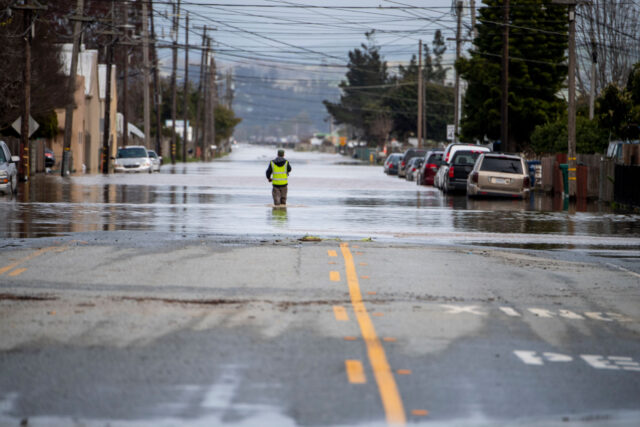
Adapting to change. California has always been a state of extremes, experiencing both drought and floods, but an increasingly volatile climate is supercharging these events and bringing sea-level rise to our shores. The state’s infrastructure isn’t yet ready. California would benefit from pragmatic leadership to help us plan for a new and different future.
California is a magical place to live, and nearly 40 million people experience that magic every day. The price of living here, however, includes coping with natural disasters and a climate that’s growing more extreme. Fortunately, Californians know a lot about innovation and partnership. As a global leader, California can model for the rest of the world how to work with nature and achieve better water outcomes with fewer resources.