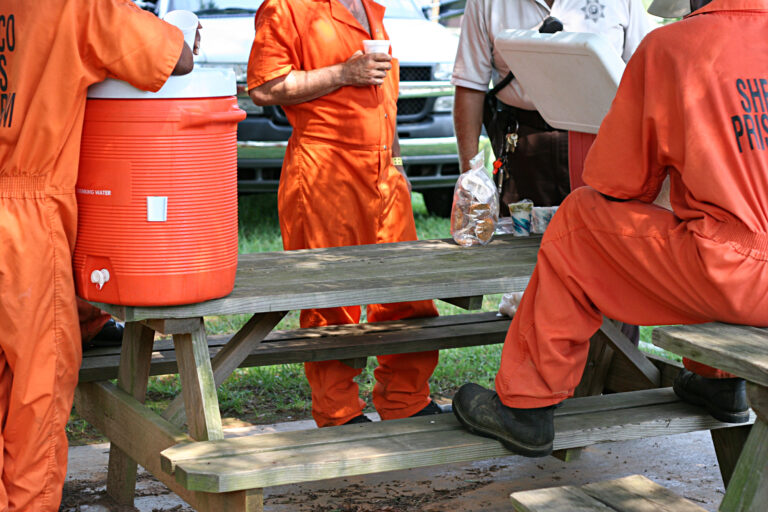
Policymakers have long sought to promote employment among released prisoners through policies and programs that reduce incarceration and broaden access to the labor market. Our research yields new employment information for about 170,000 people released from California prisons from 2015 to 2019, with the aim of highlighting opportunities to encourage more consistent work.
Employment Levels Were Low—and Jobs Were Low Wage
Nearly half of formerly imprisoned people never had a job outside prison. One-quarter of people had no record of working before, during, or after prison. Four in ten held jobs before prison, 52% worked in prison, and 44% were employed afterward. Some people could have had under-the-table or other work not represented in employment data. But pretrial and post-sentencing incarceration explain why many in our cohort did not have jobs outside prison.
Inside and outside prison, jobs were low skill, low wage, and short term. Before prison, one-third of people who worked had temp jobs; after prison, 42% did. Most prison jobs involved unskilled labor, lasted about a month, and supported prison operations. California prisoners earned 40% less than the national average, and 32% of prison jobs were unpaid—though workers could earn time off their sentences.
Earnings were rarely above the poverty threshold—before or after prison. Before prison, just 11% had earnings above the poverty threshold ($20,200 in 2023) in at least one year. After prison, that share grew to 19%. Employment-rate disparities narrowed after prison, but earnings gaps persisted: men earned 20% more than women, and Black people earned 38% less than white people, on average.
A Few Hopeful Signs
Encouragingly, our analysis indicates that a capacity for consistency can be built inside prisons via longer job tenure and investments in education, employment, and behavioral health programs. While earnings stayed low, people who worked earned more than twice as much after prison as they did before prison.
People who worked before or during their time in prison were more likely to work after release. People who worked before prison were 9 times more likely to have jobs afterward; each quarter of pre-prison employment was associated with a 42% increase. People who had prison jobs were 9% more likely to work after release than people who did not, and those who held prison jobs for two to six months were 11% more likely.
Participants in some prison programs were more likely to be employed after prison. Participants in prison-based college courses, vocational training, and substance-use disorder treatment were more likely than nonparticipants to have jobs after release. Participants in K–12, computer technology, and criminal thinking courses were no more likely than nonparticipants to hold jobs after prison.
Opportunities for Improvement
Our analysis indicates that people released from California prisons before the pandemic struggled to find work and were less likely to have formal jobs than released prisoners in other states. This points to several key policy recommendations.
Examine whether state regulations create barriers to employment. California has more than twice the average number of regulations affecting employment for people with criminal histories than other states. A comprehensive review—including a causal analysis of effects on people with criminal and prison histories—could help identify necessary and effective regulations.
Consider incentivizing employers to hire people with criminal histories. Most people released from prison in California have arrests or convictions for violent crimes; these individuals are unlikely to commit new violent crimes, but employers are five times less likely to hire people with violent histories. Programs with low administrative burdens that offer employers insurance against liabilities while their workers are under criminal justice supervision could boost employment among people on parole.
Build people’s capacity for consistency. Encouraging people to stay in prison jobs for at least two months could improve post-prison employment rates, and longer tenures were associated with deeper impacts.
Evaluate innovations that support success after prison. California is providing more services—such as community reentry programs—just before and after people are released. Early evaluations of these programs in California have found promising results, but similar programs that have been brought to scale have not fulfilled that promise. As the state reinforces its commitment to rehabilitation, rigorous evaluation of the effectiveness of interventions will be important.
Topics
Criminal Justice Economy Jobs and Employment Poverty & Inequality Workforce and Training