Table of Contents
- Key Takeaways
- Introduction
- Farmland Fallowing in Perspective: Costs and Inefficiencies
- SGMA-Ready Crops Offer Flexible Alternatives to Fallowing
- When Irrigation Is Limited, Crop Management Matters
- Simple Policy Measures Can Help Keep Agricultural Land in Production
- Conclusion
- Notes and References
- Authors and Acknowledgments
- PPIC Board of Directors
- Water Policy Center Advisory Council
- Copyright
Key Takeaways
Irrigated farmland in California’s San Joaquin Valley is expected to contract by as much as 900,000 acres—20 percent of irrigated agricultural land—as water managers implement the Sustainable Groundwater Management Act (SGMA). While many land repurposing options are costly, some lands may remain viable with crops that require substantially less water and little additional investment. Evidence from over five years of research suggests that winter grain crops, when managed according to best practices for water-limited conditions, can provide multiple benefits without compromising groundwater sustainability goals. These and similar “SGMA-ready” crops, along with other adaptation strategies, could help reduce widespread and uncoordinated fallowing.
- Farmland fallowing reduces groundwater demand but brings few other benefits—and may incur costs. Bare fallow fields can cause dust, pest, and heat nuisances, and contrary to common assumptions, they are no more effective at capturing rainfall than appropriately managed crops. →
- SGMA-ready crops represent one way to avoid some fallowing while furthering groundwater sustainability goals and bringing other benefits. Among SGMA-ready crops, a practical option is growing winter grains and forages for livestock consumption, which have an established market and can make productive use of limited water. →
- Best management practices for winter grain crops under water-limited conditions emphasize early planting, minimal supplemental irrigation to support crop establishment, and early harvest as forage or fodder products, often for dairies. →
- Water-limited forages do best with at least some irrigation input, but when managed appropriately they do not notably deplete soil water relative to fallow. They can even improve direct recharge from rainfall in wet years and maintain similar recharge rates to fallow in other years. →
- Unlike fallowed land, these crops could generate returns and deliver non-economic benefits such as dust mitigation (see our companion policy brief). They also offer growers flexible management options depending on seasonal weather conditions: from abandoning the crop in very dry years to harvesting a forage crop, grain crop, or repurposing the field for groundwater recharge in very wet years.
- Supportive public incentives and program guidance can help reduce risks from crop transitions, improve economic and environmental outcomes, and help growers implement a SGMA-ready farm plan.
Introduction
The San Joaquin Valley is confronting widespread farmland fallowing under California’s Sustainable Groundwater Management Act (SGMA). Passed in 2014, the law mandates that groundwater use be reduced to sustainable levels by the early 2040s. In areas like the San Joaquin Valley, where groundwater pumping greatly exceeds replenishment, water agencies and landowners face hard choices to protect drinking water, prevent land subsidence, and avoid other negative impacts from overpumping. As a result, SGMA is expected to drive major shifts in land use and significant losses to the economy of the predominantly agricultural San Joaquin Valley.
Local groundwater sustainability agencies (GSAs) are rolling out pumping restrictions and allocations to address groundwater demand, and some areas are considering water markets to allow flexibility in where groundwater is pumped. Farmland fallowing has emerged as both a strategy for reducing irrigation demand and a response to tightened pumping allowances. As these restrictions are implemented, growers may opt to direct available water to crops that generate the largest returns—often specialty tree crops such as almonds, pistachios, and fruit (Hanak et al. 2019). With available irrigation water concentrated on fewer acres, the remaining land may be left idle, transitioned to different crops, or repurposed to non-agricultural uses.
Previous PPIC work estimated that SGMA-related actions to end overdraft will result in farm water reductions of 2.7 million acre-feet (maf)—or 17 percent of pre-SGMA supplies—annually by 2040 (Escriva-Bou et al. 2023). Groundwater sustainability plans (GSPs) developed by local agencies emphasize strategies to secure new supplies—such as 1 maf of new groundwater recharge annually—but they remain far from their goals (Hanak et al. 2020; Peterson, Hanak, and Joaquín Morales 2024). Even under optimistic scenarios for augmenting water supplies, some 500,000 acres of irrigated farmland, or about 10 percent of the current irrigated footprint, will need to transition out of fully irrigated production; without new supplies, fallowing could reach 900,000 acres (Escriva-Bou et al. 2023).
Concern about the environmental, economic, and social impacts of widespread and uncoordinated farmland fallowing has led to efforts to identify viable options for keeping land in production. However, coordinated farmland repurposing efforts are characterized by projects—such as solar energy development and habitat restoration—that need large upfront investments and ongoing management. While solar could be lucrative in some areas of the valley, other projects need sustained funding sources to remain viable. Projects may have long timelines and need to overcome regulatory hurdles.
Meanwhile, nearly all of the affected land is privately owned, which means decisions about its use are more likely to be influenced by commodity prices, financial circumstances, and personal values than by potential public benefits. Some growers may be hesitant to participate in coordinated land repurposing efforts due to contractual or fiscal obligations, lack of capital, or perceived loss of autonomy over land use decisions, and others may simply prefer to keep their land dedicated to agriculture.
Roadmap for This Report
In this report, we examine alternatives to farmland fallowing that could keep agricultural land productive while supporting groundwater sustainability goals. We first discuss common assumptions related to land fallowing, and present data that challenge and reframe those assumptions. Next, we consider how some land slated for fallowing could remain in agricultural production by transitioning to SGMA-ready crops—meaning crops and management practices that can generate revenue, avoid some of the downsides of fallowing, and provide other benefits while supporting groundwater sustainability goals.
Although SGMA-ready crops could take many forms, previous work by PPIC and University of California partners has highlighted how winter forage crops are uniquely suited to an agricultural landscape defined by SGMA. We review these findings, including the adjustments to crop management that result in the greatest returns per drop of water. We then build upon this work with new research that examines the water use implications of keeping land in production instead of fallowing it. Specifically, we compare water losses and gains between fallowed fields and water-limited crops using a combination of methods.
Finally, we describe ways that policy at both the local and state levels can support transitions to SGMA-ready crops. A companion policy brief explores the economic dimensions of water-limited winter forages as an example of a SGMA-ready crop, including profitability thresholds, links to California’s livestock sector, and further policy considerations (Franklin et al. 2026).
Farmland Fallowing in Perspective: Costs and Inefficiencies
GSAs set local targets for reducing groundwater demand, devise programs, and plan actions around sustainable water management, and their decisions can influence how agricultural land is ultimately used. At first glance, fallowing fields represents a simple accounting solution for reducing demand for irrigation water: crops can require several acre-feet per year of irrigation, whereas a fallow field requires none. Many GSA plans consider fallowing in this light—as an arithmetic problem, rather than a land management choice that has implications beyond groundwater demand reduction.
While fallowing reduces groundwater demand, it does so at a cost. Part of the cost is economic: foregoing crop harvests means receiving no income on land that must still be managed or risk becoming a nuisance. In addition to SGMA, other regulatory agencies are considering the need for dust emission reduction practices on fallowed acreage (SJVAPCD 2024). Pest and weed abatement requirements may apply, creating additional costs for growers or the public.
Fallowing can also have on-farm, public health, and environmental costs such as increased dust emissions, soil degradation and carbon loss, and increased pest and weed pressure. We have explored these downsides in depth in previous reports (Ayres, Kwon, and Collins 2022; Hanak et al. 2023; Peterson, Pittelkow, and Lundy 2022). Active research is also showing that, in addition to dust, fallow fields create rural “heat island” effects that increase plant water stress in bordering fields and could worsen conditions for agricultural laborers (Adebiyi et al. 2025; Kibria, Adebiyi, and Abatzoglou in review).
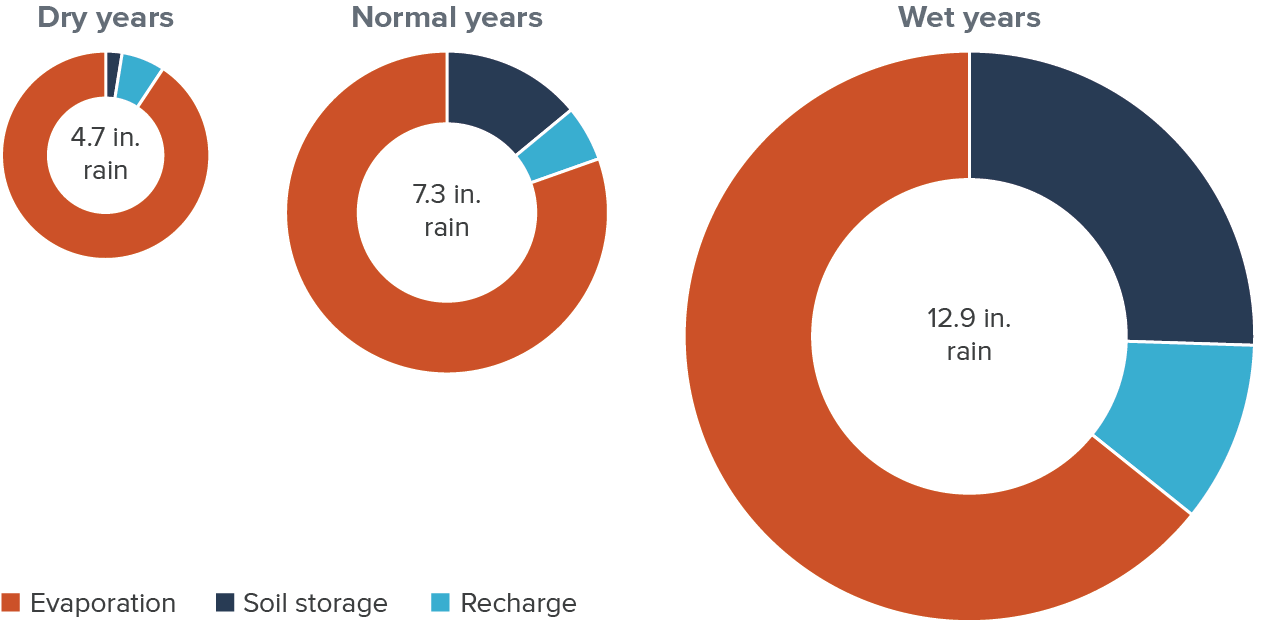
Regarding groundwater savings, it is commonly assumed that bare fallow fields are the most effective way to capture winter rainfall; this rainfall is then either stored in the soil or drains to groundwater as passive recharge. Relatedly, plant cover on fallow fields is assumed to scavenge water that would otherwise contribute to groundwater recharge. The reality is more complicated. Fallow fields are inefficient at capturing and storing rainfall: the bare soil in a fallowed field can lose 60–90 percent of the rainfall it receives each year to evaporation by late March (Figure 1; Technical Appendices A and C). The proportion lost to evaporation is highest in dry years. This amounts to 4–8 inches of water—often the total rainfall amount for that winter—that are lost to no productive end.
In the same vein, Figure 1 shows that groundwater recharge from rainfall on a fallow field is fairly inconsequential, ranging from one-third of an inch in the driest years to 1.3 inches in the wettest years, or 7–10 percent of total rainfall. This may partly relate to the bare soil surface being exposed to wind and heat, resulting in increased evaporation and poor infiltration. Rainfall in the San Joaquin Valley also tends to arrive in small storms that deliver less than 0.1 inch, which is often too little to penetrate the lower soil profile or drain to groundwater (Peterson, Pittelkow, and Lundy 2022). More recharge is likely to occur during large, infrequent flooding events (including heavy surface irrigation or managed aquifer recharge), when high volumes of standing water are on the soil surface for hours or days at a time.
Exact dynamics will vary depending on weather and soil characteristics, but these measurements show that evaporative water loss from fallow fields can be significant—and that the majority of rainfall received is not captured in the soil or returned to groundwater aquifers as recharge. Thus, while fallowing delivers the reduced demand for irrigation water sought in overdrafted basins, it generates few other benefits—and likely incurs costs. While fallowing will often happen by default where water supplies are limited, the downsides of fallowing warrant examination of other options that can deliver on groundwater sustainability goals while ideally generating economic, social, and environmental benefits.
Fallow fields lose more than half of water inputs to evaporation, even in the wettest years
SOURCE: Author estimates from HYDRUS 1D-modeled water balance outputs.
NOTES: Values are HYDRUS 1D-simulated water balance outcomes by March 31 (forage harvest window) for a fallow field. Rainfall amounts are weighted averages derived from historical weather conditions from 2000–25 and binned into dry, normal, and wet years according to percentile of total annual precipitation. Evaporation is water lost from the soil surface; soil storage is water that is added to the soil profile by rainfall; and recharge is deep drainage to groundwater. Water balance values are averaged across three planting dates (early, mid, and late). See Technical Appendix C for details.
SGMA-Ready Crops Offer Flexible Alternatives to Fallowing
As farmland is fallowed, land repurposing that happens on large, interconnected areas may boost the benefits of certain alternative uses, such as habitat restoration or solar energy production (Hanak et al. 2023). But many fallowing decisions will likely be made by private landowners on a farm-by-farm basis. What options are available then, to growers who must cut back on water use but wish to avoid fallowing?
One possibility may be to transition to different kinds of crops that require low or no irrigation—or what we call SGMA-ready crops. These are crops and management practices that reduce groundwater demand while also delivering other on-farm and community benefits, such as revenue-earning potential, improved soil health and air quality, and better rainfall capture. Below we list several examples of the forms that SGMA-ready crops could take. We then focus on water-limited winter forage crops, which we find are best positioned to integrate into existing farm operations.
Novel, desert-adapted crops. Agave, jojoba, guayule, and similar crops are tolerant of hot, dry growing conditions and can be productive with only a few inches of water per year. These crops could be lucrative once commercialized, assuming the relevant specialty market linkages can be developed. However, they will require additional research and investment in crop breeding, trialing, and defining best management practices for the San Joaquin Valley growing environment (e.g., Placido et al. 2021; Davis, Abatzoglou, and LeBauer 2021).
Low-water summer forages. Common summer forages like alfalfa and corn have high irrigation demands. Growing evidence shows that scaling up the production of summer crops that have lower irrigation demands is feasible. Sorghum or sorghum-sudangrass hybrids grown for silage, grain, or biofuel are prominent examples: sorghum requires 20 percent less water than a typical corn silage crop, and roughly 40 percent less than alfalfa (Atim et al. 2024a; 2024b). By making limited water go further, these crops could become an important part of overall farm adaptation strategies under SGMA. However, they may not be viable in areas with limited surface water because their annual water requirement of roughly 2 acre-feet per year still exceeds native groundwater yield in many areas.
Cover crops. Much of the discussion around land fallowing and SGMA has centered on the benefit of cover crops—grown in the winter for soil protection, not for sale—to reduce the downsides of fallowing. Cover crops can be a single species or a mix of species chosen for specific functions, such as nitrogen fixation, nutrient scavenging, pollinator habitat, or soil structure. Many valley growers use cover crops as a pest break between summer cash crops. In California, cover crops have been studied extensively and implemented on a limited basis for decades, with research showing their benefit for soil health and water retention (Ingels et al. 1994; Mitchell et al. 2017; Tautges et al. 2019). The text box below provides more detail on cover crops in the context of SGMA and SGMA-ready crops.
Winter grain and forage crops. In California’s Mediterranean climate, most crops—including those discussed above—can’t survive the summer growing season without at least some supplemental irrigation. Alternatively, cool-season crops such as grains and forages can take advantage of natural rainfall to meet some or all of their water requirements. Small grains such as wheat, barley, oats, rye, and triticale are among the most commonly grown winter grain and forage crops in California. They are produced under a range of conditions, including as a fully irrigated double crop (i.e., as a secondary crop grown during the winter/fall season and usually followed by a summer forage) or in more opportunistic rainfed systems in wetter parts of the valley and the state.
Ultimately, growers know their business best. Transitional options that keep agricultural land in production are important to soften the economic impact of SGMA in the San Joaquin Valley and other predominantly agricultural regions. Among SGMA-ready options, winter grain and forage crops have two clear advantages: high water productivity and income-generating potential through established markets—along with potential growth in demand from California’s livestock industry. We explore these economic dimensions of water-limited winter crop production in a companion policy brief (Franklin et al. 2026).
Winter Grain and Forage Crops Are Familiar, SGMA-Ready Commodities
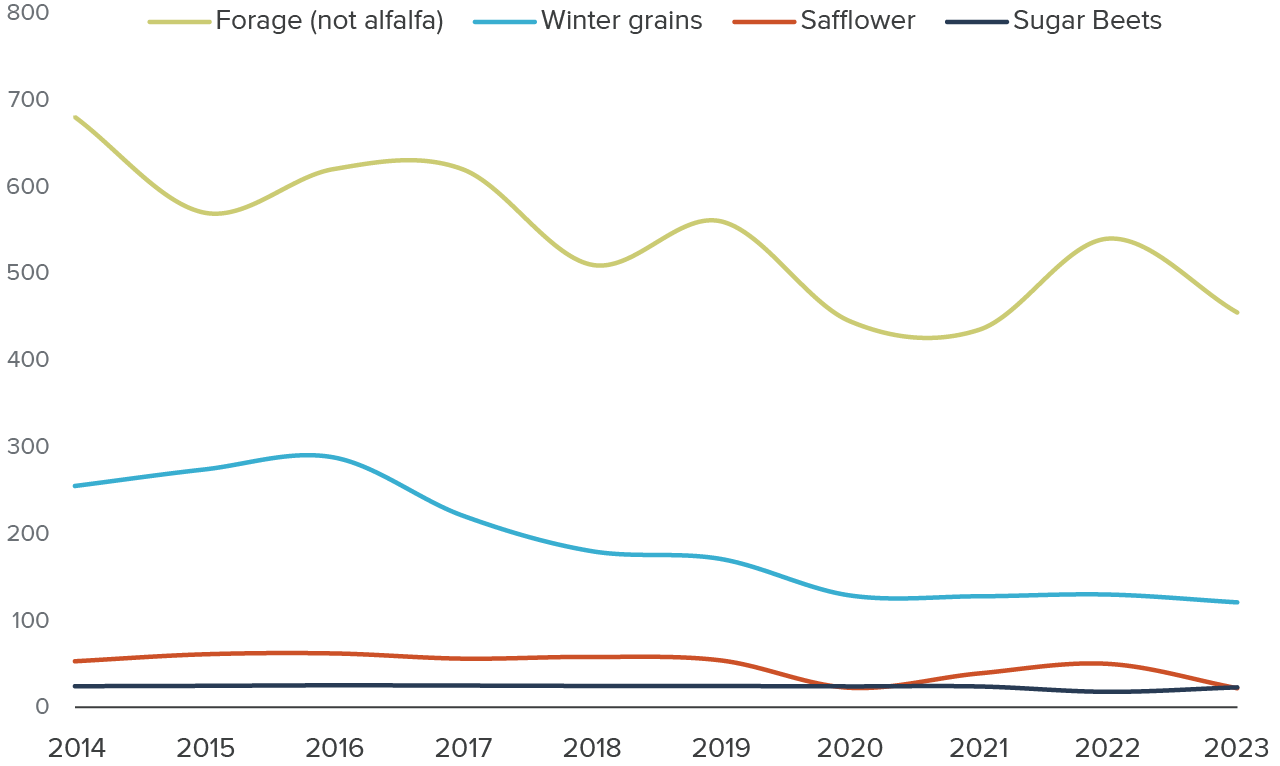
California growers already produce a variety of winter crops, principally grains and forages for livestock consumption (Figure 2). Oilseeds like safflower can also be produced as a winter forage, and canola, though not widely grown, could expand further (George et al. 2018). Sugar beets are salt-tolerant and well adapted to valley growing conditions, and they make excellent livestock fodder, but their prevalence has declined in recent decades with the closure of the last remaining sugar processing plant in the state in 2025. Most grain crops have also declined in acreage in the last four decades as perennial specialty crops have grown in importance (California County Agricultural Commissioners n.d.).
Winter grains and forages are a fixture in California despite declines in acreage over the last decade
Thousands of acres
SOURCE: CDFA 2023–24 California Agricultural Statistics Review.
NOTES: Forage includes wheat, oats, barley, triticale, and other winter cereal crops not harvested for grain. Grain includes wheat, oats, and barley. Safflower is principally considered a spring-planted crop, but it can also be planted in the fall and harvested as silage for livestock.
Wheat and other cool-season grains are not typically priority crops for San Joaquin Valley growers, given their lower returns compared to specialty crops. They also have lower nutritional value for livestock relative to more water-intensive summer forages such as corn, sorghum, or alfalfa. That said, among the SGMA-ready crops described above, winter grains and forages may be best suited for rapid expansion. Their familiarity to growers makes them a natural transition option. They are well studied and can be readily incorporated with corn silage and other available byproducts to complete a dairy cow’s ration. Thus, unlike novel crops, winter forage crops can tap into established commodity markets—potentially fulfilling a portion of demand for feed from California’s large dairy and beef sectors (Franklin et al. 2026).
As irrigation water becomes scarcer under SGMA, winter grain and forage crops may become more appealing—both for their efficient water use and the flexibility they add to a crop portfolio. They can be harvested for livestock fodder, grazed, or grown for grain depending on seasonal conditions. They tolerate water stress and generally require fewer costly inputs than irrigated summer crops. They also have similar soil and environmental benefits to cover crops and can complement water supply activities such as managed aquifer recharge.
Benefits for soil health and habitat. Winter grain and forage crops can serve similar functions to cover crops and in fact are often included in cover crop species mixes. They generate soil cover quickly and can scavenge excess nitrogen from the soil. And, unlike cover crops, they offer the option of harvesting a marketable product when conditions allow. The same characteristics make winter grain crops useful in habitat restoration; for example, they have been employed in the California Department of Conservation’s Multibenefit Land Repurposing Program (MLRP), where growers plant winter cereal mixes such as barley and rye to rehabilitate retired farmland (Butterfield et al. 2025). In this context, they serve as transition crops that grow well on disturbed soils with high residual nitrogen levels, paving the way for more varied mixes that include native plants.
Integration with managed aquifer recharge (MAR). Grain and forage crops are also compatible with managed aquifer recharge activities such as spreading high flood flows on agricultural land to replenish groundwater. Because these crops have lower establishment costs than orchards or other specialty crops, the benefits of recharge in wet years are likely to outweigh the potential loss of the crop from flooding. Additionally, maintaining winter crop cover may increase groundwater recharge effectiveness relative to fallow fields. A small but growing body of research points to ways crop cover could improve on-farm recharge efficiency, including by:
- shading the soil surface and reducing wind exposure, which reduces evaporation and allows more water to filter into the soil (DeVincentis et al. 2022);
- improving soil water holding capacity (Joyce et al. 2002; NRCS 2018; Abad et al. 2021); and
- creating crop root channels that help water to infiltrate more quickly (Ogilvie et al. 2021).
Furthermore, the large volumes of water applied via MAR generally overwhelm a crop’s ability to use it, meaning the amount of water lost to the crop is negligible.
Some growers and districts are conducting trials of recharge basins planted with winter grain cover crops, which can serve multiple purposes: hay or forage crop production in many years, improved infiltration, or a sacrificial crop that improves recharge in wet years. Grain crops are well suited for this purpose given their low input costs and marketability as forage in years when rainfall is too low for recharge. Furthermore, they generally require less nitrogen fertilizer, which could mean lower risk of nutrient leaching to groundwater than fully irrigated crops suitable for MAR (Dzurella et al. 2015; Waterhouse et al. 2020).
Similarly, winter-cropped fields could create synergies with Forecast Informed Reservoir Operations (FIRO), a key facet of the state’s plans to improve water supply resilience. Through more flexible reservoir releases, FIRO could increase surface water availability during winter months when irrigation districts do not typically release water to growers. Fields planted in winter crops provide an opportunity to direct this surplus water to sites where it provides multiple benefits, whether recharging groundwater or providing a marketable crop to the grower.
SGMA-Ready Crops Must Deliver Benefits Without Using Much Water
While winter grain and forage crops can preserve many of the benefits lost with fallowing, one critical question remains: is growing these crops also conducive to groundwater sustainability goals? Because of uncertainties about winter crop water use, some GSAs may unintentionally discourage their use by counting winter crop water use against pumping allocations or requiring bare soil management in fallow fields (Borum et al. 2024). However, with appropriate management practices, these crops can serve as a productive alternative to fallowed farmland with minimal additional water use.
To understand how winter crop water dynamics compare to fallow in a typical year under typical management practices, we used OpenET—a publicly available remote sensing tool—to estimate evapotranspiration for these land uses at the basin level. Evapotranspiration (or ET) is a comprehensive measure of water use that includes both losses from bare soil (evaporation) and plant water uptake and use (transpiration). Figure 3 shows whether water losses via ET exceed natural inputs from rainfall—that is, whether a crop’s water requirements could have been met by rainfall alone or would have needed supplemental water from irrigation or stored soil moisture (Technical Appendix A). We refer to this metric as net water input.
When harvested early, a typical year’s rainfall is often enough to meet winter wheat’s water demand
San Joaquin River, winter 2023–24
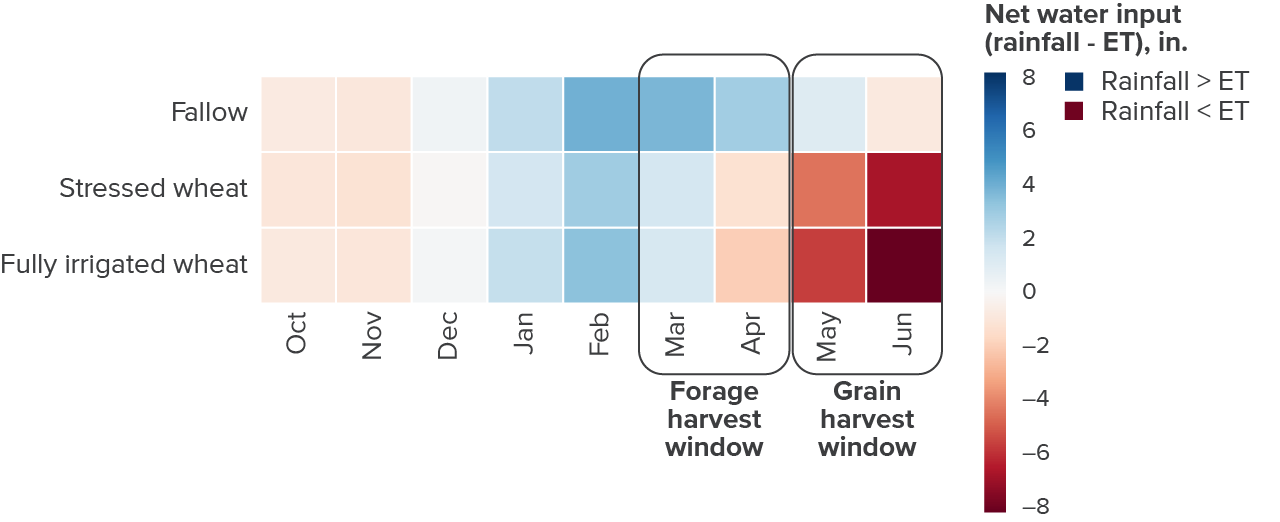
SOURCES: Author calculations from Landsat satellite imagery, OpenET model outputs, and gridMET (rainfall).
NOTES: Net water input for fallow fields, stressed winter wheat, and well-watered winter wheat in the San Joaquin River groundwater basin for the near-average water year of 2024. Net water input is calculated as rainfall minus crop or fallow ET (in.). Positive net water input values indicate that rainfall exceeds ET; negative values indicate that ET exceeds rainfall. Gray rectangles indicate the typical March–April forage harvest window and the May–June grain harvest window for winter wheat. Well-watered wheat represents crops managed with standard practices for the valley. Stressed wheat could be exhibiting lower ET values due to lack of water, pests or disease, or nutrient deficiency, any of which would reduce overall crop water consumption due to their impact on biomass production. We therefore consider the stressed wheat category a proxy for minimally irrigated wheat as discussed in this report. See Technical Appendix A for methods as well as results for water years 2021 (dry) and 2023 (wet) in the San Joaquin River and Tulare Lake groundwater basins.
For wheat and other winter grains, water demand is highest in spring when the plants are large, root systems are well developed, and the weather is warm. Harvesting before this point is similar to managing a cover crop. Best management practices for cover crops in California have repeatedly emphasized early termination—in this same seasonal window or slightly earlier—to prevent excessive depletion of soil water (e.g., Mitchell et al. 2015).
The key insight from Figure 3 is that rainfall plus 2–3 inches of additional water is enough to meet the growth requirements even for well-watered wheat through the forage harvest window, assuming current standard practices in the valley. Stressed wheat requires less additional water—only 1–2 inches. For the fallow field, ET is less than rainfall for most of the winter/spring season. These patterns suggest that harvest timing is an important consideration when managing crops under water-limited conditions and that early forage harvests often use no more water than natural inputs from rainfall. In drier years and regions, crop management would need to adjust further to avoid using more water, as we discuss in the sections below. (See Technical Appendix A for results from a wet and dry year and from the drier Tulare Lake basin.)
While monitoring ET remotely has many advantages, it may not capture factors that impact the net water balance in a cropped field compared to a fallow one—for example, changes in infiltration or evaporation rates due to the presence of plants (Figure 4). Like any measurement, remote ET estimates come with uncertainty, which can be reduced by collecting complementary evidence using other methods. In previous work, we used model simulations to explore the viability of non-irrigated and minimally irrigated winter grain crops in the San Joaquin Valley, highlighting the key management levers for successful crop establishment under water-limited conditions (Peterson, Pittelkow, and Lundy 2022). In the next section, we review those findings alongside new results comparing water gains and losses in winter cropped and fallow fields.
Rain or irrigation water applied to a field can have one of several fates
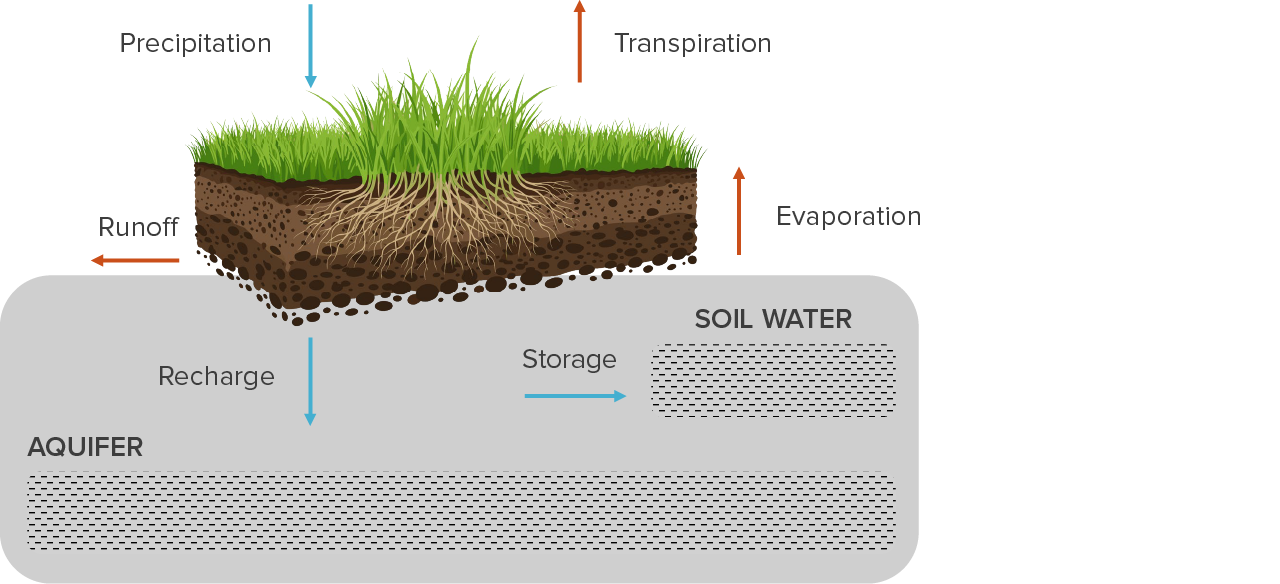
SOURCE: Author rendering.
NOTES: When considering the water balance of an agricultural field, water input can come from rainfall or irrigation. This input is then partitioned into losses—transpiration, evaporation, and runoff (lateral movement across the soil surface)—and gains, including increased water storage in the soil or deep drainage and return to aquifers (recharge). The analyses described in this report assume runoff is negligible (see footnote 3).
When Irrigation Is Limited, Crop Management Matters
In this section, we summarize results from over five years of crop trials and crop modeling that demonstrate the key management strategies for getting the most out of limited water. We present takeaways from several complementary analyses to address concerns that water-limited crops may deplete soil moisture or reduce aquifer recharge relative to fallow fields.
Water Productivity Is a Central Management Objective for Water-Limited Grain Crops
When water is limited, farming objectives may shift to prioritize water productivity over high yields. We define water productivity as crop yield or economic return per drop of water applied to the crop, including rainfall and irrigation. Water productivity can be increased through management adjustments such as changing the timing of planting and irrigation or shifting harvest earlier for forage products rather than grain (Peterson, Pittelkow, and Lundy 2023). Figure 5 illustrates model estimates of winter wheat water productivity (USD returns per inch of water), showing how small amounts of irrigation at crop establishment achieve better water productivity than a rainfed crop, as does harvesting for a late forage (soft dough) product rather than for grain.,
These results further highlight the benefits of prioritizing forages over grain when water is limited. They also point to the benefit of investing small amounts of water early in the growing season to help crops get established. Rainfed crops are more likely to fail in valley growing conditions because of low volumes or poor timing of early season rainfall.
Winter cereal crops make better use of limited water when harvested for forage rather than grain
Returns per inch of water input (USD/in.)
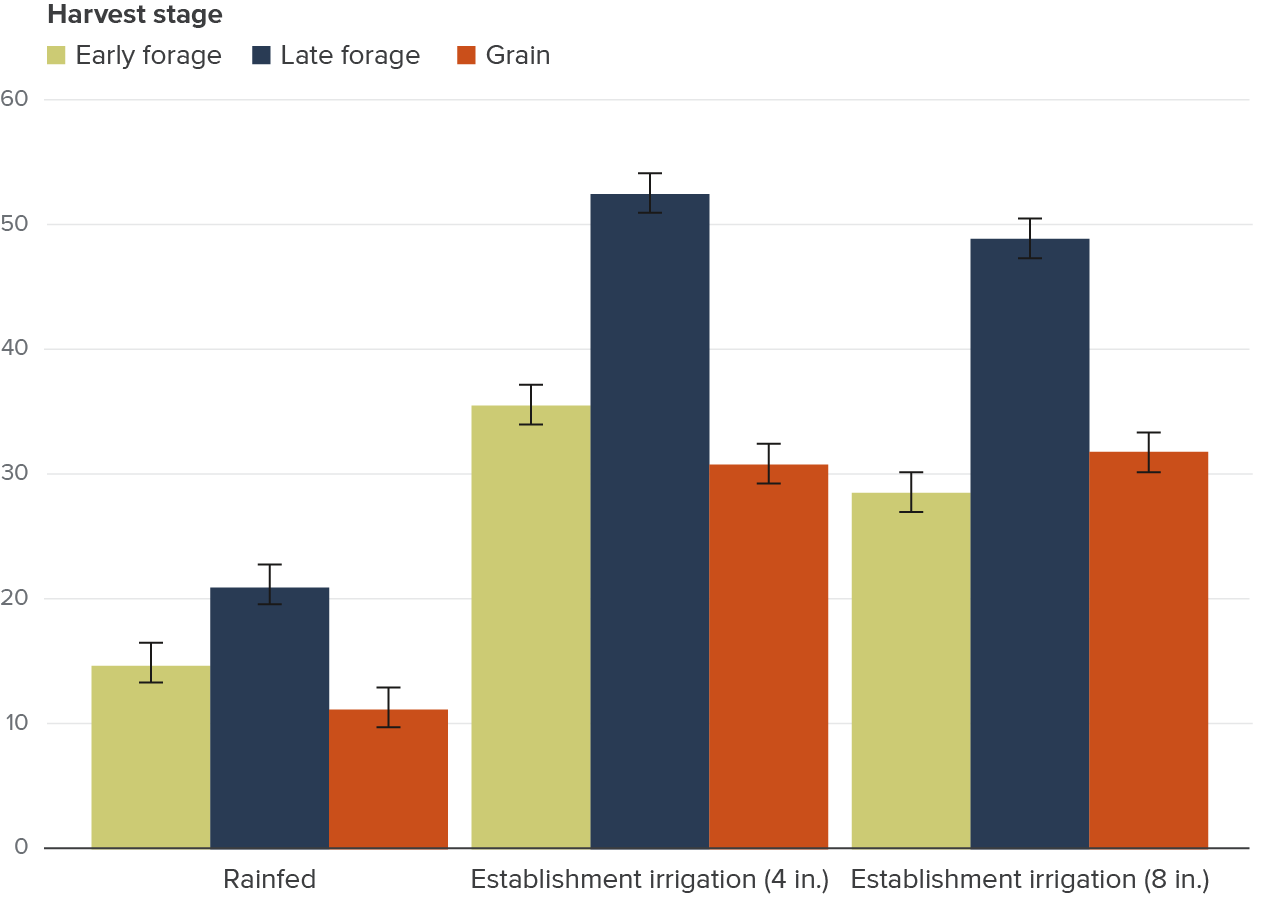
SOURCE: Peterson, Pittelkow, and Lundy (2023).
NOTES: The y-axis shows economic water productivity, or USD returns per inch of water input (irrigation + rainfall) on a per-acre basis. Error bars show ±1 standard error. The modeled wheat crop was harvested at three different growth stages: boot (early forage), soft dough (late forage), or grain. Outcomes are shown for three different irrigation amounts: none (rainfed), 4 inches, or 8 inches applied during early establishment stages.
Figure 6 shows additional water productivity results from University of California crop trials conducted during the winters of 2023–24 and 2024–25 in Fresno County (see Technical Appendix B). Here we show water productivity in terms of wheat forage harvested per inch of water input (4 inches of establishment irrigation plus rainfall) for different planting dates. Consistent with previous modeled estimates, we found that planting earlier—in mid-October, instead of the more typical mid-November to January planting window—yielded more forage per inch of water under limited irrigation. Although 4 inches of irrigation is only about 20 percent of the water requirement for a conventional winter cereal crop, it was enough to greatly improve water productivity over a rainfed crop in both a near-average (2023–24) and a dry (2024–25) growing season. (Results for rainfed crops are shown in Technical Appendix B.)
Earlier planting boosts crop-per-drop when forages are water-limited
Forage yield per inch of water input (lbs/in.)
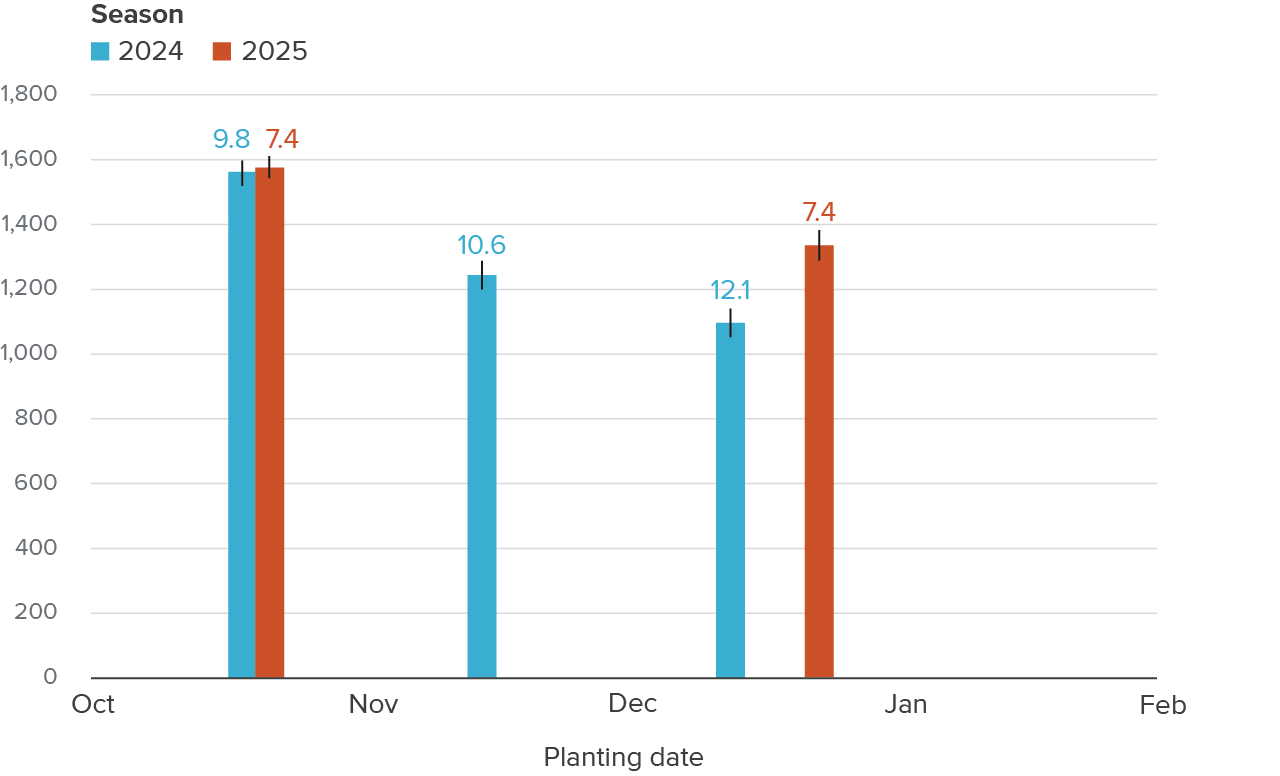
SOURCE: Author measurements from crop field trials.
NOTES: Yields were measured for a University of California winter grain variety trial in western Fresno County in two winter growing seasons: 2023–24 (a near-average rainfall year at this site) and 2024–25 (a dry year). Labels above bars indicate total water input (rainfall + irrigation; in.) from planting through forage harvest. Forage water productivity is calculated as pounds of winter wheat forage yield per inch of water input on a per-acre basis. Error bars show ±1 standard error. Only results for crops irrigated with 4 inches of water at establishment are shown; results for rainfed crops are presented in Technical Appendix B.
These results form the basis for a set of best management practices for winter grain crops grown under water-limited conditions:
- Plant early;
- Apply supplemental irrigation to support early crop establishment;
- Harvest early (in March–April) for forage.
Comparing Water Use for Fallow Fields and Water-Limited Forage
Two key questions arise when considering the production of water-limited winter forages as an alternative to fallowing. First, do water-limited forages deplete soil water relative to fallow ground? Second, do water-limited forages inhibit groundwater recharge?
Planting winter crops could seem contrary to groundwater conservation goals in areas limiting groundwater use. But with the best management practices described above, the water savings from fallowing may not be as large as they appear. The impact of a winter crop on soil water and recharge can be negligible, and in some cases even positive, when managed appropriately. Small reductions in soil water storage may be worth the gains from harvestable crops.
Early irrigation and early harvest help avoid excess soil water depletion
Preserving soil moisture matters for two reasons: to reduce water needs if the field returns to production and to reduce dust emissions if the field is left fallow.
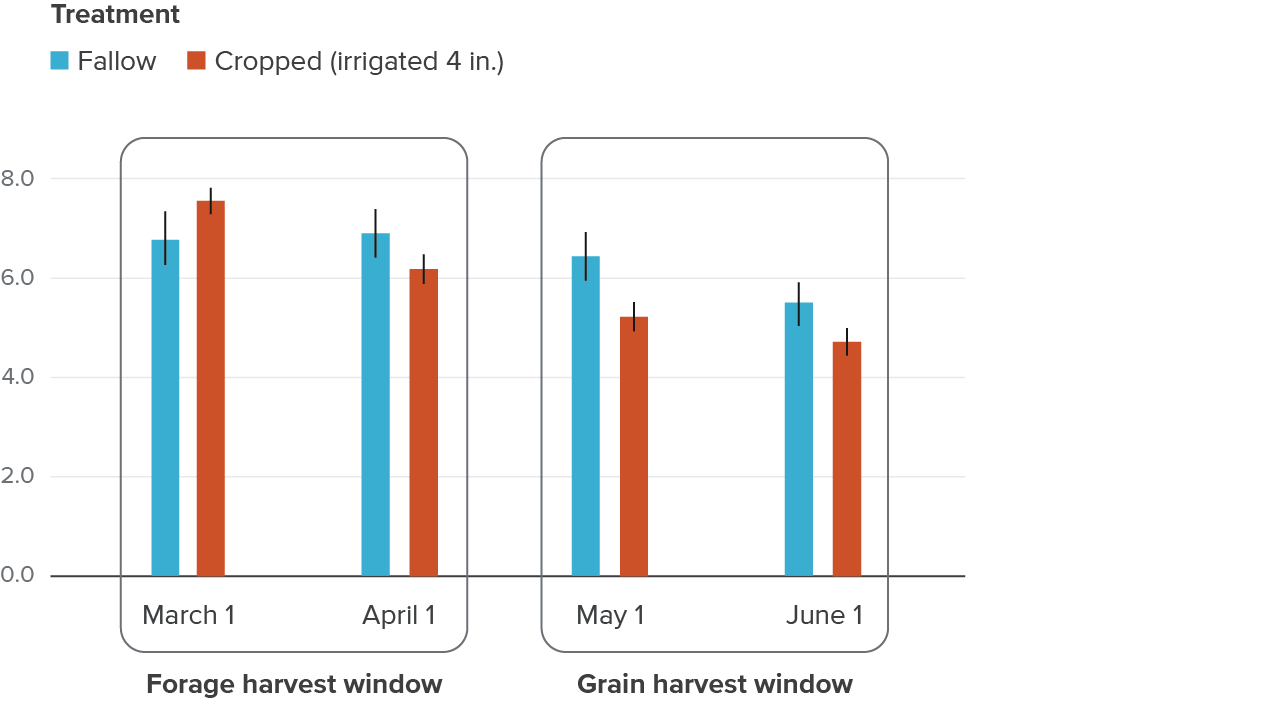
We used soil samples from the University of California crop trial experimental site described above to compare the effect of weather and plant growth on soil moisture content in a bare fallow field and cropped fields. Figure 7 shows results for average soil water content across the second half of two winter growing seasons, from March through June 2024 (a near-average rainfall year in this area) and 2025 (a dry year).
Following the best management practices for water-limited conditions described above, crops were irrigated with 4 inches early in the season to aid crop establishment. Soil samples taken during the forage harvest window of March–April showed insignificant differences in soil water content between cropped and fallowed fields. By the grain harvest window, crops had begun to deplete soil water relative to the fallow—but only by about one inch. A consistent pattern emerges: if a crop is minimally irrigated at establishment and harvested as forage, it draws a similar amount of water from the soil as a fallow field. In dry years cropped fields may use marginally more soil water than fallowed fields, but the productivity gains and additional benefits may well justify this small water cost. (See Technical Appendix B for results by year and for rainfed crops.)
If water-limited crops are harvested for forage in March–April, soil moisture is comparable between cropped and fallow fields
Soil water content (in.)
SOURCE: Author estimates from in-field soil samples.
NOTES: Late-season (March through June) soil water content (in.) to 3-foot depth in a fallow field and a winter-cropped field established with 4 inches of irrigation (“Irrigated 4 in.”) for a University of California winter grain variety trial in western Fresno County. Results are averaged across three planting dates (early, mid, and late) and two winter growing seasons: 2023–24 (a near-average rainfall year at this site) and 2024–25 (a dry year). Error bars show ±1 standard error. See Technical Appendix B for details and results for rainfed (non-irrigated) crops.
Once crops are harvested, what happens to water left in the soil? We modeled soil water depletion over the summer for standard management (fully irrigated and harvested for grain), water-limited management (early 4-inch irrigation and forage harvest), and fallow. We found that by the end of the summer, any differences in water content among cropped and fallow fields had largely disappeared (see Technical Appendix C for details). This suggests that, in most years, water savings during the winter season are temporary. Water content returns to a relatively stable, low baseline by the end of the dry season regardless of winter–spring management. Management choices during the summer—such as retention of standing residue or mulch layers—can reduce evaporative losses somewhat and may bring other benefits such as reduced soil carbon losses and reduced dust emissions (Ayres, Kwon, and Collins 2022; Peterson, Pittelkow, and Lundy 2022).
That said, in very dry years and in drier regions, soil water depletion by crops could be more severe. In these cases, the best management practices described here are even more important and may have to be implemented more aggressively. This could include forgoing harvest altogether and terminating the crop early to preserve soil water.
Water-limited forage crops improve recharge in wet years and have minimal impact in other years
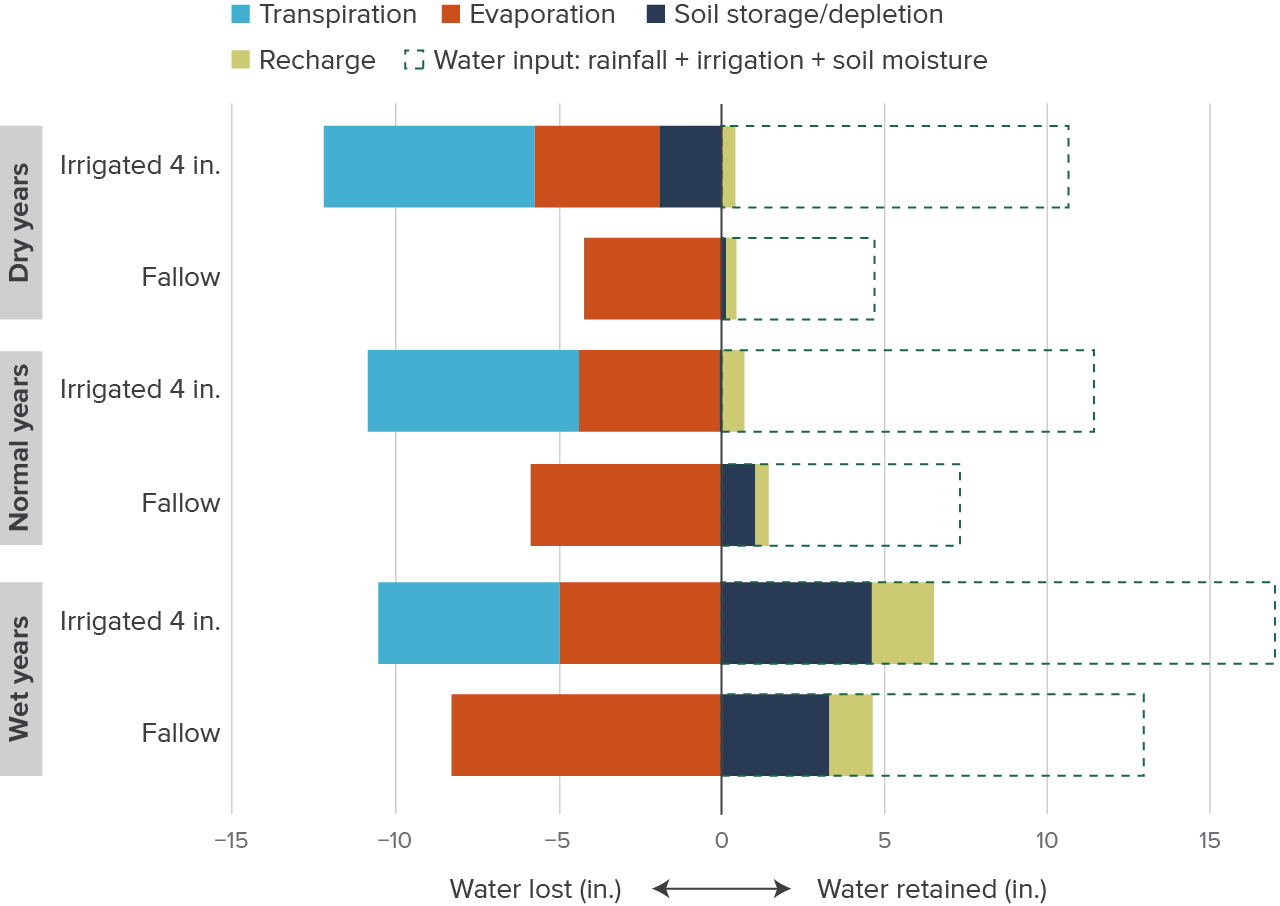
We used models of crop growth and soil hydraulic processes to further explore recharge and soil water storage (see Technical Appendix C for details). Figure 8 shows modeled water balance in wet, normal, and dry years at the forage harvest window in late March.
Recharge. Winter crops managed with water-limited best practices marginally improve recharge in wet years and do not notably decrease recharge in other years. Similar proportions of total water inputs are recharged in wet and normal years between fallow and cropped fields.
Soil water. Likewise, water-limited crops store marginally more water in the soil in wet years compared to fallow fields. However, crops may draw on soil water storage in drier years, so outcomes are most favorable in years with at least 5–6 inches of effective winter rainfall—and only if small amounts of supplemental irrigation are also available.
Evapotranspiration. As expected, water loss to the atmosphere comes entirely from evaporation in the fallow fields. In cropped fields, a greater share of ET comes from transpiration—the productive use of water for crop growth—rather than from evaporation.
Very dry conditions can alter the cost-benefit calculus of having crops in the ground, so water-limited cropping may not be appropriate in all years and locations. The key is that these crops are both flexible and lower-cost to produce, providing options for terminating the crop early—such as grazing or harvesting lower-quality fodder—that can limit losses (Goplen et al. 2021). Additionally, direct recharge from rainfall amounts to no more than 1–2 inches even in the wettest years, regardless of whether the field is cropped or fallow. However, these results should be treated as illustrative rather than definitive, given the uncertainty inherent to soil water modeling.
Water-limited winter forages maintain or increase recharge from rainfall but can deplete soil water in dry years
SOURCE: Author estimates from APSIM crop growth and HYDRUS 1D water balance simulations.
NOTES: Values are HYDRUS 1D-simulated water balance outcomes at forage harvest (March 31) for a fallow field and a field planted in winter forage supplementally irrigated with 4 inches of water. Rainfall amounts were derived from historical weather conditions from 2000–25. Dashed boxes represent total applied water, including rainfall, irrigation, and sometimes extracted soil water (in.) summed across the forage growing season (October through March). The stacked bars represent water that is either lost or gained from this total input amount. Losses can include transpiration (crop water uptake), evaporation (water lost from the soil surface), and soil water extracted by the crop; gains can include recharge (deep drainage to groundwater) and soil water storage, or water added to the soil profile by rainfall or irrigation. Values are the weighted average of years in a given water year type (dry, normal, or wet) across three planting dates (early, mid, and late). Water year types were binned by percentile of total annual precipitation.
Simple Policy Measures Can Help Keep Agricultural Land in Production
There are many ways to manage agricultural land slated for fallowing, but some are more viable than others. No single crop or management system will be appropriate in all conditions or growing environments, and growers are best suited to make land use decisions for their particular operation. That said, SGMA-ready crops offer a practical way to navigate tightening water supplies. Many of the policies relevant to individual growers and land managers will happen at the local level, though state and federal policies can help by providing technical guidance and limited financial support. Policies to support transitions to these crops fall under three main categories:
- Local rules and program requirements. GSAs, which include irrigation districts, counties, municipalities, and other land management entities, are in charge of devising programs and rulebooks that influence acceptable land management choices and uses of limited groundwater. Simplified assumptions about winter crop water use can lead GSAs to unintentionally discourage alternatives to fallowing that would give growers more options while posing little risk to groundwater sustainability goals. To avoid this problem, new policies could include offering low- or no-cost winter irrigation water in wet years, which would give growers the option to water mid-season for a grain crop; developing accounting rules that do not penalize growers for limited winter ET from crop cover; and creating allocation credit systems that acknowledge the role of winter-cropped fields in improving the capture and storage of rainfall (“precipitation credits”).
Who’s responsible: Groundwater sustainability agencies.
- Risk reduction and incentives. The best practices for water-limited conditions described here advise growers to plant and supply irrigation early in the growing season, before winter rainfall outcomes are known. In years with moderate rainfall, water-limited winter forages can generate positive returns. But incentives or crop insurance instruments that defray planting costs may be needed to reduce the risk of planting in years that turn out to be dry, when yields are likely to be low. For example, some GSAs are considering “rebate” programs that use fees collected from irrigators to reimburse dryland or limited-irrigation farmers for part of their planting costs in dry years. In wet years, growers may opt to pivot to recharge if excess surface water is available—this could also be incentivized through new and existing monetary and technical support programs.
Who’s responsible: GSAs, US Department of Agriculture (Risk Management Agency, Farm Services Agency), California Department of Water Resources, and California Department of Food and Agriculture.
- Technical guidance. While state agencies in charge of SGMA oversight must approve GSAs’ planned actions for reaching sustainable groundwater pumping levels, they have limited purview over the design and implementation of these actions. However, they can provide guidance to GSAs on how to develop programs that support the productive use of idled farmland, such as fallowing programs that provide a rainfall credit for increased infiltration in winter-cropped fields or allow for modest amounts of winter ET in the interest of preserving soil cover. These agencies can serve as resources and technical backstops, especially for small or under-resourced districts with less capacity for doing their own research.
Who’s responsible: California Department of Water Resources, California Department of Conservation, and State Water Resources Control Board.
Conclusion
With up to 20 percent of San Joaquin Valley farmland likely to come out of fully irrigated production under SGMA, practical alternatives are needed that provide economic returns while meeting groundwater sustainability targets. SGMA-ready crops like wheat and triticale forage are strong candidates for lands that might otherwise be fallowed.
We find that water-limited winter forages can be a viable alternative to fallowing, offering multiple benefits: they give growers an opportunity to generate revenue, keep farmland operational for continued agricultural use, provide options for integrating MAR, and can produce a marketable product with as little as 4 inches of supplemental irrigation in many years and locations. These benefits may be especially appealing when landowners have poor surface water access or are unable to trade groundwater allocations, increasing the likelihood that native groundwater yields would be used on SGMA-ready crops.
However, to be implemented at scale, alternatives to fallowing must make business sense for growers. We anticipate that California’s large dairy and livestock industry could be a source of sustained demand for water-limited forage crops as thirstier summer forage crops are squeezed by pumping cutbacks. In addition, water-limited forages provide non-market benefits such as dust reduction and soil carbon storage that may merit public support. We explore these topics further in a related policy brief (Franklin et al. 2026).
Priority should be given to solutions that are cost effective, evidence based, and socially and economically beneficial to the region. SGMA-ready crops may pay for themselves in many cases. In more marginal cases, policy measures may be warranted to support keeping agricultural land in production based on the public benefits these crops provide compared to fallowing.
Ultimately, crop transitions represent one piece of a broader SGMA adaptation strategy. A suite of measures will be needed, many of which are already being put into place. Water-limited winter forage crops stand out as practical and immediately available options for growers facing groundwater cutbacks. With targeted management and limited policy support, flexible cropping options can help ease fallowing pressure and put the valley on a path towards beneficial land stewardship, even under challenging conditions.
Topics
Drought San Joaquin Valley Water Supply Water, Land & AirLearn More
Policy Brief: The Financial Viability and Broader Benefits of SGMA-Ready Crops

Exploring the Potential for Water-Limited Agriculture in the San Joaquin Valley
Policy Brief: The Future of Agriculture in the San Joaquin Valley

Is SGMA Compatible with Farmland Preservation?

Commentary: San Joaquin Valley’s Next Big Air Pollution Threat—Blowing Dust from Fallowed Farmland

Land Transitions and Dust in the San Joaquin Valley