

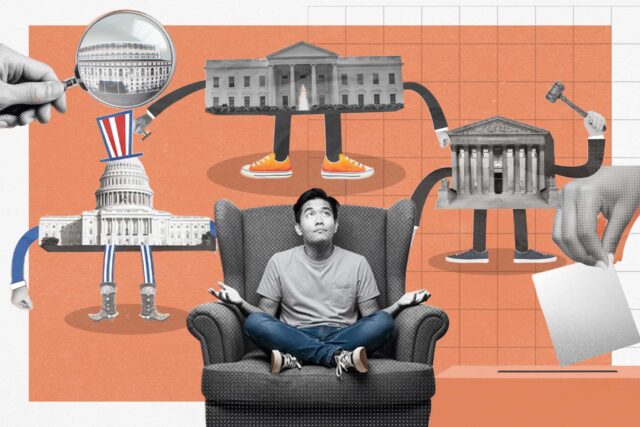
With a consequential primary fast approaching, Californians are preparing to choose new leadership—with results that will determine the direction of their state. A healthy democracy depends not only on participation, but also on an informed public that understands how government works, how to evaluate competing claims, and why civic engagement matters. That understanding doesn’t emerge automatically—it has to be taught through civic education. And a growing majority of Californians agree.
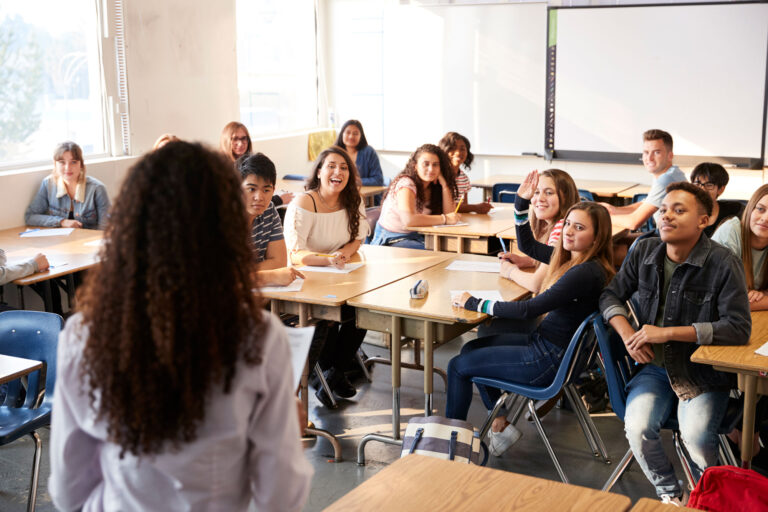
Six in ten Californians say public schools should make civic education a high priority—and that support is broadly expressed across demographic groups and regions of the state and, notably, is bipartisan. Majorities of both Democrats and Republications agree that it is very or somewhat important for young people to learn how elections operate, how to evaluate different political viewpoints, and how to detect misinformation about elections. In these polarized times, civic education stands out as rare common ground.
Concern about these issues has only increased. Comparing our 2025 and 2026 survey findings, support among California adults for key elements of civic education has grown meaningfully—and the increases are sharpest around exactly the skills our democracy needs most right now.
Learning about California elections and voter registration, for instance, was rated very important by 53% of adults in 2025. In 2026, that share rose to 58% percent—a 5-point jump heading into a primary season that will shape the state’s leadership for years to come. Support for teaching students to evaluate and discuss different political viewpoints climbed from 49% to 55% over the same period. And concern about disinformation has grown as well: in 2025, 54% of adults said it was very important for students to learn how to find reliable information and detect disinformation about elections; in 2026, that number has risen further (57%) as Californians increasingly recognize that navigating today’s information environment is much more than media skill.
In many ways, these findings reflect where we are as a state. We are living through a time of genuine civic stress: rapid shifts in policy, a contentious national discourse, and a media landscape that too often rewards heat over light. Californians are paying attention, and they are telling us, through our surveys, that they want schools to help. Teaching students about civic life, to be engaged citizens and discerning consumers of political information isn’t a partisan project—it’s a civic survival skill.
Most Californians have overall trust and confidence in their local public school and teachers. At a time when many institutions and their leaders are held in low regard by Californians, most public-school parents and the public at large assign grades of A, B, or C to their local public schools and very few say they are failing at their current tasks.
But the data also reveals an important gap. When asked to rate their local schools today, only about 50% of California adults and six in ten public school parents said they were doing an excellent or good job of preparing students to be engaged citizens. That gap between aspiration and reality is where policymakers, educators, and advocates need to focus.
California has made real progress. The State Seal of Civic Engagement, established in 2020, recognizes high school graduates who demonstrate excellence in civic learning and participation; as of 2024–25, more than 23,000 seals have been awarded across 492 participating schools. At the local level, many promising programs are focused on expanding civic knowledge through hands-on participation, community engagement, and real democratic experience. Sharing information about successful programs and identifying opportunities to scale up should be a priority.
Civics is woven through the fabric of our daily lives—from who represents us in Sacramento to how we evaluate what we read online. Elections are the most visible expression of our civic life, but participation is an everyday practice, built over years of learning and engagement. Today’s students are tomorrow’s voters. If we want them to show up informed, to distinguish fact from fiction, and to hold their government accountable, we must start in the classroom. The public agrees. Now it’s time for our schools and policymakers to follow through.
Topics
2026 Election civic education civic engagement democracy elections K–12 Education Political Landscape Statewide Survey votersLearn More
PPIC Statewide Survey: Californians and Education
Commentary: Why Civic Education Matters Now More than Ever
The Importance of Civic Education Today

Experts Discuss Civic Education in California
Californians and Civic Education
PPIC Statewide Survey: Californians and Education

Inspiring California’s Youth through Civic Education

Civic Education Is Essential to California’s Future