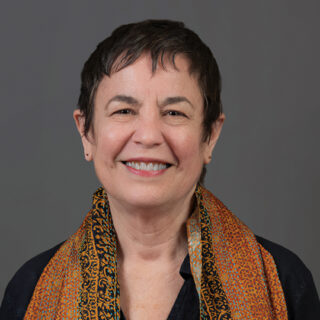
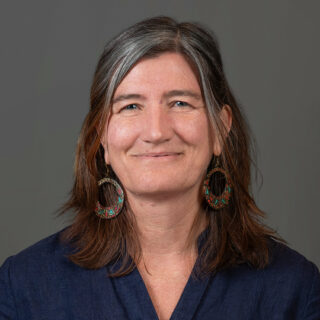
Ellen Hanak launched PPIC’s work on California water policy as a research fellow in 2001, and she went on to serve as the institute’s research director before starting the PPIC Water Policy Center in 2015. As she prepares to retire from PPIC at the end of this year, we asked her to reflect on her momentous career in California water, and to tell us what’s next.
Which accomplishments would you share with your grandchildren from your 20-plus years at PPIC?
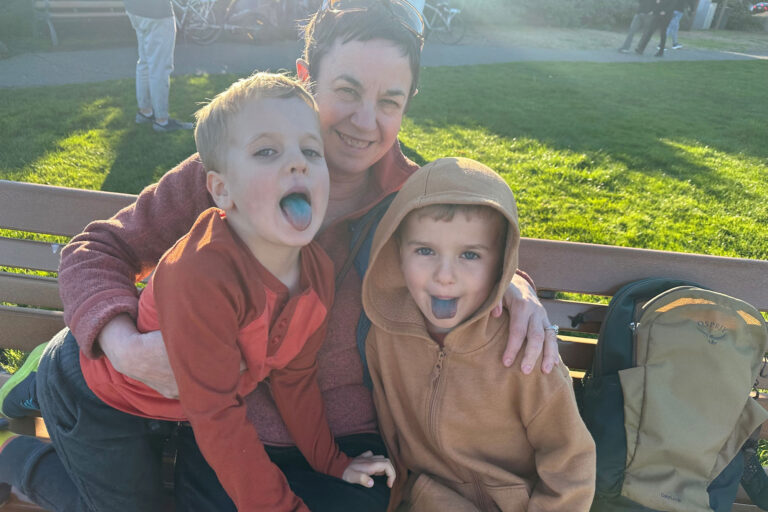
My grandsons—aged seven and almost five—would definitely think this is boring, but to me it’s been exciting and (usually) fun to develop a way of doing policy-oriented research that engages deeply with stakeholders. Folks on the ground are doing all kinds of amazing things, but many of them lack the time and perspective to get answers to big, tough questions about water policy. We’ve been able to bring rigorous methods to answering some of those tough questions.
It’s gratifying that people have been willing to trust us with their perspectives and information—be it in small group conversations, one-on-one interviews, or surveys. We acknowledge that there are a lot of different perspectives. Some may be more consistent with the facts than others, but all are based in experience. That informs our work and helps people recognize that the goal is to respect perspectives and conditions on the ground.
We’ve also taken an interdisciplinary approach, pulling from science, law, engineering, and economics. As a researcher, you’re always learning something, which keeps it interesting; hopefully you’re also helping to move the conversation forward.
My own background is in economics, and I think I’ve helped people think about how to creatively manage around tradeoffs. Economics is often called a dismal science, but to me it’s actually a hopeful science. It can help you think about the best ways to use both money and time—neither of which we’ll ever have enough of. It can be hard for advocates to step back and see the big picture, but it’s important. We’ve got to find solutions that are affordable and address not just one specific issue but the issues of the person across the river, in the city, or on the farm—as well as for our incredible natural environment.
What are some exciting recent developments or innovations in California water?
It’s amazing to me how people have taken the Sustainable Groundwater Management Act (SGMA) seriously and worked to get it off the ground and implement it in creative ways. To be sure, some of the hardest work is still ahead, but there’s already been tremendous transformation in the decade since this law was enacted.
Getting a handle on groundwater management opens doors to storing water underground in collaborative ways—something that’s key for adapting to a climate with changing precipitation patterns. Before SGMA, we didn’t have the necessary monitoring and institutional structures. Now, when we get a wet year, people are mobilizing to get water in the ground. Each wet year provides an opportunity to figure out how to make this work more easily. That’s a management innovation.
We also continue to see technological innovations coming online that can help us do things better, smarter, and more cheaply—things like Forecast Informed Reservoir Operations (FIRO) for storm monitoring, or Airborne Electromagnetic (AEM) surveys for snowpack. The ability to use remote sensing to know what crops are grown, where, and how much water is being used—these advances are already helping with SGMA implementation, and they could be applied to filling other big data gaps, like tracking streamflow. It sounds mundane, but even simple things like sending cameras into pipelines to figure out where to target repairs can be really useful in managing utility budgets.
I hope we don’t get in our own way on advancing innovations like this; they are key to keeping things affordable in a world where many costs are rising.
What are some of the biggest challenges facing California water in the next 20 years?
Even when you make good progress, you generally don’t get “problem solved” wins in water. There’s always more work to do. But if I had to pick a couple of really thorny issues, it would be managing our ecosystems and taking on big projects.
We need a new approach to how we manage freshwater ecosystems and water for the environment. As we’ve said in our reports, doing more of the same is not going to get us to a better place. Too much of what we do now is backward-looking—aimed at restoring what once was—and focused on a few imperiled species. In our changing climate, this is a losing proposition. The big-picture goals should be about supporting ecosystems that can be resilient in the face of change. This means reconnecting water and land—especially in floodplains—and using environmental water flexibly to support the fish and wildlife in our rivers and wetlands. I realize that there are legal impediments to making this shift, but the bigger obstacle, to my mind, is that not enough folks are willing to look forward and acknowledge that we have to take risks to better manage risk.
I’m also concerned about our inability to do anything big anymore. There’s a growing tendency towards kneejerk opposition to big projects. But if we don’t bite the bullet, we are going to seriously limit our ability to adapt and thrive. Permitting challenges are a huge part of this—even getting relatively non-controversial environmental restoration projects permitted can take so long. Once you start looking at projects to address other important concerns—like securing water supplies, reducing wildfire risk in headwater forests, or protecting people from growing flood risk—the roadblocks multiply. It’s been encouraging to see new partnerships and creative solutions in some watersheds. But fundamentally for anything that’s not local, it’s really hard—especially anything related to the big Central Valley watershed.
Conditions are changing rapidly. I have no doubt that we have the capacity to adapt, but we trip over ourselves. We’re going to have to be flexible and creative over the next 20 years and acknowledge the importance of having solutions that can work across different sectors—for a range of societal objectives.
I’m really excited that we found Letitia Grenier—a tremendously smart and creative water leader and researcher—to take the Water Policy Center forward. And we’ve also been lucky to recruit Brad Franklin, a really talented economist, to help continue the center’s tradition of bringing in an economic perspective.
Favorite memories from your time at PPIC?
It’s a lovely place to work—really collegial and a great anchor for the kind of work that we built up in water. People here are committed to improving conditions and lives in California, and to helping each other do that work.
A lot of my favorite memories are working with colleagues and external research partners on big collaborative projects like the work we did on the Delta or the San Joaquin—or our work on water finance. These were great opportunities to bring a bunch of different talents together, get to know each other, and have fun in the process.
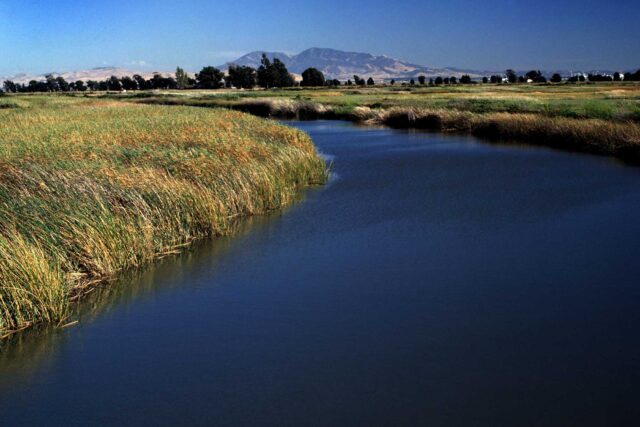
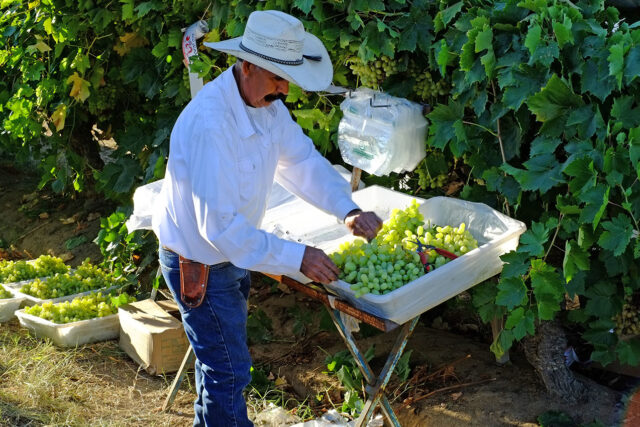
And getting out into the field with stakeholders has been so rewarding. This is also the part of my job that my grandsons would appreciate the most. I remember one multi-day field trip across the San Joaquin Valley in the wet spring of 2017. In one wildlife refuge, we saw riparian brush rabbits up on levees because the river was so full. We also saw amazing water birds in the recharge ponds at the Kern Water Bank. We visited almond and tomato farms and stopped at Buck Owens’ Crystal Palace for dinner one night in Bakersfield. Another time, sitting around a giant dinner table at the Conaway Ranch with a group of Sacramento Valley growers and water managers who had shown us their fish-friendly rice farms—listening to the wonderful Bryce Lundberg tell jokes—it was just great.
What’s next for you?
I don’t yet know, but I don’t think this is my closing chapter. People should feel welcome to stay in touch. I’m delighted that the center is in good hands with Letitia and the team. I will stay connected to PPIC as an adjunct fellow and serve as resource for the team. I really want to take a few months and spend more time with my family and on some non-work things that I haven’t had as much time for as I would have liked over the past few years, like my qi gong practice. I feel like as long as I have the energy for it, I’m hoping there will be something fun to do in this next chapter—whether it’s water or something else.