The climate is changing, and Californians are feeling the effects. In our recent Priorities for California’s Water report, we outline what’s been happening and forecast the changes that lie ahead. But walking through the effects of a changing climate on California’s water can quickly become a slog—a litany of depressing facts with no end in sight.
That’s why we blew up our usual format at last week’s fall conference. We asked four water experts to conduct a thought experiment: we offered them a series of positive water headlines from the year 2050 and asked them to tell us how we got there. And our distinguished panelists—Phoenix Armenta (San Francisco Bay Conservation and Development Commission), Alvar Escriva-Bou (UC Davis, PPIC Water Policy Center adjunct fellow), Karla Nemeth (Department of Water Resources), and Willie Whittlesey (Yuba Water Agency)—obliged.
How California Faced Climate Whiplash—and Thrived

Our first headline tackled one of the biggest climate adaptation issues head-on: climate whiplash. The state is facing more swings between very wet and very dry years, with fewer “average” water years. California Department of Water Resources director Karla Nemeth laid out a vision for 2050 that was breathtaking in scope.
- All water planning in the state of California is done at a watershed scale, from headwaters to floodplains and out to the ocean. Most California watersheds are governed by a watermaster who works with communities on how to best manage surface water supplies during wet and dry periods.
- The state has adopted regional permitting so that state and federal agencies are aligned, working together in real time to implement flood, habitat restoration, and water supply projects.
- Transparency around data and information has increased; artificial intelligence makes information available to the public and significantly streamlines permitting.
- Major infrastructure, including the State Water Project and the Central Valley Project, has been rehabilitated and brought up to date.
- The state has come together to deal with that “great tragedy of the commons, subsidence, which has hampered our flood control systems and water delivery systems.”
- California’s flexible water market transfers water where it’s needed in a transparent way.
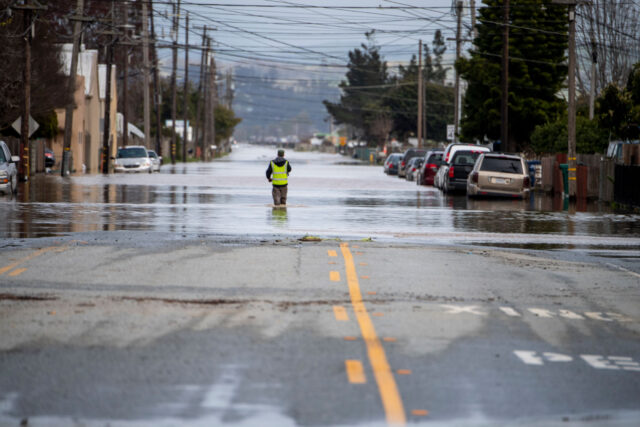
“Lastly,” said Nemeth, “I spend an insane amount of time thinking about flood risk. It’s one of the things that absolutely keeps me up at night.” She recently texted the state climatologist to ask how the catastrophic floods in Valencia, Spain could manifest in California.
What he told her, without hesitation, said Nemeth, is that it could happen here, as a series of atmospheric rivers hitting California over five days with precipitation falling as rain instead of snow. She paused to let that sink in. “We have a lot of work to do. It is my sincere hope that in 2050 we can say that we have not had significant fatalities from a flood emergency in the previous two decades.”
Alvar Escriva-Bou spoke feelingly about the floods in his home country, and Willie Whittlesey echoed Nemeth’s message about the state’s growing volatility. “If you had asked me 25 years ago if we would have a significant catastrophic wildfire in November of any given year,” he said, “I would have said no way in heck. But the Camp Fire started on November 8, 2018, and it was one of the most devastating wildfires we’ve ever seen. Anything can happen, and we need to be prepared for it.”
California’s Frontline Communities Become Climate Leaders on International Stage

Preparation was also top of mind for panelist Phoenix Armenta of the San Francisco Bay Conservation and Development Commission (BCDC) in the form of community education and involvement in climate adaptation planning. To that end, they delivered a utopian vision of 2050 worthy of the late, great science fiction writer Octavia Butler.
Their vision of 2050 painted a picture of a grassroots movement in California that promoted trainings for the bioremediation of toxic sites and brownfields, community involvement in shoreline adaptation to sea level rise, and the development of worker-owned and community-owned cooperatives. “The BCDC Shoreline Leadership Academy, the Mycelium Youth Network, the Indigenous Traditional Ecological Knowledge Academy, and many other programs trained members of frontline communities in the tools they needed to create solutions for the climate and for social issues they were all facing.”
In one statewide effort to jumpstart an alternative currency—a contest to plant the most trees in California—led to the Great Tree Rush of the 2030s. “Oakland became a lush urban forest. People were paid for planting and maintaining trees. There were contests to grow food in urban settings.” And, they said, working on climate change issues became more popular and more lucrative than working in the fossil fuel industry.
They also addressed California’s housing and population issues. Armenta described the challenges the state may face from an influx of climate refugees seeking safer living conditions. Both Karla Nemeth and Willie Whittlesey echoed Armenta’s concerns in this area. “California’s population loss is a temporary moment,” said Nemeth.
San Joaquin Valley Grower Wins Coveted Mezcalifornia Award

We then peered into the future of California’s formidable agriculture sector, which is already feeling the effects of climate whiplash.
“We’re in 2050 now,” said UC Davis’s Alvar Escriva-Bou, “and 500,000 acres of farmland have transitioned to other uses, but we’re still the first state in the nation in agriculture.” So how did California retain its agricultural dominance despite a shrinking irrigated footprint? Escriva-Bou named three key ways California maintained its position: by utilizing groundwater planning and management, implementing smart land repurposing, and regionalizing approaches.
He said by 2050, California had prioritized groundwater planning and management and implemented smart land repurposing to bolster groundwater recharge, solar development, and habitat restoration. He described a state that had also aligned its energy and water policies, and advanced water-limited crops like the agave mentioned above. And he praised California’s robust incentives to convince people to scale down or use less water for alfalfa. “Some incentives are really cheap,” he said. “The most important thing here is to be smart in our initiatives and investments.”
Furthermore, it had been important to think about a regional approach to land use changes, said Escriva-Bou. For solar development, transmission was a real bottleneck, as well as water infrastructure and water markets. “There’s a lot of need for water in the south, and we can make things more equitable by sharing some water,” he said. That said, droughts are going to keep happening. “The 2027–30 drought was really bad.”
But other panelists, including Phoenix Armenta and moderator and center director Letitia Grenier, brought up the need to transition workers as land comes out of production.
Wildfire Damages Drop to Lowest Level in Three Decades

“What is a watershed?” asked Yuba Water’s Willie Whittlesey. “It’s a large community composed of many small communities.” He is deeply concerned about how wildfire is affecting California water, and he envisions that in the year 2050, Cal Fire and the US Forest Service are working together with Native American tribes to manage forests on a watershed level, using government resources and tribal knowledge. Whittlesey stressed the importance of treating forests so that “when they burn, they burn at low intensity.”
Water quality and quantity are both affected by wildfire for years, making watersheds more prone to flash floods and trickier to manage as debris flows and sediments increase. Trees in 2050, Whittlesey said, are growing and absorbing carbon. Air quality is better, and industry has identified uses for low-value forest products from forest thinning. “The technology is being advanced, so that by 2050, we can harness in a meaningful way at a scale where material isn’t just left in the forest.”
Like Armenta, Whittlesey stressed the importance of community engagement and participation. Particularly in the wildlands-urban interface, “we have to have a community that’s wise to what’s going on.” Wildfire threats aren’t going away, but better construction and building materials can make homes more resilient—though emergency action plans and routes remain important “so we can get people out of their communities safely.”
In 2050, he explained, fire-safe councils are more powerful and more well-funded. California was seeing fewer human ignitions because “energy utilities got smart on how to manage their equipment and operate it. They got really good at smart grid technology and burying electrical lines to reduce ignitions.”
The event was full of ideas—and sparked many conversations when it ended. California, you’ve got your marching orders.
We invite you to watch the event videos.