Table of Contents
- Key Takeaways
- Introduction
- The Inland Empire Labor Market for Graduates
- Inland Empire Students and College Preparation
- College-Going and Community College Transfers
- Challenges for Inland Empire Universities
- College Graduation and Baccalaureate Degrees
- A Path Forward for Higher Education in the Inland Empire
- Notes and References
- Authors and Acknowledgments
- PPIC Board of Directors
- Copyright
Key Takeaways
Home to 4.6 million people—far more than the San Diego or Sacramento metropolitan areas—the Inland Empire continues to grow even as many other regions in California see population loss. The region is youthful, with a higher share of children and young adults than the rest of the state, but few earn college degrees. We take stock of progress in the Inland Empire toward addressing low rates of college completion, highlighting strategies that could encourage more students to go to and through college. Our focus is on baccalaureate completion.
- High school students from the Inland Empire are much less likely to go to and graduate from college than their peers in the rest of the state. Only 26 percent of Inland Empire ninth graders are on track to earn a bachelor’s degree, compared to 35 percent in the rest of the state. Even with high school graduation rates that are above the state average, only 57 percent of Inland Empire graduates attend a college anywhere in the US, compared to 65 percent of graduates in the rest of the state.
- Fewer Inland Empire high school graduates enroll in four-year colleges, and transfers from community colleges are low. Only 25 percent of the region’s high school graduates attend a four-year college after high school. Most who go to college attend community colleges, where transfer rates are the lowest in the state—only 31 percent of transfer-intending students do so within six years, compared to 40 percent statewide.
- Inland Empire students are underrepresented at the state’s public four-year universities. Low representation is due in part to low completion of the high school courses required for admission to University of California (UC) and California State University (CSU), though other factors such as financial constraints, campus proximity, and access also play a role.
- College-going and completion are low among low-income, Black, and Latino students. Inland Empire students from low-income families are much less likely to graduate from college than those from higher-income families. Black and Latino ninth graders are only about half as likely as white and Asian students to make it through high school, enroll in college, and graduate with a bachelor’s degree.
The good news is that students at some Inland Empire high schools are faring well; strategies at these schools could be leveraged by others in the region. To create a college-going culture, students may need early and ongoing exposure to college- and career-readiness opportunities. Curriculum changes may involve aligning high school graduation requirements with those for admission to UC and CSU and expanding access to dual enrollment courses. Furthermore, community colleges are a primary point of access to higher education—streamlining transfers can help students continue their journey to four-year institutions. Lastly, addressing non-academic needs—including college knowledge and financial support—may be necessary to make college accessible and affordable.
Introduction
The diversity of students, institutions, and opportunities within the Inland Empire calls for a close look at the strategies that work best to set the region’s students on the path to college. Recognizing the points where students fall off the path can help tailor efforts to improve outcomes. The size of the Inland Empire—with more than one in ten of the state’s high school students—means improvements to higher education attainment would reach beyond the region and across the state.
With 4.6 million people, the Inland Empire is the third-most populated region in California—after Los Angeles County (10 million) and the San Francisco Bay Area (7.8 million); it consistently ranks among the fastest-growing regions in the state (Figure 1). With its youthful, diverse, and growing population, the Inland Empire could be an important source of new college graduates to meet the strong demand for highly educated workers in the state, which could lead to a better regional economy. Students and their families also express a desire for higher education: 71 percent of California parents want their child to earn a college degree (Baldassare et al. 2025).

Workers Often Live in the Inland Empire but Commute to Coastal Areas
The vast majority of the region’s residents live in urban and suburban locales just outside the large coastal metropolitan areas of Los Angeles, Orange, and San Diego Counties. Many workers choose to live in the less expensive Inland Empire and commute to jobs in those adjacent counties. With the exception of the Coachella Valley, the mountains and eastern deserts are lightly populated. Over the past 50 years, per capita income has lagged behind the rest of the state and is now almost 40 percent lower (Figure 2).
Low levels of educational attainment both drive and reflect these economic realities. The value of a bachelor’s degree remains high in California (Cuellar Mejia, Alesi Perez, Hsieh, and Johnson 2025); today’s labor market continues to reward workers who have a bachelor’s degree. And the state’s four-year public institutions—the University of California (UC) and California State University (CSU) systems—consistently rank among the best in the nation for return on investment, especially among lower-income students. Yet among the state’s most populated regions, the Inland Empire has the second-lowest share of California’s adults (ages 25–54) with at least a bachelor’s degree (Figure 3).

Migration partly accounts for this trend—most people who move to the region do not have a college degree. But the primary driver is that relatively few Inland Empire students enroll in college after they graduate from high school and fewer go on to complete a bachelor’s degree. Wide variation in student outcomes across high school districts within the region show what is possible, but far too many students are still falling off the path to a college degree.

Examining the Data for Progress and Opportunities
By analyzing publicly available data and interviews with education officials and key stakeholders, this study determines the progress being made toward raising the levels of degree attainment in the Inland Empire. We examine trends in student progress toward completing a bachelor’s degree, with a focus on four critical junctures: high school graduation, college access and enrollment (among first-time and returning students), transfer to four-year colleges among community college students, and persistence to completion (a baccalaureate degree) among all college students.
We also measure how educational trends vary by key subregional and demographic communities, and we highlight places where outcomes exceed expectations. To explore factors that could improve college-going rates for students in the Inland Empire we interviewed regional, district, outreach program, and community college leaders (see Technical Appendix A). Participants provided insights into the challenges and opportunities involved in improving college outcomes. We use qualitative analyses to identify policies and practices that might have led to these better outcomes, highlighting opportunities where college-going rates might be increased in the region.
The Inland Empire Labor Market for Graduates
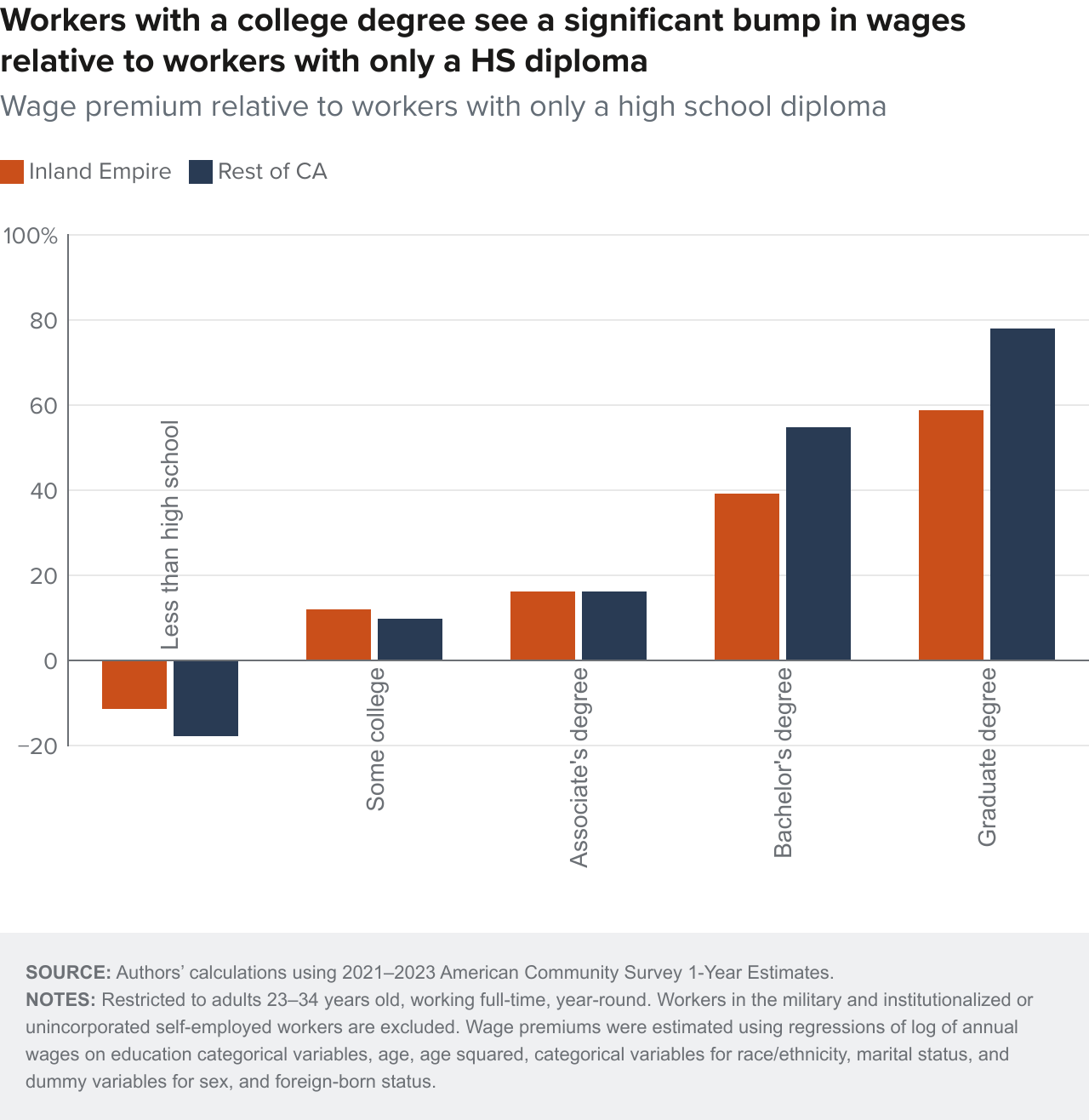
Like elsewhere, the economic prospects for recent college graduates with a bachelor’s degree in the Inland Empire are much better than for those without. In the Inland Empire, early career workers with a bachelor’s degree earn on average 39 percent more than workers with just a high school diploma, and workers with graduate degrees earn 59 percent more. Because location shapes the industrial structure of an area—and demand for labor varies with industry in ways that can increase or decrease the earnings gap between workers with and without a college degree—the college wage premium varies greatly across the state and the country (Winters 2020).
In the last decade, most job growth in the Inland Empire has been driven by the transportation/warehousing and health care industries and most workers in those two industries do not have a college degree (see Technical Appendix Figure B1). In other words, the demand for manual skills has been higher than the demand for college graduates, which lowers the college wage premium.
Even though the college wage premium in the Inland Empire is lower than elsewhere in the state (Figure 4), college is still a good investment. Graduates from both CSU San Bernardino and UC Riverside, which enroll a high proportion of low- and moderate-income students, earn a high enough premium to pay down their education costs quickly after attendance, according to a recent analysis of return on investment for California higher education institutions (Itzkowitz 2024; Itzkowitz 2025). Moreover, recent college graduates in the region are nearly twice as likely to own a home than recent college graduates in the rest of California (see Technical Appendix Figure B2).
Yet despite these benefits, only 18 percent of the region’s adults ages 23 to 34 had a bachelor’s degree, and 6 percent had a graduate degree in 2023—much lower than statewide (29% and 12%, respectively).
The Local Economy and Perceptions of the Value of a Degree
As we spoke to officials across the Inland Empire, one theme that came up repeatedly was a general pessimism among students about the value of a bachelor’s degree and disagreement about whether or not a college degree was necessary to participate in the regional economy. Interviewees noted that two of the three most prominent industries in the Inland Empire were logistics and construction, industries that generally pay higher than minimum wage and do not require a college degree to participate.
Many of our interviewees noted that the breadth of job opportunities for high school graduates and the lower cost of living than the rest of the state translated to less motivation for students to attend college. Without college, many of their peers had already achieved a quality of life that was equal to or better than that of their parents.
PPIC has extensively studied the value of a bachelor’s degree across the state; in nearly all courses of study, the long-term benefits of obtaining a bachelor’s degree far outweigh the costs even if the benefits take longer to develop (Cuellar Mejia, Alesi Perez, Hsieh, and Johnson 2025). This is not to say that all high school graduates should attend college or that not attending college should be seen as a failure. However, given that only one quarter of the region’s ninth graders are on a path to completing a bachelor’s degree, many students could benefit from college—but they are not provided with the necessary opportunities and support to achieve this.
Addressing Concerns about College Affordability
The cost of college as well as anxiety and confusion around how to pay for these costs continue to be obstacles on the path to higher education in the Inland Empire. Every official we spoke with noted that students and their families see the cost of college as a significant barrier, particularly with respect to four-year colleges and universities. In PPIC’s latest education survey, 69 percent of parents of school-aged children expressed they are either very worried or somewhat worried about being able to afford a college education for their youngest child (Baldassare 2025).
Compounding the issue of affordability is the complexity of financial aid programs and the application process; interviewees noted that students often felt discouraged from completing the process to access financial aid. Ensuring that graduating high school seniors have all the information they need to plan their future has been a focus area for districts in the Inland Empire over the past decade.
Inland Empire Students and College Preparation
Students must navigate a long road from ninth grade to college graduation. They must complete the so-called “A–G” courses in high school to be eligible for admission to the UC or CSU, and then they must graduate high school. Students who first attend a community college need to transfer to a four-year university. Once there, students must persist to graduation. Multiple deadlines and requirements, both for admission and financial aid, complicate these transitions.
The good news is that Inland Empire students are slightly more likely to graduate from high school (88%) than their peers in the rest of the state (86%). The bad news is that they are less likely to have completed the college preparatory courses needed for UC and CSU, and they have worse outcomes than students in the rest of the state at every other education transition.
Considering the entire pathway from ninth grade, Inland Empire students are much less likely to eventually graduate from college. Only about a quarter of Inland Empire ninth graders are on a path to earn a bachelor’s degree (from a college located anywhere in the US). This is lower compared to the rest of the state, where over a third of ninth graders are on the path. (Figure 5), based on the most recent rates of high school graduation, college enrollment, transfer, and persistence in college. Students from Bay Area and Orange County are much more likely to complete the path to a bachelor’s degree while those in the San Joaquin Valley are slightly less likely than those in the Inland Empire.


Most High School Students Are Not Academically Ready to Apply to UC and CSU
UC and CSU are the main destinations for California high school graduates bound for college; in the Inland Empire, two-thirds who attend a four-year college go to either a UC or CSU. Yet despite high graduation rates, college-going remains low in the region—especially as compared to other highly populated regions—in part because a large share of graduates do not complete the A–G courses (Figure 6) and are not eligible for admission.
Within demographic groups, A–G completion rates are only slightly lower for the region compared to the rest of the state; however, the Inland Empire is home to a relatively high share of Latino and low-income students, both of whom have relatively low A–G completion rates.


For Inland Empire students who do complete A–G requirements, college-going rates are much higher than those who do not complete A–G—more than twice as high for A–G completers (81%) than for non-completers (38%). Still, college-going is low for both groups compared to students in other regions, suggesting A–G completion may not be the only factor inhibiting Inland Empire students from enrolling in college.
Promoting Early Awareness about College and Career Options
Most districts we spoke to, including K–12 and community college, are moving towards providing information on the college application process and the A–G course sequence in middle school. No K–12 districts yet had graduation requirements aligned directly with A–G requirements; A–G is not set as the default by district policy, so students need to opt in. These districts have graduation requirements that closely, but do not fully align.
Scaling outreach to middle schools could help students obtain information on college-going requirements such as the A–G courses sooner. California College Guidance Initiative (CCGI) is aiming to do this through the CaliforniaColleges.edu platform. All districts have access to basic accounts; however, districts vary on their levels of engagement.
We analyzed the college-going rates of over 45 high school districts in the Inland Empire using data from the California Department of Education, and we conducted further research with publicly available data to see which districts had policies in place to align graduation requirements with A–G requirements. Typically, districts that align or very closely align had higher college-going rates than those that did not align.
Those districts that closely align with A–G have a chance to make a direct impact on college access by slightly modifying their requirements. For example, one K–12 district from Riverside County described graduation requirements that vary by only one course of foreign language from the A–G requirements; adjusting from one year to two years in foreign language would ensure their students graduate A–G and college ready.
Many students in the region are first generation and low income, so the earlier they get exposed to college and career opportunities, the better they will understand how to take advantage of them. Interviewees also discussed tying career education to higher education, as they are often seen as separate tracks by students. Helping students understand that college is indeed a step toward career development, and career education courses can prepare them for college as well is important.
One district mentioned that they organize career fairs for their elementary school students every year. Career fairs could be most impactful by having alumni, people of color, and people from the community present so students feel represented and can see themselves attaining those careers. K–12 district interviewees mentioned high school pathways, but they focused more on sub-baccalaureate education. For example, one K–12 district mentioned their robust firefighter pathway program where students visit work sites to see live projects and simulations. They aim for their pathways to be as close as possible to industry-level standards. In this district, all students must complete a senior project, which requires job shadowing and certain hours a week to be involved in internships.
Expanding Access to Dual Enrollment Courses
Dual enrollment was identified across many districts as a key effort toward supporting college readiness and access. Community college leaders and several high school districts have prioritized expanding dual enrollment for high school students. Districts identified several strategies to make programs more accessible, such as offering courses online, designating physical space on the high school campus, or offering transportation to the local community college campus. Providing online courses is also a key component for expanding dual enrollment and meeting student demand for more flexible schedules (Rodriguez et al. 2025).
Interviewees identified transfer-level math and English courses as popular, with course offerings continuously growing. Every official noted that the experience with college courses demystifies higher education and gives students confidence, allowing them to believe they belong in college.
Though schools across the region had expanded their dual enrollment offerings, community college officials expressed concerns to us about how and why students were enrolling in these courses. One concern was that students were attempting these courses because the courses were offered online, and students believed that online courses would be less rigorous than face-to-face courses offered on campus. These concerns, however, represented a minority of interviewees (two out of nine), with most interviewees noting that the benefits of expanding dual enrollment course offerings far outweighed their concerns.
College-Going and Community College Transfers
Differences between Inland Empire students and others in the state are evident along every step of the pathway, but two transitions stand out: college enrollment after graduating high school and transfer from community colleges to four-year colleges. Among those who do not earn a bachelor’s degree, 51 percent completed high school but did not attend college, and another 23 percent attended a community college but did not transfer.
Fewer Inland Empire Students Enroll in College than in Other Regions
The Inland Empire has one of the lowest college-going rates (57%) of any major region in California (the statewide rate is 65%). Enrollment is low at all types of institutions—particularly at CSU, out-of-state, and community college campuses. College-going rates in the region are lower among almost every demographic group, except Black students, compared to the rest of the state (Figure 7). These low rates of college-going reflect lower levels of academic preparation for college, with Inland Empire high school graduates—especially Latino high school graduates—less likely to graduate with the full set of college preparatory courses required to be eligible for UC and CSU.
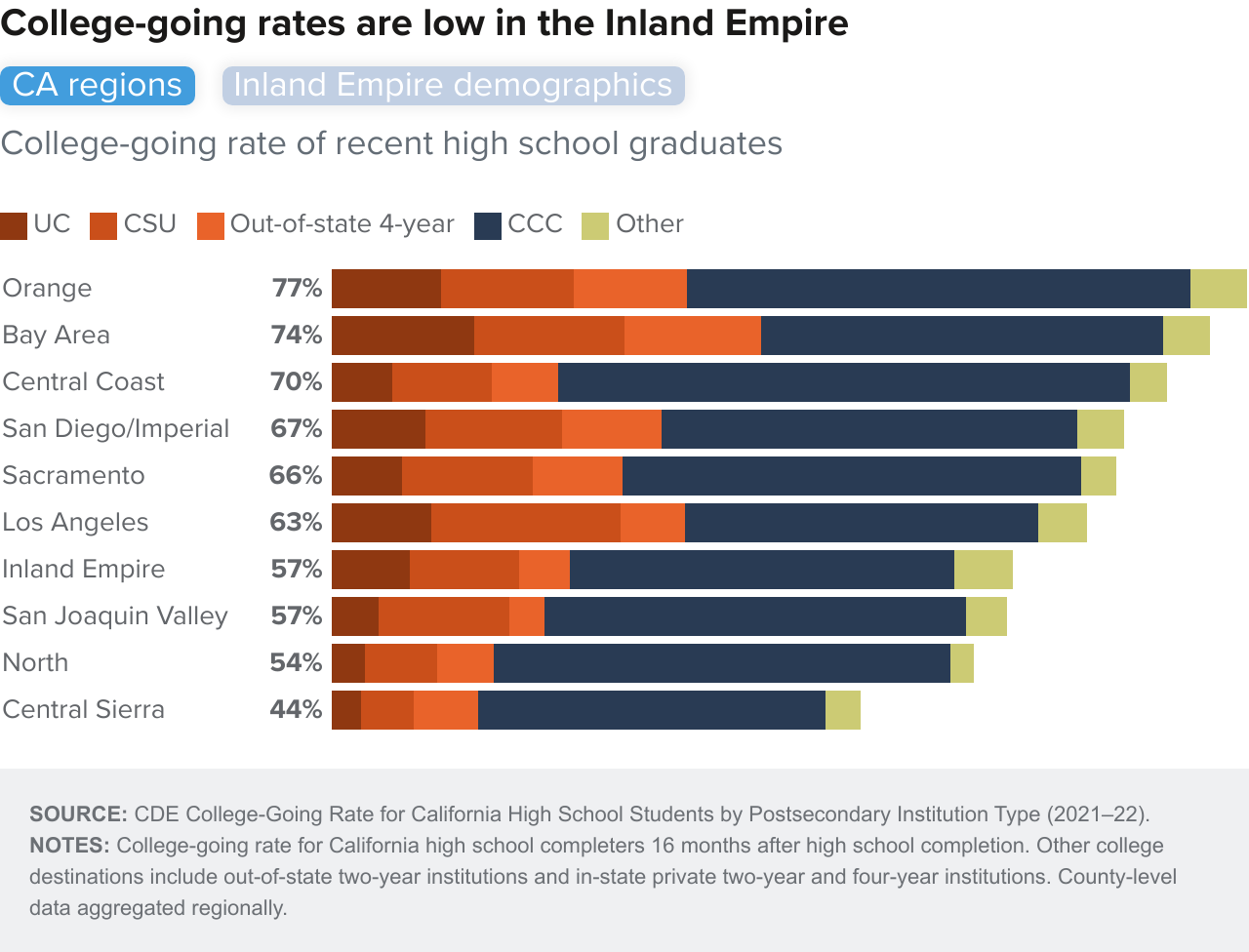

Enrollment rates vary widely across school districts in the Inland Empire. The starkest differences occur with college enrollment among recent high school graduates; these enrollment differences cause most of the gap in student outcomes between the Inland Empire and the rest of California. Rates range from a few districts where less than 30 percent of graduates enroll to almost 70 percent enrollment in districts with the best outcomes. Districts that have high college-going rates for middle- and high-income students also tend to have high college-going rates for low-income students, but there are notable differences even within districts (Figure 8).
Some high school districts do a good job of getting all their students into college: low, middle, and higher income. In most districts, however, low-income students are less likely to go to college. But college-going rates tend to vary most across districts rather than between students within a district. In other words, district policies and practices seem to have more influence than student socioeconomic status in determining college-going rates.

Taken together, low academic preparation and college-going mean the region’s share of freshmen at UC and CSU does not reflect its share of the state’s public high school students (Figure 9). While the Inland Empire accounts for 14 percent of high school graduates in California, it accounts for only 12 percent of UC and 11 percent of CSU new freshmen enrollment, the latter reflecting a decline from its pre-pandemic level.

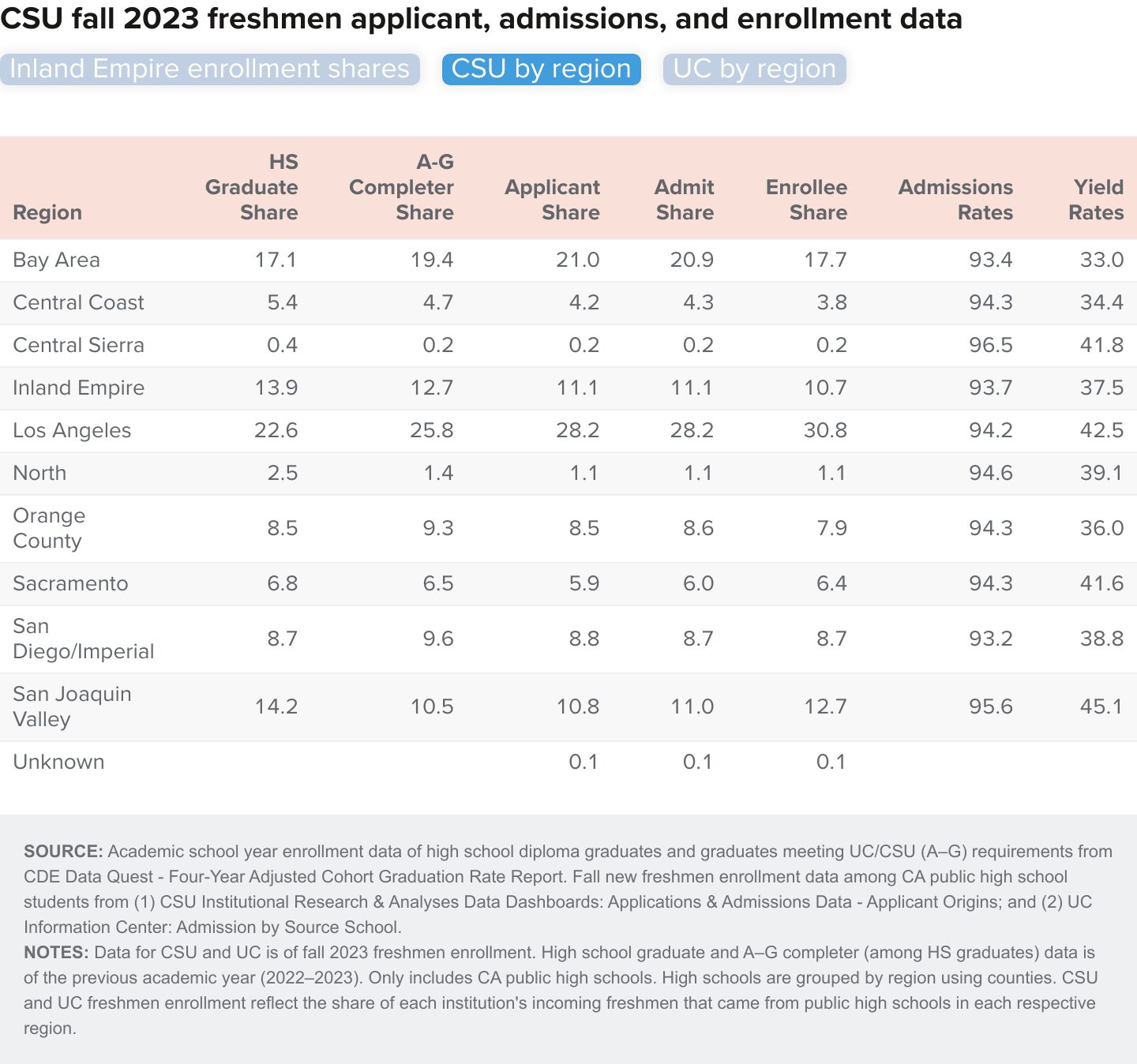

Slightly lower application rates, rather than admissions rates, are driving this regional underrepresentation. While student goals or preferences may play a role, high school students from the Inland Empire also may not be applying to four-year institutions precisely because they have not been prepared to enroll and are not eligible for admission.
Transfers from Community College to CSU and UC Are Falling
Given these high school outcomes, transfers from the community college could counteract the low initial enrollment in public universities. Yet here again, we see worse outcomes in the Inland Empire.
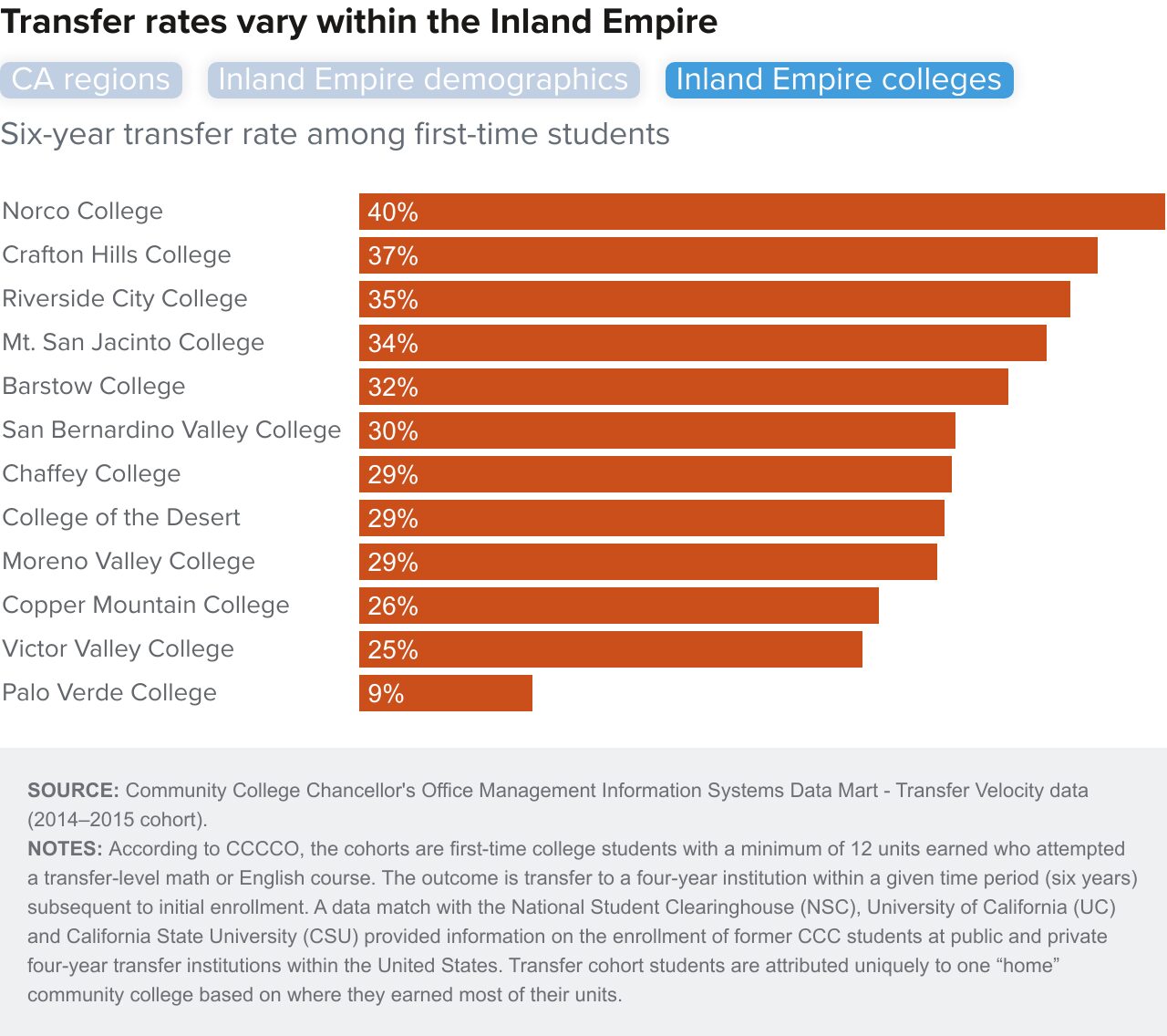
While transfers are low across the state, the Inland Empire has the lowest rates of six-year transfers among first-time students. All 12 community colleges in the region have transfer rates lower than the statewide average; transfer rates for every demographic group are also lower (Figure 10). Latino students have the lowest transfer rates (31%) despite being the majority of community college students in the region (63% in the Inland Empire compared to 47% in the rest of the state).


Furthermore, the Inland Empire is heavily underrepresented in CSU and UC transfers (Figure 11). Indeed, fewer community college students from the Inland Empire declare a goal to transfer or to earn a degree compared to those from other regions.


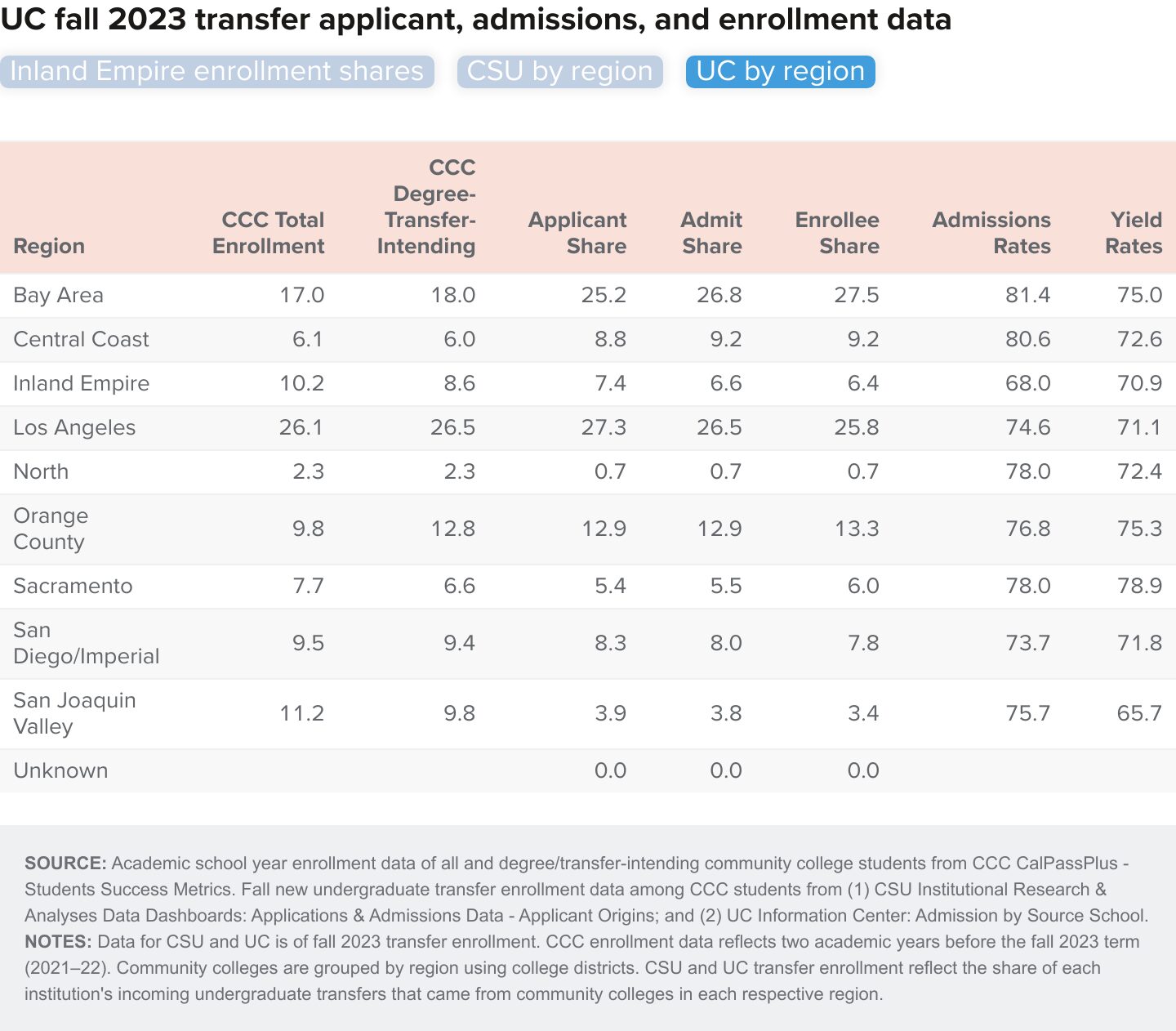
Again, lower transfer application rates are driving this regional underrepresentation, though low admissions and yield rates—the share of students who enroll after being admitted—also play a role at UC. Like freshman application rates, academic preparation likely affects transfer rates. Incoming students attending Inland Empire community colleges have lower than average college readiness compared to students at other community colleges in the state—including low A–G completion rates, GPAs, standardized math and English test scores, and fewer AP exams passed (Rothstein, Dizon-Ross, and Lacoe 2024). They are also less likely to express an intent to transfer than community college students elsewhere in the state.
According to our interviews with local officials, some community college students in the region may face further headwinds, such as less access to key transfer-level courses and both academic and non-academic supports. Limited access to necessary coursework in high school and community college makes the path to transfer more difficult.
Improving Transfers from Community Colleges
In the Inland Empire, community colleges are the top destination for college-bound students. Indeed, students in the region are more likely to start their college journey at a CCC than their peers in other regions (see Figures 6 and 11, earlier). The 12 community colleges in the Inland Empire serve a diverse community of 4.6 million residents over 27,000 square miles. We learned through our interviews that the presence of community college outreach and counseling staff at high school campuses builds a trusted relationship in support of this pathway.
At several high schools, community college counselors go to the campuses to help students with community college and financial aid applications for admission and financial aid. This outreach creates a pipeline that helps students enroll in postsecondary education. Interviewees also noted AB 705 as a benefit for local community colleges; this legislation removed remedial courses and decreased time to transfer. Statewide legislation in the form of AB 705 and AB 1705 has transformed the remedial education landscape and widened opportunities for community college students to reach their educational goals (Cuellar Mejia et al. 2023b).
The predominance of outreach by two-year institutions over four-year may lead more Inland Empire students to choose community colleges. These colleges play a bigger role in and have greater engagement with the community: two-year institutions could leverage this visibility to build stronger transfer pathways and articulation agreements with four-year institutions. A streamlined transfer process could enhance the college-going experience for students and thereby help raise the relatively low transfer rates in the Inland Empire (see Figure 10, earlier).
Challenges for Inland Empire Universities
The Inland Empire is home to two public universities, UC Riverside and CSU San Bernardino, which serve as primary destinations for students in the region. Among students from Inland Empire high schools and community colleges who attend a UC campus, at least a third of freshmen and half of transfers enroll at UC Riverside. A majority of the remaining UC-bound students attend UC Irvine, UC San Diego, or UCLA—the next closest UC campuses. Similarly, among Inland Empire students at CSU, enrollment is concentrated at nearby campuses, with CSU San Bernardino being the most popular (Figure 12).
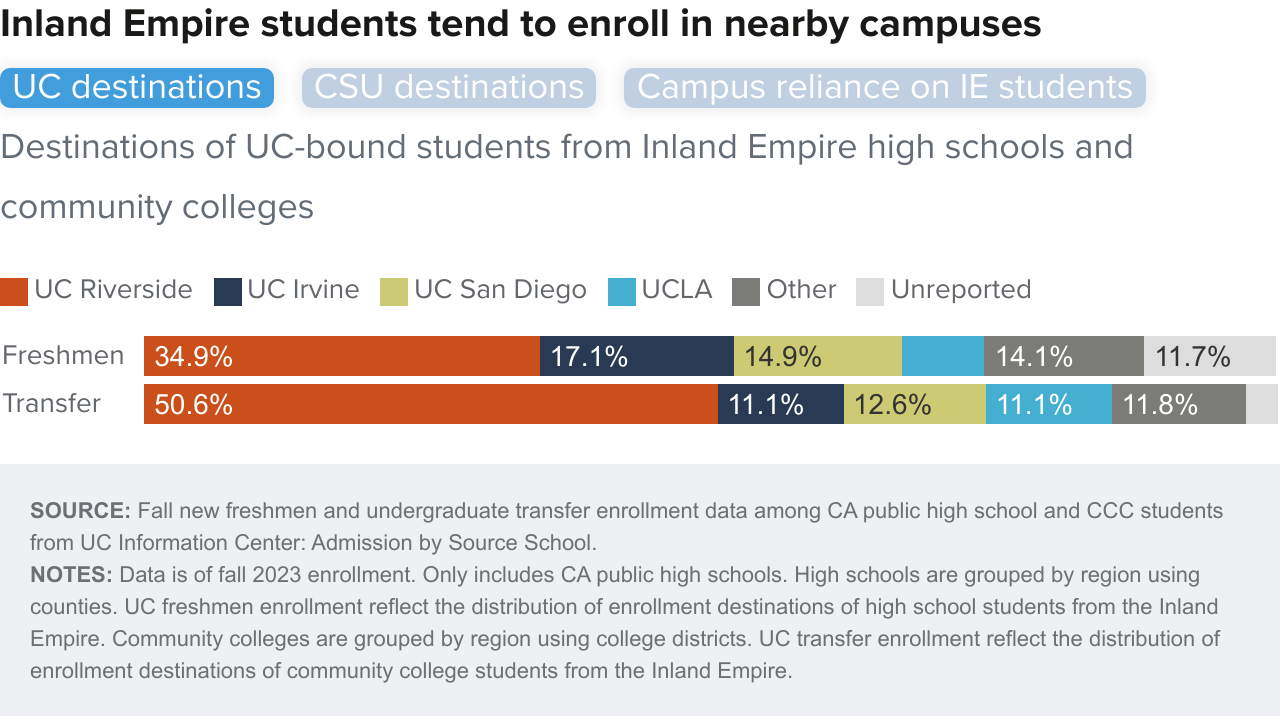

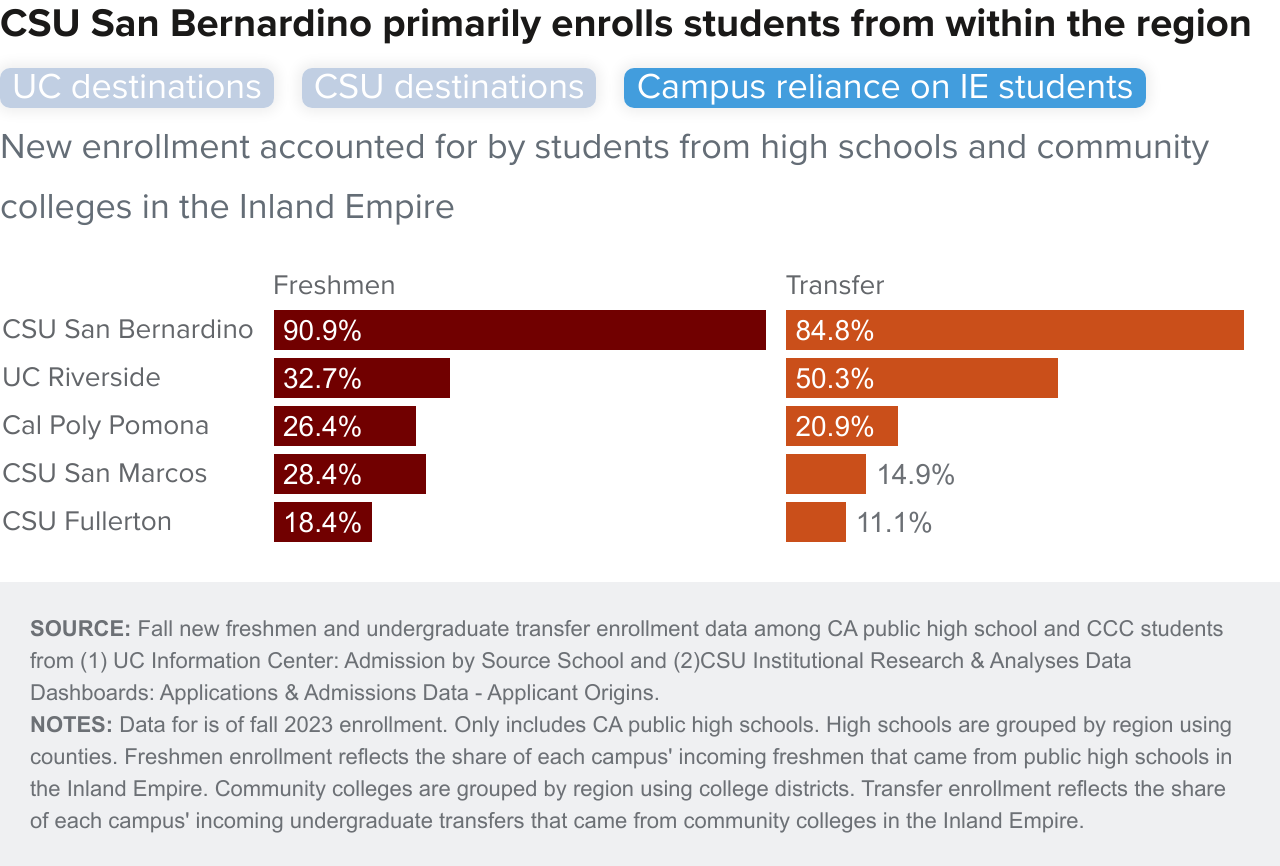
A mutual reliance exists between the region’s students and campuses: the Inland Empire accounts for one in three incoming freshmen and half of incoming transfers at UC Riverside, and nearly all incoming freshmen and transfers at CSU San Bernardino (Figure 12). Thus, increasing four-year college enrollment in the Inland Empire benefits students and campuses alike. Unfortunately, although both campuses have expressed desires to expand supply, each faces obstacles.
UC Riverside and CSU San Bernardino Face Challenges with Expansion
In its UC 2030 Capacity Plan (2022a), the UC system outlined a plan to significantly increase enrollment, with UC Riverside alone accounting for 35 percent of this projected growth. The Long Range Development Plan (2021) for the campus outlines plans to expand capacity to meet enrollment projections up to 35,000 students by 2035, an increase of over 9,000 students.
To expand to these numbers, however, the Riverside campus would need to significantly increase its academic, research, and support space (including classroom, office, and library capacity) by approximately 50 percent and more than double its student life space—primarily its housing capacity. A companion report from UC, Building 2030 Capacity, points out that despite local support, land, and opportunity to expand, UC Riverside “needs greater support expanding and upgrading its infrastructure.”
While CSU San Bernardino has also expressed a desire to significantly expand its capacity, notably so in its 2016 Campus Master Plan, it faces more pressing challenges. In a 2020 CSU-commissioned report (HOK 2020) the system projected a moderate increase in student demand in the Inland Empire through 2035, requiring its current capacity to nearly double. However, undergraduate enrollment has declined since the pandemic and remains below 2013 levels, even as CSU faces significant budget cuts amid a $1 billion system-level deficit.
Greater demand for college in the San Bernardino region will be necessary to raise enrollment numbers. Factors such as campus proximity, financial constraints, perceived access, and social capital likely influence decisions to apply. If students face work, family, or financial constraints that make moving away from home difficult, their options for higher education will be limited by what is available locally.
On average, community college students in the Inland Empire are relatively far from their nearest CSU and UC campus compared to students in other major regions (Rothstein, Dizon-Ross, and Lacoe 2024). Recent work from the RP Group highlights the strong relationship between proximity and transfer outcomes, finding that transfer rates were far lower for California community colleges that were at least 25 miles from the nearest public university than for those within 25 miles (Segovia and Cooper 2024). By this definition, half of the Inland Empire’s community colleges—Barstow, Copper Mountain, Desert, Mt. San Jacinto, Palo Verde, and Victor Valley—are located in university deserts. Deciding whether to apply or go to college at all likely depends on how accessible the nearest campus is; substantial and growing research shows a relationship between proximity to a college and the likelihood of attending college.
Enrollment may increase with partnerships and targeted strategies
Efforts that could boost access and demand are underway in the region. Growing Inland Achievement (GIA), a supporting member of a regional K–16 collaborative, has wide reach and is engaging in cross-sector partnerships to conduct research, develop student-centered resources, and implement effective postsecondary reforms.
Partnerships between community colleges and four-year universities are key to boosting enrollment at the four-year institutions. Riverside Community College District and UC Riverside recently broke ground on a joint student housing initiative with the goals of addressing student housing insecurity and streamlining transfer into the UC system.
It is also necessary to remove barriers to applying and enrolling. CSU San Bernardino is participating in a direct admissions pilot program that will offer high school students in Riverside County immediate, conditional admission before they even apply. UC Riverside and CSU San Bernardino also have a joint satellite location in Palm Desert, which serves more than 2,000 students (95% of whom come from within the region), likely playing a significant role in addressing place-bound preferences or constraints in the Coachella Valley.
Supporting Students Through Partnerships and Outreach Programs
Several high school districts and community college leaders highlighted the importance of nonprofits and outreach programs in filling gaps where students need support. National programs like AVID and state programs like CalSOAP offer similar supports to students and assist with college readiness and planning.
A multitude of nonprofits and outreach programs exist for students in the Inland Empire, many of which target their services to a certain microregion or population due to the region’s vastness and diversity. These organizations provide college tours, internships, job shadowing, networking, application support, financial aid workshops, scholarships, and mentorship.
BLU Education Foundation is a community partner working on college and career access, especially for students with limited income and opportunities. The foundation runs several programs to help students obtain college degrees and explore career paths, including a year-long health pathway program, the Black Educator Pipeline Project, and the College Exodus Project. The Black College and Career Access Network (BCCAN) shares resources with Black students and guides them toward attaining a college degree and viable career. By utilizing program alumni as college tour guides or for job shadowing, students can gain a sense of belonging as they see themselves represented in higher education and beyond.
While these programs are designed to promote positive outcomes, there is opportunity for improvement in reaching a broader range of students. Currently, many require students to opt in or self-select, which can limit their overall impact. Outreach efforts often offer essential one-on-one support, especially where schools may face capacity constraints—highlighting the value of expanding and strengthening such supports. With better coordination and alignment across organizations, and by working to bring these efforts to scale, there is real potential to extend their reach and effectiveness for more students across the region.
College Graduation and Baccalaureate Degrees
Ultimately, the goal of increasing access to and representation at CSU and UC among Inland Empire students is to see more students earn a bachelor’s degree. Thus, regional disparities in persistence and graduation rates at the state’s four-year universities need attention so that these disparities can be reduced.
More Students Are Graduating from CSU and UC but Rates Are Still Low
Graduation rates for students who start as freshmen at CSU San Bernardino have increased over time—from 44 percent for students entering in fall 2000 to 55 percent for those entering in 2017—but remain below the systemwide average (62%). At other top CSU destinations, freshmen graduation rates for Inland Empire students are mixed. They are relatively high at CSU Fullerton and Cal Poly Pomona, and low at CSU San Marcos. Graduation rates among transfer students are less varied across campuses and are more in line with the systemwide average (Figure 13).

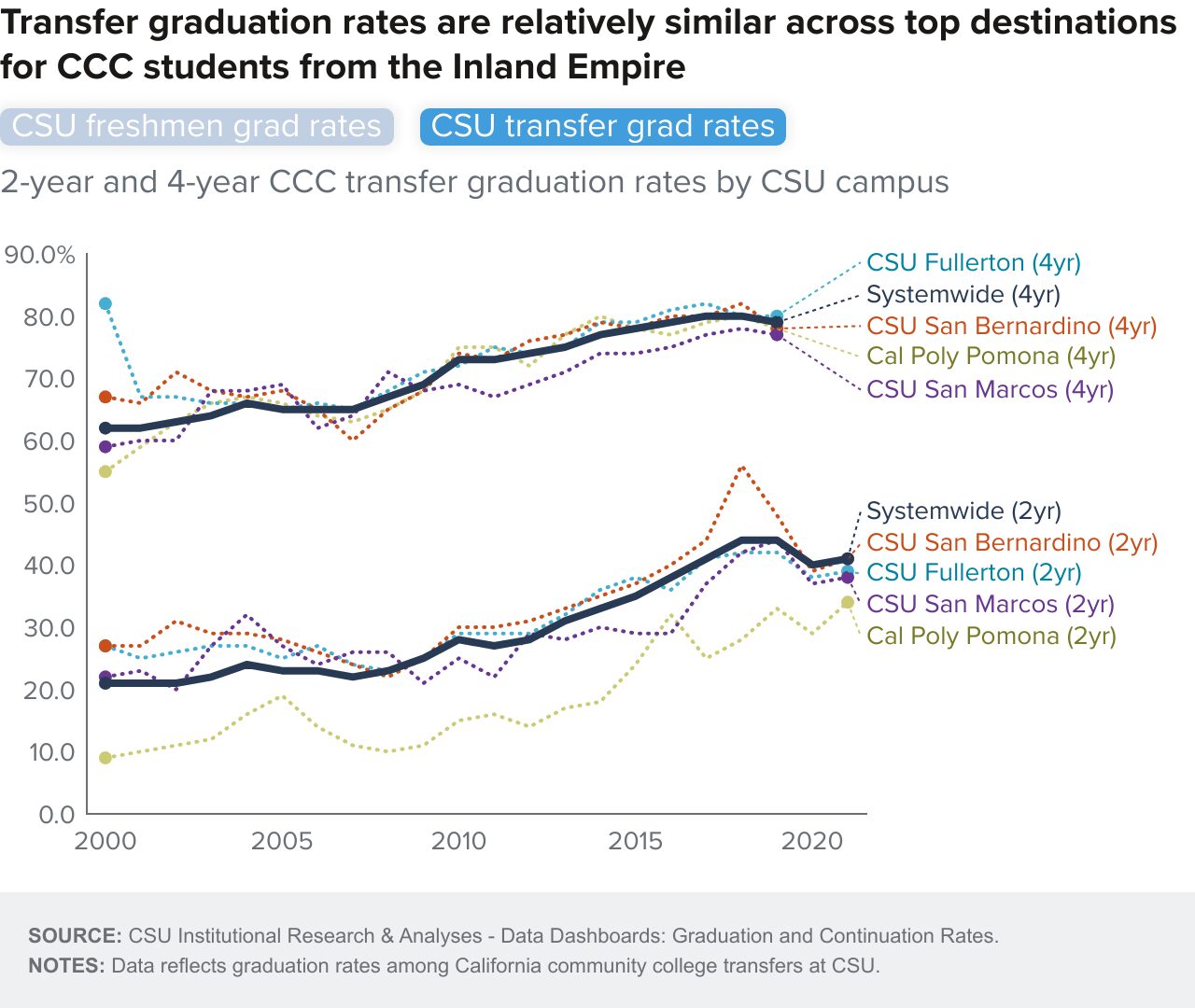
Unlike CSU, UC provides data on graduation rates by student, and we can compare students from Inland Empire high schools and community colleges to those from schools in other parts of the state. Though graduation rates throughout UC have increased over time, rates are slightly lower for students from the Inland Empire, especially freshmen (Figure 14). These lower graduation rates further exacerbate the regional divide in UC degree attainment.


Low-Income Students Are Less Likely to Earn a Degree
Within the Inland Empire, college completion rates vary by race/ethnicity and by income. Low-income students are only about half as likely to complete college as their middle- and high-income peers, and less likely than low-income students in the rest of the state. Moreover, the share of high school graduates from low-income families is higher in the Inland Empire (68%) than the rest of the state (58%). Notably, Inland Empire students from middle- and high-income families are less likely to graduate from college than their peers in the rest of the state.
In both the Inland Empire and statewide, Asian students are more than twice as likely as Latino and Black students to earn a baccalaureate degree. The Inland Empire has relatively low shares of Asian students, and relatively high shares of Latino students and Black students. Almost two-thirds (66%) of Inland Empire high school graduates are Latino, compared to just over half (52%) in the rest of the state.
A Path Forward for Higher Education in the Inland Empire
The Inland Empire faces unique challenges around advancing educational attainment, but strategic interventions at key transition points can push the needle on the region’s low rates of college access and completion.
A central issue is that the vast majority of jobs in the Inland Empire do not require a college degree. Wage premiums for completing college are high in the region, but not as high as elsewhere in the state. Many college graduates in the region will work in jobs outside of the region—especially in coastal Southern California—after completing their degree. Despite living in the Inland Empire post-graduation for the lower cost of living, they are not participating in the regional economy. To a large extent, this economic context frames efforts (or lack of efforts) to improve college-going and college completion, and to increase opportunities for high-skill, high-paying jobs where individuals could use their degree within the region.
To be clear, multiple stakeholders in the region are working to improve college-going and college completion, but almost all of our interviewees felt that more effort and cooperation across education segments in the region was necessary to move the needle. Perhaps most important, a majority of Inland Empire parents hope their children will earn at least a bachelor’s degree—far more parents want this than the number of children who currently earn degrees.
Raise Awareness about College at Critical Junctures
To build a strong foundation for college readiness, students must learn about college before they enter ninth grade. To adopt this early intervention, middle schools and high schools will need to work together to align course offerings.
- Implement policies and programs to improve college readiness. Unified school districts (those that are K–12), can do this through their school boards, while other high school districts will need to work with their feeder K–8 districts. Districts should implement the A–G curriculum as the default pathway, requiring students to actively opt out rather than opt in. This approach ensures more students automatically align with college admission requirements while maintaining flexibility for alternative paths.
- Provide key information (“college knowledge”) about the process of enrolling in college—including financial aid, college applications, and timelines to give students agency in executing their academic goals.
Creating a college-going culture requires systematic changes in school environments. Such changes include visible college messaging, regular college and career counseling sessions, and celebration of college acceptances.
- Deliver accurate information about college via online services such as californiacolleges.edu, the state’s official college and career planning platform.
- Provide comprehensive support to students and families; school administrators, supported by district leaders, must offer clear information about college requirements, financial aid opportunities, and application processes.
- Place special emphasis on four-year college enrollment, particularly for first-generation students who might otherwise default to community college despite being four-year eligible.
Regional coordination, rather than isolated institutional efforts, is crucial for improving transfer rates. Community colleges and four-year institutions must align their programs and requirements to create seamless pathways.
- Expand initiatives such as the associate degree for transfer (ADT) that yield clear guarantees to students and streamline the transfer process. The ADT provides students with a clear curricular pathway to qualify for transfer to California State University campuses.
Use Regional Efforts to Make Region-wide Changes
The Central Valley Higher Education Consortium has been critical to establishing a coordinated effort in the San Joaquin Valley, from setting goals to sharing data across segments and districts. In the Inland Empire, Growing Inland Achievement has been moving in this direction and—with adequate resources—could serve a similar role.
- Move regional college promise programs beyond campus and high school initiatives to create comprehensive support systems and broader opportunities for students. These programs provide information to students about college-going requirements and opportunities in middle school or at the start of high school.
- Incentivize momentum and completion by giving priority enrollment at four-year colleges to qualified transfer students. Creating regional referral pools for CSU admissions can help distribute enrollment more effectively and ensure qualified students find appropriate placement within the system.
Regularly assessing progress and adapting strategies based on feedback and outcomes will be fundamental in achieving meaningful results. Support for regional data sharing and evaluation is critical to follow student progress, identify barriers, and measure the effectiveness of interventions.
- Use data to follow students from K–12 through college completion and into the labor market while monitoring critical transition points and completion rates.
- Identify successful programs and practices, providing feedback to improve program effectiveness and enabling early intervention for struggling students.
Regional leaders could leverage the state’s Cradle-to-Career (C2C) data system to fit the needs of Inland Empire school districts, colleges, and universities. The state must play an active role in coordinating and supporting these regional efforts.
- Fund regional coordination initiatives and establish data sharing frameworks and systems. The state could also set policy guidelines that support regional collaboration.
- Provide technical assistance to implement new programs, such as the Golden State Pathways Program. This program has significant funding and momentum behind college- and career-readiness pathways and presents an important opportunity to improve college readiness and access.
- Offer incentives for institutional participation in regional efforts to increase opportunities and collaborations.
Success in the Inland Empire requires sustained commitment from all stakeholders: K–12 schools, community colleges, universities, business leaders, and state agencies. By focusing on these key areas and maintaining strong regional coordination, the region can significantly improve college access and completion rates for its students. The Inland Empire has the potential to become a model for advancing college-going and completion by strategically addressing key transition points, fostering a culture of higher education, and leveraging regional collaborations for sustained success.
Topics
Access Completion Higher Education