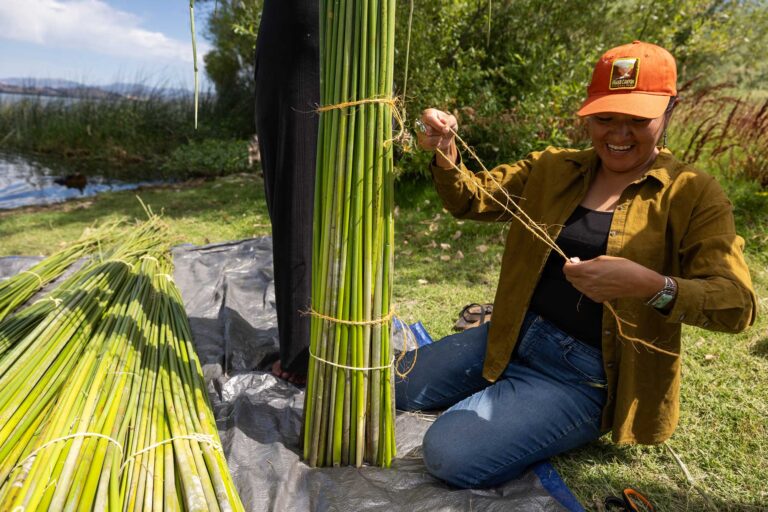
California is home to the largest number of Tribal nations in the United States.
- There are 109 federally recognized and more than 55 currently unrecognized Tribes in California, with diverse histories, cultures, economies, and water use practices.
- The members of these nations are descendants of the Native peoples who once occupied all the lands—and made use of the waters and other natural resources—of what is now the state of California.
- A majority of Tribal members live on Indian reservations that were established by federal law. The population of these areas is about 66,000, including residents who are not Tribal members.
- Indian reservations total approximately 670,000 acres, less than 1% of the state’s landmass.
Most Tribal water rights are linked to reservation land.
- Tribal nations that have reservation lands also have federal reserved water rights. The US Supreme Court has held that the creation of an Indian reservation also creates a “reserved” water right, which provides enough water to enable the Tribe to sustain a permanent home and economy on the reservation.
- Tribal reserved water rights can include surface water and groundwater, which may be used for a variety of purposes. Depending on the reservation, these include irrigation, domestic use, commercial and industrial uses, and instream flows to support fisheries and traditional practices.
- Most reserved water rights are senior to the water rights of other users in the same river system or groundwater basin. The seniority of a Tribe’s reserved water rights defines which users can divert water in times of shortage and is determined by the date on which the Tribe’s reservation was created.
- To date, only 16 California Tribes have quantified water rights. A quantified right defines the specific amount of water a Tribe may divert or pump for use on its reservation or, in some cases, for off-reservation uses.
The Colorado River Tribes have the largest quantified Tribal water rights in California.
- Tribes that inhabit four reservations along the Colorado River have federal reserved water rights that were quantified by the US Supreme Court. They may divert a maximum of 156,522 acre-feet annually for irrigation and related uses on 28,757 acres of reservation lands within California.
- Over the past decade, these four reservations combined have diverted an average of approximately 65,000 acre-feet annually for irrigation and related uses on about 10,450 acres of land. This is about 1.5% of California’s annual water use of Colorado River water.
- Although the Tribes use most of their water within their respective reservations, several have contributed conserved water to help stabilize reservoir levels in Lake Mead as part of regional, multiuser programs to address systemic shortages of water in the Lower Colorado River basin.
- The Quechan Tribe of the Fort Yuma Reservation has a long-term “forbearance agreement” with the Metropolitan Water District of Southern California (MWD) to allow MWD to receive up to 13,000 acre-feet of Tribal water annually. It also has engaged in a multiyear pilot program to fallow up to 1,600 acres of irrigated lands and to transfer the conserved water to MWD.
Several other California Tribes have water rights quantified by federal legislation.
- Several Southern California Tribes—five San Luis Rey River Bands, the Soboba Band, and the Pechanga Band—have water rights that were quantified by settlement agreements and confirmed by Congress. The rights total approximately 30,000 acre-feet annually and include local surface water and groundwater, as well as imported supplemental water. All bands except the Pechanga may transfer water to off-reservation uses.
- The Timbisha Band of Shoshone Indians also has reserved rights to surface water and groundwater that have been confirmed by federal legislation. These water rights support the Timbisha Shoshone village in Death Valley National Park and other ancestral lands.
- In addition, the Tule River Tribe and the Agua Caliente Band of Cahuilla Indians have reserved water rights that have been quantified by settlement agreements but not yet confirmed by Congress.
Only 16 Tribal nations in California have quantified federal reserved water rights
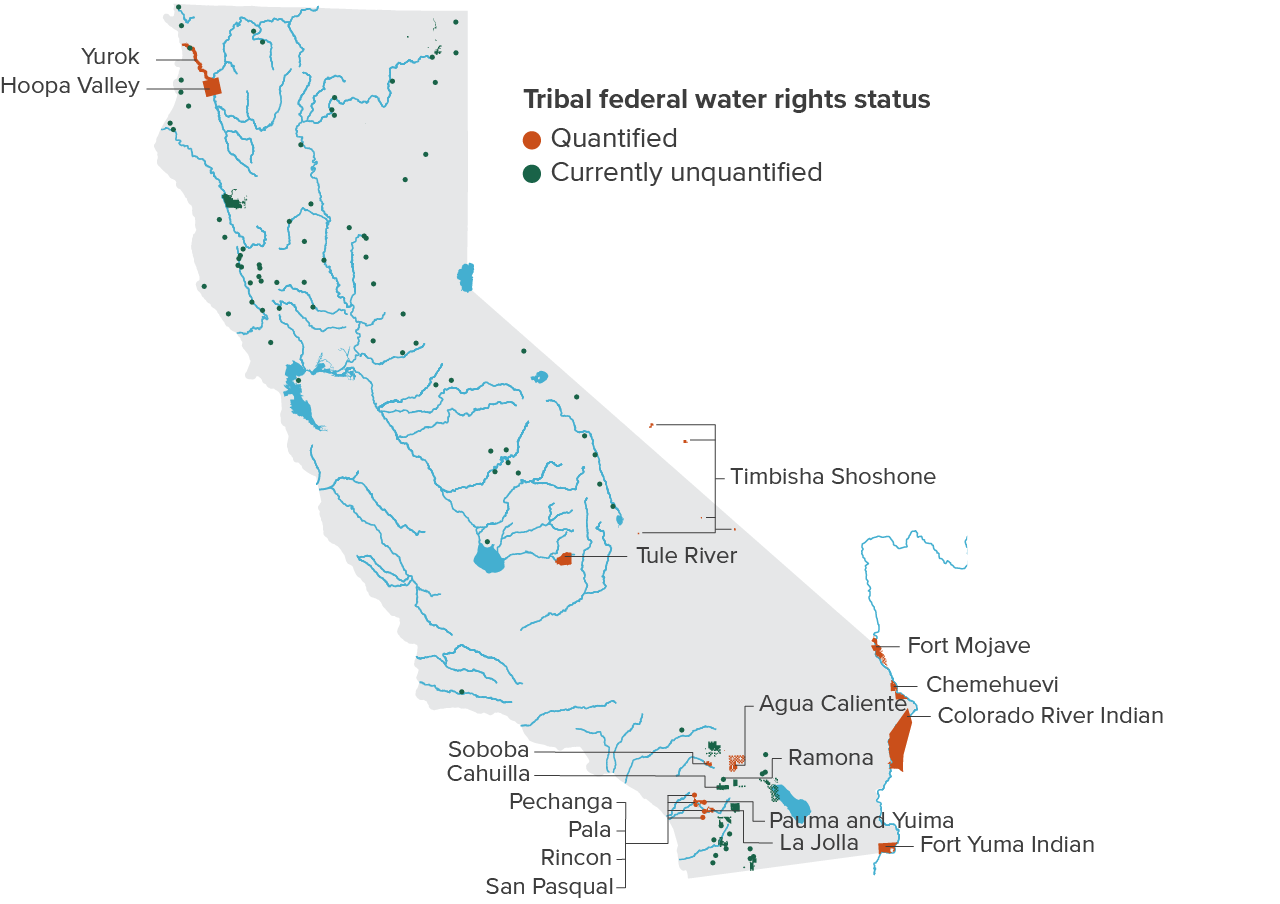
SOURCES: California Indian Water Rights Study (CILS) and Tribal Water Rights in California (PPIC 2026). Reservation boundaries are obtained from the US Bureau of Indian Affairs. Lake, river, and stream boundaries are obtained from the USGS National Hydrography dataset and the Lincoln Institute of Land Policy. Water features in the San Francisco Bay Area were obtained from the Metropolitan Transportation Commission.
NOTES: This map shows the locations of the federal Indian reservations wholly or partly within California. Reservations smaller than 7,500 acres are shown as point locations to improve visibility.
Two Northern California Tribes have instream water rights.
- Most Tribal reserved water rights support uses such as irrigation, domestic use, and water for businesses and tourism. In contrast, the Yurok Tribe and the Hoopa Valley Tribe have federal reserved rights to support instream uses in the Lower Klamath River, which entitles them to sufficient flows of water to support ancestral fishing rights and traditional practices.
- Although the Yurok and Hoopa Valley water rights are not yet precisely quantified, the federal courts have held that they include at least as much water as needed to ensure the survival and recovery of coho salmon in the Lower Klamath River, as required by the federal Endangered Species Act.
Most California Tribes do not yet have quantified reserved water rights.
- The remaining 93 federally recognized Tribal nations have reserved water rights that have not yet been quantified.
- The Yurok Tribe and a group of five Owens Valley Paiute and Shoshone Tribes are currently working with Department of the Interior assessment teams to begin the process of quantifying their water rights.
- In addition, approximately 30 other Tribes have water rights or water rights claims under California law. Some of these water rights support domestic, irrigation, manufacturing, and other uses.
Topics
Population Water Supply Water, Land & AirLearn More
Blog Post · June 15, 2026
The Essential Role of Tribes in Regional Water Management
Blog Post · June 8, 2026
Agriculture and Water Use on California’s Tribal Lands
Report · May 2026
Tribal Water Rights in California
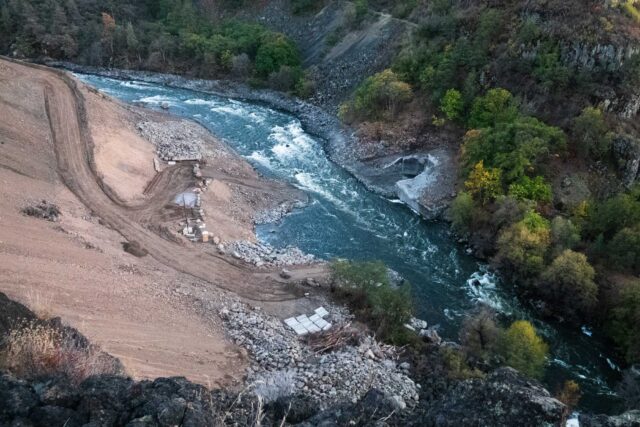
Blog Post · February 17, 2026
The Water Remembers: A Story of the Klamath River
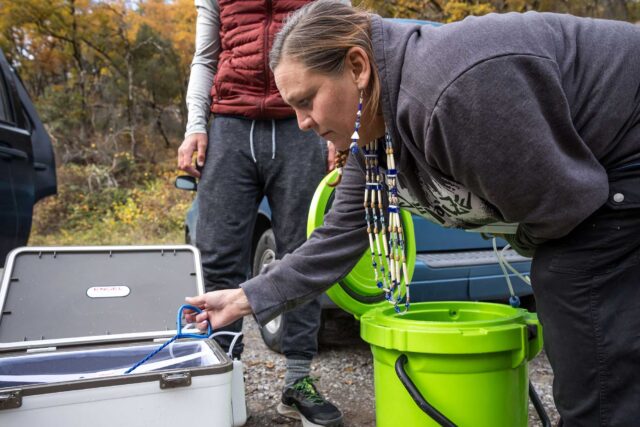
Blog Post · October 7, 2024
A Promising New Effort to Save California’s Salmon
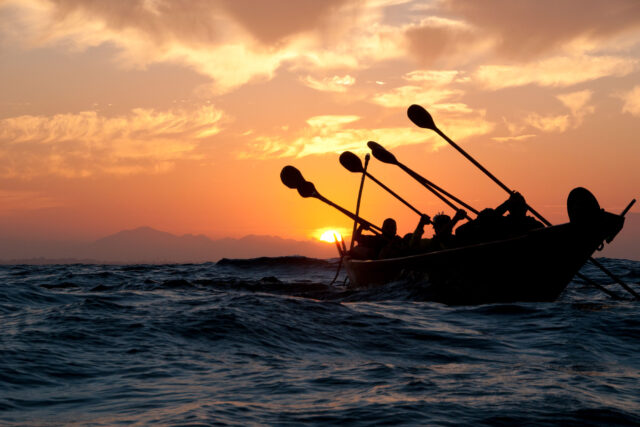
Blog Post · August 14, 2024
The Chumash Tribe’s Long Struggle to Protect California’s Coastal Waters
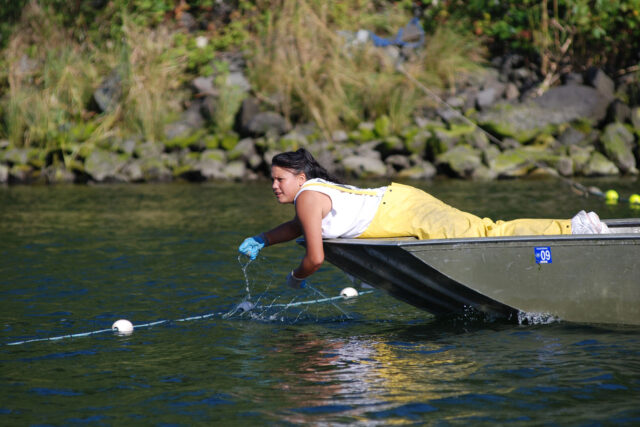
Blog Post · September 5, 2023
Exploring the Yurok Tribe’s Management of the Klamath River

Blog Post · June 22, 2021
Ensuring Safe Drinking Water for California’s Native American Communities
Blog Post · September 1, 2020
Using Fire for Good on Tribal Land