


After growing for decades, California’s multilingual school population began declining in 2017–18; declines among Ever ELs (students who were ever classified as English Learners) have been a driving force in overall enrollment declines. In 2023–24, the most recent year of data, statewide enrollment was 6% lower than enrollment in 2015–16.While most districts are likely to see continued declines, Ever EL enrollment is increasing in some parts of the state. These shifts in EL enrollment will pose challenges for most districts.
Enrollment among Ever ELs has fallen dramatically since 2015–16, declining about 15% or 372,000 fewer Ever ELs by 2023. In comparison, the English Only population declined between 2020–21 and 2021–22, but returned to pre-pandemic levels in 2023–24. English Only enrollment is about 8,000 lower than it was in 2015–16.

As we have reported elsewhere, the main drivers of declines among multilingual students are lower birthrates and changes in migration (including lower international migration to California and greater migration to other states). Some of the 2020–21 decline is attributable to challenges in identifying student language statuses: although the English Language Proficiency Assessment for California could be taken remotely that year, many students were not classified (15% of kindergarteners had a “TBD” status). But declines in recent years are based on population shifts.
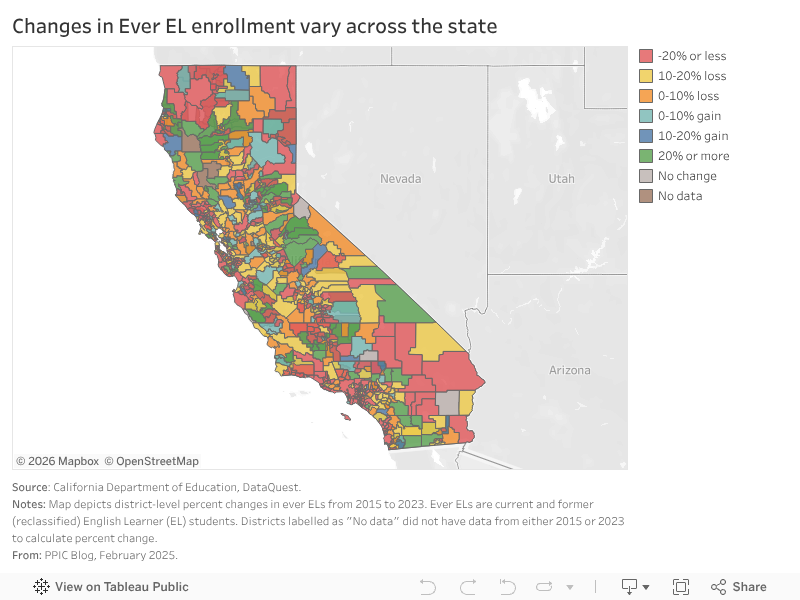
The Ever EL population has not declined uniformly across the state, and some areas have seen increases. About 64% of districts have experienced declines in their Ever EL population. Eight of the ten largest school districts saw declines; only Elk Grove and San Juan Unified—both in Sacramento County—saw growth. For the most part, declines were most dramatic in large coastal districts like Los Angeles (-27%), San Diego (-26%), Long Beach Unified (-38%), and San Francisco (-15%) and most other Bay Area districts. In total, Ever EL enrollment grew in 337 districts since 2015; some Central Valley, Northern, and Sierra foothill communities (and just a few coastal ones) have seen Ever EL growth.
Changes in the English Learner population present new challenges for districts. Those with increasing EL populations may be implementing EL programming for the first time or dealing with language groups they have not yet seen in their schools. And these growing EL populations might still be small in number, making it difficult for districts to fund a robust EL curriculum.
Districts with declining numbers of students must grapple with this new reality. The returns to scale of having large numbers of ELs students may dissipate, making it more challenging to serve EL students with the funding they generate. Annual funding smoothing factors might forestall decisions about how best to serve students with existing infrastructure and staffing, but many districts will ultimately have to consider school consolidation and budget cuts.
Because enrollment declines are concentrated among Ever ELs, districts may need to pay extra attention to how their EL populations are distributed and served. However, one potential silver lining is that the bilingual teacher shortage may be less extreme. Finally, EL enrollment may be further impacted by federal changes to immigration policy; while most California ELs are native born, many have immigrant parents.
In future work, PPIC will continue to explore the implications of changes in Ever EL populations for districts throughout the state.
Topics
English Learners enrollment K–12 Education PopulationLearn More

K–12 Enrollment Trends Diverge by Students’ Language Background

Enrollment Is Falling across California’s School Districts

Adapting to Changes in California’s English Learner Population

California’s Changing School Demographics

California’s Multilingual Population Is Driving TK–12 Enrollment Declines