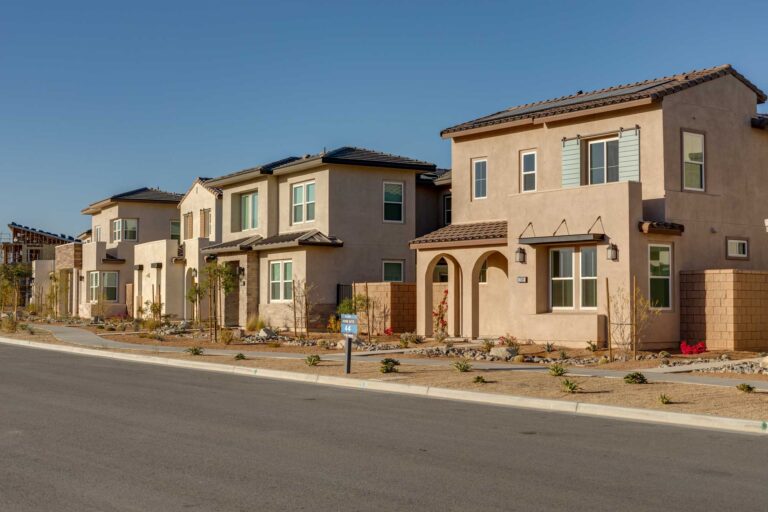



It is no secret that California has a housing problem. Home values are more than twice the national median ($776k vs $370k), rents run about 40% higher, homeownership is the second lowest in the nation, and housing has become a dominant reason people leave the state. Two of every three Californians say the cost of housing is a “big problem” in their part of California, according to the PPIC Statewide Survey.
The problem is stubborn because no single lever controls it: demand is powered by a high-wage economy and amenities that keep people wanting to live here; supply is constrained by high land, labor, and financing costs; land use decisions are spread across hundreds of cities and counties; and the vast majority of housing is built by a private sector that responds to financial feasibility more than policy goals.
The fundamentals
Homeownership in California has trailed the nation for decades, and the path to a first home keeps getting longer—young adults buy later, and fewer buy at all. Responsibility for improvement is contested: cities and counties control land use, but many have long approved less housing than their regions need. The state has responded with tougher oversight through its Regional Housing Needs Allocation (RHNA) process and laws that limit local discretion—fueling tension with local governments.
Since 1990, California has added 3.9 million housing units while gaining 9.8 million residents; over that period, inflation-adjusted home values rose 62% and rents rose 41%. Even with the high costs, vacancy rates are low and demand remains high. Estimates of the state’s housing shortage generally exceed one million units. A gap built over three decades will not close in one administration.
Key issues
Californians are spreading out across more housing. Californians have long lived in more crowded households than people in the rest of the United States—often doubling up in response to high costs—but that is now unwinding. The change is in part due to supply—677,000 new units were built between 2019 and 2024 for just 39,000 new residents. And in part it’s due to demography—fewer children and an aging population both point toward smaller households. The sobering implication: the state must build well beyond its population growth just to relieve crowding, pent-up demand, and changing demography.
Homeownership prospects dim for younger Californians. Ownership is especially low among young adults. Less than one-third (31%) of young adults in California (ages 30 to 34) own their own home compared to almost half (49%) in the rest of the United States. Part of the problem is a mismatch between what gets built and what Californians aspire to own. Seventy-one percent of Californians prefer a single-family detached home, but almost half of new units built since 2010 have been in multi-unit buildings—and 94% of multi-unit housing built in the past decade has been rented rather than owned. Without ownership products at attainable prices—condos, townhomes, small-lot homes—a generation’s main vehicle for building wealth stays out of reach.
The regional picture varies widely—as do ownership rates across race/ethnic groups. Coastal metros face the most extreme costs and the strongest pressure to move elsewhere. Inland areas are straining under redirected demand—rental vacancy in San Bernardino and Riverside fell by roughly 4 points, and renter stress is especially acute in the San Joaquin Valley and the Sacramento metro area. In the far north, where prices are lower, the housing problem increasingly arrives as an insurance bill: seven of the state’s twelve largest insurers have reduced coverage since 2022, and the state’s FAIR Plan enrollment has grown 115% since 2021. Solutions must vary accordingly.
Moreover, racial gaps are stark: in 2024, Latino homeownership stood at 45.9% and Black homeownership at 36.5%, far below white (64.4%) or Asian American (61.6%) households.
The housing crisis has downstream consequences. California has seen a net interstate migration loss of nearly 900,000 people since 2015. Movers often cite housing as the main reason for leaving, and 34% of Californians say they have seriously considered leaving because of costs. Those who stay are strained. The state ranks third in the share who commute for more than an hour, and 30% of renters pay more than half their income on housing.
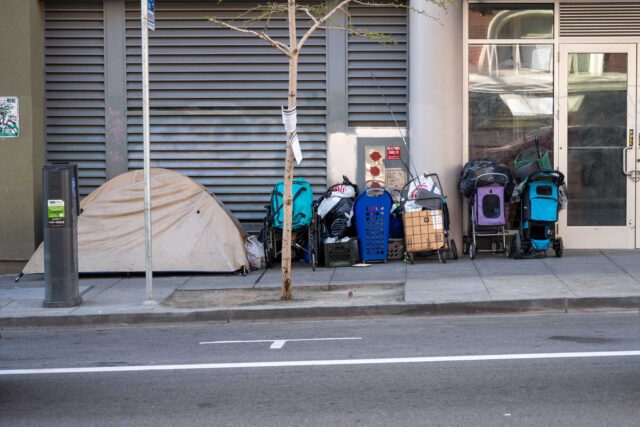
At the extreme people end up homeless. While the causes of homelessness are multifaceted, the effects are visible throughout the state. California had 182,000 people experiencing homelessness in 2025, amounting to 24% of the national total. About two in three of these residents are unsheltered (63.5%).
The road ahead
California is taking a far stronger role in housing policy than it did a decade ago. The state now promotes housing much more assertively through the Regional Housing Needs Assessment process, levying fines and mandating streamlined review of new developments in jurisdictions failing to meet their housing goals. The state has also beefed up benefits for projects with units for lower-income renters or that are located close to transit, limited environmental regulation for projects in central cities, empowered homeowners to split their lots into multiple units, imposed statewide rent control, and relaxed the regulations on accessory dwelling units (sometimes known as in-law units or granny flats).
The public favors more state control to ensure local governments build their “fair share” of new housing but do not favor relaxing environmental or land use regulations in order to build more housing, according to the PPIC Statewide Survey.
Several important housing initiatives will be on the ballot in the fall, addressing such issues as environmental review, downpayment support, rental support, and affordable housing construction. Recent statewide housing ballot initiatives have had mixed success in recent years, with just one of three narrowly approved by voters.
The next governor must consider that laws on the books are not homes on the ground: streamlining only matters where projects are economically viable. The governor will need to balance state enforcement with local implementation, and rental supply with Californians’ enduring aspiration to own. California has taken strong actions to reduce its housing shortage. The next administration’s job is to make it deliver.
Topics
cost of living Economic Trends Economy home insurance homelessness homeownership Housing Political Landscape Population racial disparities remote work rentersLearn More

Super-commuters in California
Who’s Leaving California—and Who’s Moving In?
A Deeper Look at California’s Homeowner Insurance Challenges
Homelessness Hits Record High in California, Jumps Dramatically in Rest of US